Although not commonly named alongside food, water, and shelter, sleep is a basic need that many misclassify as a neglectable desire. From maintaining immunological function and hormonal balance to emotional and neurological health, sleep optimizes the efficiency of biological processes (Stickgold, 2015). In the realm of psychology, Maslow’s hierarchy of needs is an anthropological theory proposed in 1943 that categorizes sleep as a physiological need (Olivieri, 2016). The physiological requirements are listed at the bottom of the hierarchy, indicating that they must be fulfilled for individuals to satisfy psychological and self-fulfillment needs higher up in the pyramid.
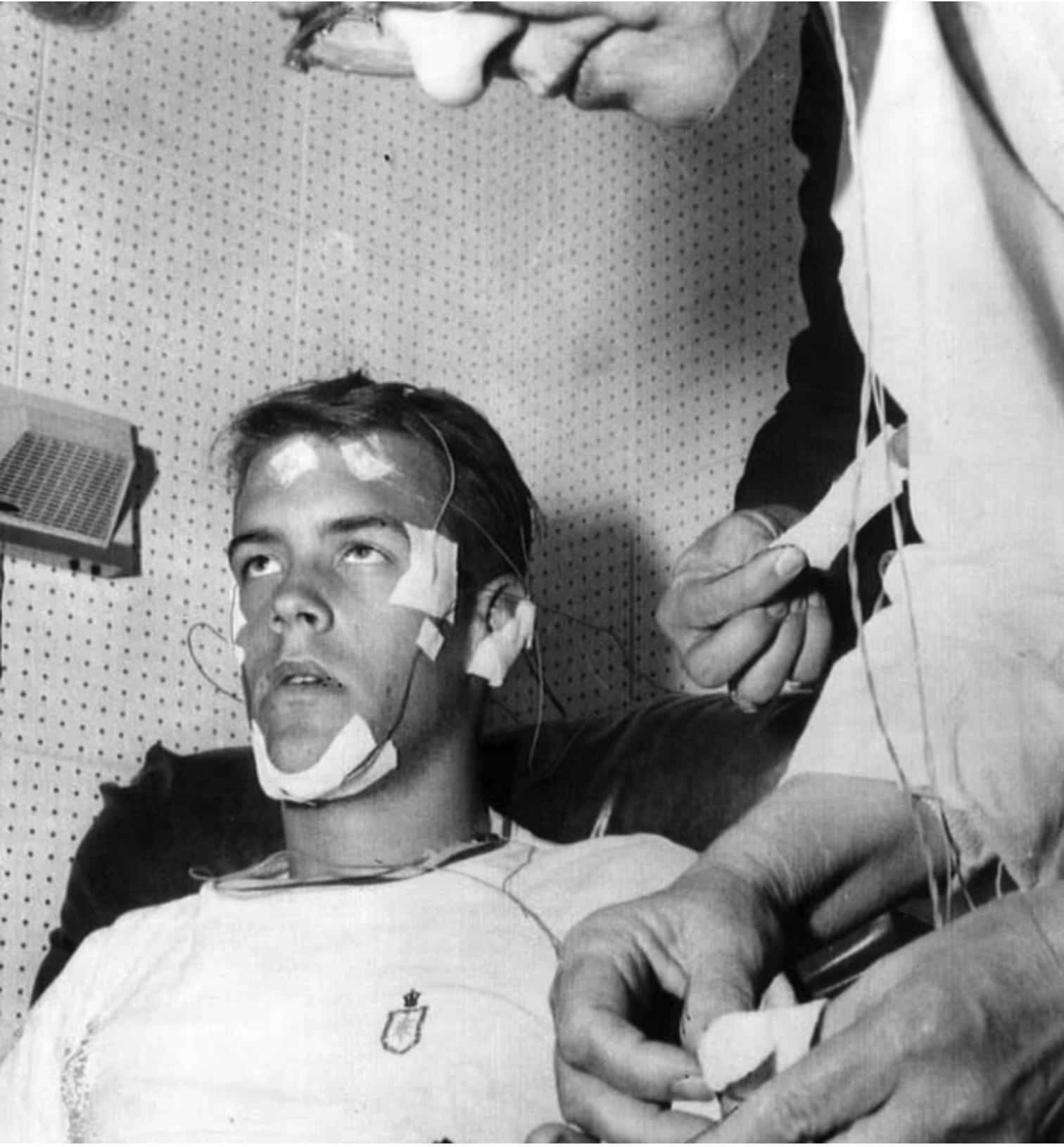
Due to health concerns associated with sleep deprivation, the Guinness Book of World Records stopped recognizing individuals who could abstain from sleep for long periods in 1997. Randy Gardner, a 17-year-old ‘self-proclaimed science nerd’ pictured in Figure 1, broke the record in 1965 by staying awake continuously for 11 days (264 hours) and 12 minutes (Chokroverty, 2009). Fourty years later in 2003, he began to suffer from constant bouts of insomnia and irritability. He is unable to stay asleep for more than fifteen minutes at a time to this day, indicating the permanent interruption of his circadian rhythms (Eyes Wide Open, 2018). The lack of reported damage to Gardner’s anatomical systems has resulted in dangerous beliefs that the effect of sleep on cognitive functioning is solely a placebo (Chokroverty, 2009).

However, the claim that sleep holds illusory significance can be refuted by studies spearheaded in 1989 by Rechtschaffen and Everson (Rechtschaffen et al., 2002). The effects of total and paradoxical sleep deprivation, referred to as TSD and PSD respectively, on rats were observed (Table 1). PSD is the prevention of REM (rapid eye movement) sleep, while TSD involves forgoing all forms of sleep (Rechtschaffen et al., 2002).
Table 1: Mean measurements of eight sleep deprivation effects (SDEs) on PSD and TSD rats. Instances where rats subjected to a specific type of sleep deprivation were impacted more severely than those of the other test group are highlighted in yellow. Most notably, the survival rate of all nine TSD subjects was 11 to 32 days while that of the twelve PSD subjects was 16 to 54 days. In terms of decreased body temperature, weight loss, and increased food intake, PSD rats were more heavily impacted than TSD rats. mone production), respectively. Modified from source: (Rechtschaffen et al., 2002).

The increased severity of SDEs on PSD rats as opposed to TSD rats suggests that lacking REM sleep alone could be more detrimental to physiological function than total sleep loss. From a chemical perspective, sleep deprivation increases the release of neurotransmitters and disrupts the body’s metabolic processes (Table 1). The high norepinephrine and thyroxine levels observed can contribute to hypertension (high blood pressure) and hyperthyroidism (excess thyroid hormone production), respectively. Both conditions increase the risk of cardiovascular diseases like heart attack and stroke. Additionally, sleep deprivation interrupts endocrine regulation of energy homeostasis. Two major hormones that control appetite are ghrelin and leptin. Ghrelin is an orexigenic hormone, indicating that it stimulates appetite, while leptin is anorexigenic and thus suppresses appetite (Schmid et al., 2008). Excessive sleep loss promotes increased ghrelin secretion and decreased leptin secretion (Schmid et al., 2008), consequently increasing food intake (Table 1).
However, SDEs on the endocrine system and central nervous system concerning energy homeostasis may be reversible. Recovery studies were conducted with two PSD and five TSD rats by allowing them to “sleep ad lib” after the presentation of major SDEs at the 8-day mark (Rechtschaffen et al., 2002). “Sleeping ad lib” is a medical term that refers to allowing unrestricted sleep without interference. The three rats that exhibited the greatest declines in body temperature (one PSD and two TSD rats) died within a few days. The other four, in contrast, recovered from all SDEs. Energy expenditure, body temperature, and plasma norepinephrine levels returned to baseline levels within one to three days (Rechtschaffen et al., 2002).
Nonetheless, long-term effects on mood and cognition have not thoroughly been explored, especially not in human contexts. The lack of research on recovery from accumulated sleep deprivation throughout adolescent years should be recognized as a gap in scientific literature to prevent the spread of misinformation.
Works Cited
Chokroverty, S., 2009. Sleep Disorders Medicine E-Book: Basic Science, Technical Considerations, and Clinical Aspects. Elsevier Health Sciences.
Eyes Wide Open, 2018. Available at: <https://hiddenbrain.org/podcast/eyes-wide-open/>.
Lawton, K., 2023. The challenge axed by Guinness World Records for being too DANGEROUS. [online] Daily Mail. Available at: <https://www.dailymail.co.uk/sciencetech/article-11972387/Guinness-World-Records-stopped-recognizing-record-dangerous.html>
Olivieri, C., 2016. Boy, Am I Tired!! Sleep….Why You Need It! Journal for Leadership and Instruction, 15(2), pp.33–36.
Rechtschaffen, A., Bergmann, B.M., Everson, C.A., Kushida, C.A. and Gilliland, M.A., 2002. Sleep Deprivation in the Rat: X. Integration and Discussion of the Findings. Sleep, 25(1), pp.68–87. https://doi.org/10.1093/sleep/25.1.68.
Schmid, S.M., Hallschmid, M., Jauch-Chara, K., Born, J. and Schultes, B., 2008. A single night of sleep deprivation increases ghrelin levels and feelings of hunger in normal-weight healthy men. Journal of Sleep Research, 17(3), pp.331–334. https://doi.org/10.1111/j.1365-2869.2008.00662.x.
Stickgold, R., 2015. Sleep on It! Scientific American, 313(4), pp.52–57.