Imagine being confined to an 80-foot cell for 22 ½ hours a day, where your only view of the outside world is a small patch of sky through a perforated metal door. Your social interactions are eliminated and your only source of entertainment is pacing the edges of your cage. This is the reality of solitary confinement in supermax prisons (Guenther 2012) (Figure 1). This punishment not only restricts freedom, but also causes severe damage to neurochemical/biological systems.
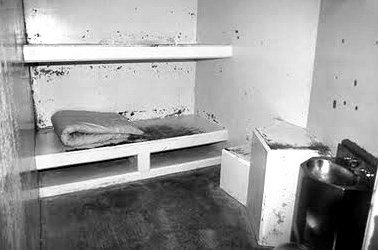
For decades, the devastating mental health consequences of extreme isolation have been researched and documented. A notable contribution comes from clinician Stuart Grassian, who identified three core features of isolation: affective disturbances including panic attacks, obsessive intrusive thoughts and perceptual distortions and hallucinations (Coppola 2019). These effects extend to loss of identity, self-esteem and meaningfulness. They also persist following release, where individuals remain incapable of accommodating to normal life, unable to participate in family moments and intolerant to everyday noises.
The brain is a vital organ which is susceptible to alterations under environmental experiences and genetic influences (Mumtaz et al. 2018). Social isolation has been found to not only cause psychological damage, but also induce harmful changes to neurobiology. Previous animal studies report social isolation leads to measurable brain changes including reduced cortical volume, decreased myelin production, diminished neuronal connections in the hippocampus and altered amygdala activity (Coppola 2019). These changes can occur after just a few days of isolation and are correlated to cognitive decline, depression, memory loss and anxiety.
The mechanism behind this damage is primarily caused by the brain’s major excitatory neurotransmitter, glutamate. The expression and function of receptors in the central nervous system is disturbed by the increase of excitatory synaptic transmission such as glutamate during social isolation stress (Mumtaz et al. 2018). This increase causes the brain’s signaling system to become extremely overstimulated and damages neurons (Averill et al. 2017). After the safe threshold of glutamate is passed, a cascade is initiated which alters the connectivity in brain regions which are imperative for emotional regulation and memory.
This cascade is a part of a broader collapse of multiple neurotransmitter systems. Research shows that social isolation also impairs serotonin function and disrupts GABAergic signaling, which contributes to anxiety and seizure susceptibility (Mumtaz et al. 2018). This disruption is enhanced through the failure of the brain’s stress-regulating systems. For instance, the hypothalamic-pituitary-adrenal axis becomes dysregulated which results in a massive release of the primary stress hormone, cortisol. This increases the feeling of stress and is toxic to neurons, particularly in the hippocampus.
The undeniable conclusion is that humans are wired for connection, and solitary confinement interferes with this wiring at the most fundamental level. What may seem like only psychological suffering (panic, loss of self, distortions) actually physically manifests in brain damage. Together, these failures dismantle the security for emotional regulation and social bonding. Solitary confinement does not only isolate a person from others, but also isolates them from their own healthy brain function.
References
Averill, Lynnette A., Prerana Purohit, Christopher L. Averill, Markus A. Boesl, John H. Krystal, and Chadi G. Abdallah. 2017. “Glutamate Dysregulation and Glutamatergic Therapeutics for PTSD: Evidence from Human Studies.” Neuroscience Letters 649 (May): 147–55. https://doi.org/10.1016/j.neulet.2016.11.064.
Coppola, Federica. 2019. “The Brain in Solitude: An (Other) Eighth Amendment Challenge to Solitary Confinement.” Journal of Law and the Biosciences 6 (1): 184–225. https://doi.org/10.1093/jlb/lsz014.
Guenther, Lisa. 2012. “Beyond Dehumanization: A Post-Humanist Critique of Intensive Confinement.” Journal of Critical Animal Studies. Special Issue on Animals and Prisons 10 (2). https://philarchive.org/rec/GUEBDA.
Mumtaz, Faiza, Muhammad Imran Khan, Muhammad Zubair, and Ahmad Reza Dehpour. 2018. “Neurobiology and Consequences of Social Isolation Stress in Animal Model-A Comprehensive Review.” Biomedicine & Pharmacotherapy = Biomedecine & Pharmacotherapie 105 (September): 1205–22. https://doi.org/10.1016/j.biopha.2018.05.086.
Ridgeway, James, and Jean Casella. 2011. “Case Closed on Supermax Abuses at Pelican Bay.” Solitary Watch, February 15. https://solitarywatch.org/2011/02/15/case-closed-on-supermax-abuses/.


Leave a Reply
You must be logged in to post a comment.