Author: isci
-
Combating the Crippler
In the early 20th century, the world was plunged into a state of frenzy. Poliomyelitis, or polio for short, was a formerly sporadic disease caused by poliovirus that had grown to become a global pandemic. At its height, 22000 people in the US alone were left paralysed each year, their motor neurons destroyed (Trevelyan, Smallman-Raynor and…
-
Neurological Effects of the Gut Microbiome
The human microbiome is perhaps one of the most subtle and unfamiliar aspects of modern medicine. Though some bacteria have been shown to be beneficial to human health, not much is known about microbiome-host interactions. It remains a keen topic of research. Numbering in 100 trillion cells, the human microbiome is comprised of 10 times…
-
Toxicodendron: Getting Under Our Skin
Itch, medically referred to as pruritus, is a nocifensive neural sensation most everyone has experienced. It can be induced by touches only microns in length, like the legs of an insect or the spines of a plant (Twycross, 2003). Unimpressive as they seem, brushing and scratching responses itch are important to our health. Without these evolved defences, we…
-
The Physics of Ballet – It’s Harder Than LonCapa
On the surface, when you watch ballet dancers gracefully move across an empty stage filling it with their passion and emotion, it almost gives the impression that dance is quite effortless. Even after hours of endless rehearsals and tiring performances, ballet dancers make everything look calm, collected, and strong. On the other hand, when you…
-
Amino Acids: a Scaffold to a Better Future
Modern Westernized medicine is constantly developing novel clinical and surgical practices. These practices have been created in response to rapid advancements in technology and society’s desire for better, faster and more reliable treatments. The current need for reliable clinical practices has created a relatively new discipline known as bioengineering (Griffith, 2001). Bioengineering incorporates molecular and…
-
Translating Thoughts Into Actions
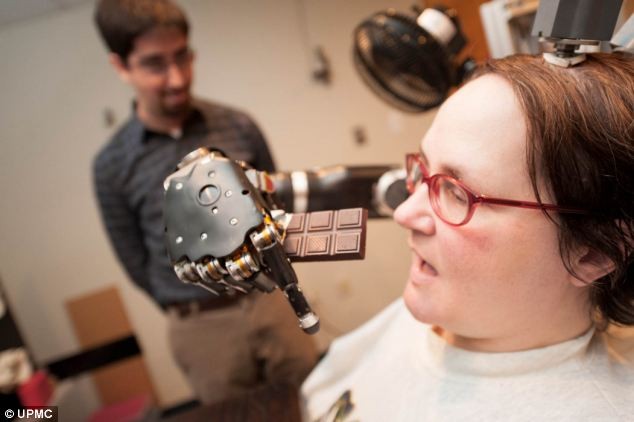
Our society is one that focuses on the needs of the few, rather than the needs of the many. Nowadays, people become fixated with what they cannot do, instead of appreciating what they can. For a short individual, this may mean a time-consuming climb to the top shelf of a library, just to get a…
-
Exploring Davy Jones’ Locker
Buried gold and treasure maps may bring to mind tall tales of swashbuckling pirates, but even today, “treasure hunters” endeavor to recover valuable items from shipwrecks. These haunting sites, mere skeletons of past expeditions, are both important historical markers and resting places for precious cargo (Figure 1). The exploration of such debris fields is a complex and…
-
Those Cancer-Sniffing Fruit Flies
Over the last few decades, the importance of early cancer detection has come to the forefront of the medical field’s attention. Researchers are continuously trying to develop new diagnostic imaging techniques that can better detect cancer. Recently, animals have been of particular interest in this research due to their ability to differentiate between cancerous and…
-
Artificial Intelligence: Siri-ously.
Artificial intelligence (AI) is a fascinating, faulty mirror of human consciousness. It is able to demonstrate immense intellect, but cannot reflect human intuition or emotion. We tend to associate AI with robots from science-fiction movies, but it is a controversial reality in modern society that is constantly probed by human psychologists and computer engineers. Furthermore,…
-
Non-invasive, Transdermal Techniques in the Detection of Malaria
Of all the infectious diseases currently plaguing humankind, there are perhaps only a few more difficult to diagnose than malaria. Caused by the parasitic protist Plasmodium , malaria infects over 200 million people each year in Sub-Saharan Africa, Asia, and South America (Howitt et al., 2012). Malaria is transmitted through mosquito bites, in which Plasmodium…