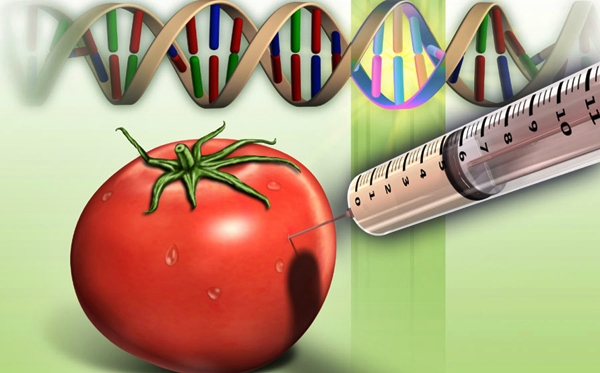
In a world where access to quality medical care is highly dependent upon the wealth of a nation, lack of immunization imperils the health of citizens residing in developing countries. In Africa alone, one in five children do not have access to critical vaccines, and are thus subject to illness at premature ages (Hasan, 2017). The delivery, administration, and production of vaccines present various financial challenges that prevent their feasibility in developing countries (McGovern and Canning, 2015). However, in a society dominated by biotechnology, developing countries may be one step closer to conquering infectious disease.
Behold plant-based vaccines- where humans can receive an immunization by simply munching on foods rather than enduring shots. Essentially, vaccines promote the production of antibodies in order to provide immune support and protection against fatal diseases (Doshi et al., 2013). Edible vaccines are transgenic plants that initiate an immune response when consumed (Laere, et al., 2016). The process involves integrating desired genes that encode the antigen proteins for specific diseases into the genome of plant tissues, using the Agrobacterium-mediated gene transfer method (Figure 1) (Laere, et al., 2016). Upon consumption, the antigen present in the recombinant plant (fruit or vegetable) stimulates a mucosal immune response, which then produces the secretory antibodies required to quickly neutralize any pathogens they contact (Langridge, 2000).

Figure 1: This diagram illustrates the production of vaccine potatoes. The Angrobacterium method for creating an edible vaccine is based upon the use of Angrobacterium tumefaciens as a vector for the delivery of antigens into the target plant cell. The recombinant DNA, containing the antigen gene, is co-cultured with the target plant cells to produce the transgenic crop (Rivera, 2015).
Since most pathogens enter the body through orifices, they first encounter the defences located within mucous membranes, such as the digestive tract (Langridge, 2000). Therefore, the ability for edible vaccines to trigger a mucosal immune response increases the viability of the vaccine by enhancing pathogen-impeding reactions (Langridge, 2000). In addition to the mucosal immune response, a systemic reaction is also activated, which promotes the destruction of pathogens at distant locations through the circulation of immune cells (Langridge, 2000).
In contrast to traditional injected vaccines that primarily bypass the mucous membranes, the duality of edible vaccines promotes enhanced resistance against diseases by stimulating mucosal immunity. Furthermore, plant-based vaccines are financially favourable, since they do not require the expensive process of cold-chain storage to maintain optimal conditions (Nochi et al., 2007). This mode of vaccine administration would increase accessibility for citizens living in remote areas and developing countries. Since edible vaccination does not require injection, the need for the presence of a medical professional is eliminated, thus allowing for those with limited access to healthcare to achieve immunity. Furthermore, these plant-based vaccines introduce the possibility of second-generation vaccines by incorporating various antigens, which contact specialized epithelial cells (M cells) simultaneously, to prompt an immune response (Figure 2) (Arakawa et al., 1998). Since plant-based vaccines do not comprise of heat-killed pathogens, they do not induce any risk of infectious protein reformation (Naeema et al., 2016).

Figure 2: The mechanism of action of the potato edible vaccine involves the uptake of discharged antigens by M cells, which then encounter macrophages. This activates memory cells, which in turn stimulate the secretion of antibodies that efficiently attack the pathogen (Naeema, et al., 2016).
Currently, algae, bananas, rice, potatoes and tomatoes are being studied as edible vaccines against diseases like swine fever, Hepatitis B, infectious bursitis, Norwalk virus, and Coronavirus, respectively (Concha et al., 2017). For instance, a recent placebo-controlled, double-blind clinical trial explored the viability of transgenic potatoes containing the recombinant antigen for Hepatitis B prevention in humans (Kong et al., 2001). These potatoes were fed to 168 volunteers, in which approximately 60% demonstrated a dramatic and sustained increase in Hepatitis B antigens, whereas those volunteers who ingested the non-modified control potatoes did not express any increase in Hepatitis B antigens (Kong et al., 2001). Thus, the result of this study emphasizes the utility of edible vaccines in regions that lack access to quality medical care, but are highly dependent on crop yield.
The potential of edible vaccines presents a promising future for a safe, cost-efficient, and accessible mode of vaccine administration. Global attention towards this application of biotechnology has the ability to protect the lives of those who lack access to traditional vaccination delivery. Therefore, eating your vegetables may not be so much of a burden after all.
References
Arakawa, T., Yu, J., Chong, D.K., Hough, J., Engen, P.C. and Langridge, W.H., 1998. A plant-based cholera toxin B subunit-insulin fusion protein protects against the development of autoimmune diabetes. Nature Biotechnology, [e-journal] 16(10), pp.934–938. https://doi.org/ 10.1038/nbt1098-934.
Concha, C., Cañas, R., Macuer, J., Torres, M.J., Herrada, A.A., Jamett, F. and Ibáñez, C., 2017. Disease Prevention: An Opportunity to Expand Edible Plant-Based Vaccines? Vaccines, [e-journal] 5(2). https://doi.org/ 10.3390/vaccines5020014.
Doshi, V., Rawal, H. and Mukherjee, S., 2013. Edible vaccines from GM crops: current status and future scope. Journal of Pharmaceutical and Scientific Innovation, [e-journal] 2(3), pp.1–6. https://doi.org/10.7897/2277-4572.02321.
Hasan, H., 2017. Global Immunization News. World Health Organization, [online] Available at: <https://www.who.int/immunization/GIN_January_2017.pdf?ua=1> [Accessed 9 January 2019].
Kong, Q., Richter, L., Yang, Y.F., Arntzen, C.J., Mason, H.S. and Thanavala, Y., 2001. Oral immunization with hepatitis B surface antigen expressed in transgenic plants. Proceedings of the National Academy of Sciences of the United States of America, 98(20), pp.11539–11544. https://doi.org/ 10.1073/pnas.191617598.
Laere, E., Ling, A.P.K., Wong, Y.P., Koh, R.Y., Mohd Lila, M.A. and Hussein, S., 2016. Plant-Based Vaccines: Production and Challenges. Journal of Botany, [e-journal] Available at: <https://www.hindawi.com/journals/jb/2016/4928637/> [Accessed 10 January 2019].
Langridge, W., 2000. Edible Vaccines. Scientific American, [online] Available at: <https://www.mcdb.ucla.edu/Research/Goldberg/HC70A_W12/pdf/EdibleVaccines.pdf> [Accessed 10 January 2019].
McGovern, M.E. and Canning, D., 2015. Vaccination and All-Cause Child Mortality From 1985 to 2011: Global Evidence From the Demographic and Health Surveys. American Journal of Epidemiology, [e-journal] 182(9), pp.791–798. https://doi.org/10.1093/aje/kwv125.
Naeema, J., Fouzia, S., Omar, H., Khalid, M., Shuaib, M., Ishrat, M., and Nayik, G., 2016. An Overview on Edible Vaccines and Immunization. Journal of Nutrition and Food Sciences, [e-journal] 4(2): 1078. Available at: <http://austinpublishinggroup.com/nutrition-food-sciences/fulltext/ajnfs-v4-id1078.php#Mechanism%20of%20Action> [Accessed 10 January 2019].
Nochi T, Takagi H, Yuki Y, Yang L, Masumura T, Mejima M, et al., 2007. Ricebased mucosal vaccine as a global strategy for cold-chain- and needle-free vaccination. Proceedings of the National Academy of Sciences of the United States of America, [e-journal ] 104(26): 10986-10991. https://doi.org/ 10.1073/pnas.0703766104.
Rivera, I., 2015. Edible Vaccine. [online] VC Voices. Available at: <http://vcvoices.org/2015/04/edible-vaccine-2/> [Accessed 10 Jan. 2019].