Hot Sauce Cures Cancer? Causes Cancer? Both??

Capsaicin (Figure 1) is the major compound in chili peppers that triggers the reception of “spice”. It acts on the transient receptor potential vanilloid subfamily member 1 receptor, or just TRPV1. The TRPV1 receptor is found across sensory neurons, and because the response is followed by a long refractory period, capsaicin has been applied as a therapeutic to help with pain (Sharma et al. 2013). In recent years, research into the applications of capsaicin has proposed its use as an anti-cancer treatment, but there has also been research that suggests it has carcinogenic properties (Bode and Dong 2011). 
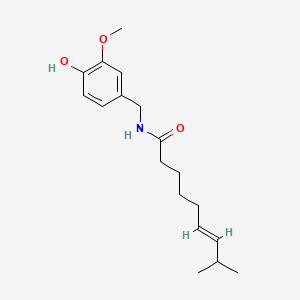
Figure 1: molecular structure of capsaicin (PubChem 2005).

The anticancer mechanism of capsaicin has been investigated, proposing that it induces cell-cycle arrest and apoptosis. It has been shown to do so in multiple types of cancer, including liver, pancreatic, colonic, esophageal, skin, leukemia, and more. The exact mechanism requires more research to confirm, but it is speculated that for triggering apoptosis, capsaicin targets proteins involved in the mitochondrial death pathway (Clark and Lee 2016). The mitochondrial death pathway is a major apoptosis pathway which occurs when apoptogenic molecules trigger the outer membrane to dissolve, leading to apoptosis (Gupta et al. 2009). Capsaicin has also been found to enhance the activity of the p53 tumor suppressor. As for cell cycle arrest, it has been shown that capsaicin does so by decreasing levels of vital cyclin-dependent kinases. Additionally, research indicates that capsaicin not only targets cancer on a cellular scale, but has anti-angiogenic and metastatic properties (Clark and Lee 2016). 


Research into the chemotherapeutic potential of capsaicin has been accompanied by numerous studies that demonstrate its carcinogenic properties. In many in vivo studies on rats, capsaicin has resulted in cancer growth in the liver and stomach (Bode and Dong 2011). Numerous studies report both the genotoxic and carcinogenic effects of capsaicin, however it is of note that many of the studies done on its carcinogenic potential were not done with pure capsaicin (Bley et al. 2012). A study done in 2004 using pure capsaicin found no increase in mutations in bacterial assay tests, concluding it as not genotoxic (Chanda et al. 2004).

Capsaicin has been shown to be safe and effective in treating pain. Additionally, its potential as a treatment for cancer should not be dismissed as it may have mechanisms which inhibit cancer at multiple stages in its growth and spread. Regardless, more research should be conducted into capsaicins properties due to the great divide of studies confirming it as both a cancer-preventative and cancer-inducing agent. 

Bibliography

Bley, Keith, Gary Boorman, Bashir Mohammad, Donald McKenzie, and Sunita Babbar. 2012. “A Comprehensive Review of the Carcinogenic and Anticarcinogenic Potential of Capsaicin.” Toxicologic Pathology 40 (6): 847–73. https://doi.org/10.1177/0192623312444471.

Bode, Ann M., and Zigang Dong. 2011. “The Two Faces of Capsaicin.” Cancer Research 71 (8): 2809–14. https://doi.org/10.1158/0008-5472.CAN-10-3756.

Chanda, Sanjay, Greg Erexson, Colin Riach, et al. 2004. “Genotoxicity Studies with Pure Trans-Capsaicin.” Mutation Research/Genetic Toxicology and Environmental Mutagenesis 557 (1): 85–97. https://doi.org/10.1016/j.mrgentox.2003.10.001.

Clark, Ruth, and Seong-Ho Lee. 2016. “Anticancer Properties of Capsaicin Against Human Cancer.” Review. Anticancer Research 36 (3): 837–43.

Gupta, Sanjeev, George EN Kass, Eva Szegezdi, and Bertrand Joseph. 2009. “The Mitochondrial Death Pathway: A Promising Therapeutic Target in Diseases.” Journal of Cellular and Molecular Medicine 13 (6): 1004–33. https://doi.org/10.1111/j.1582-4934.2009.00697.x.

PubChem. 2005. “Capsaicin.” https://pubchem.ncbi.nlm.nih.gov/compound/1548943.

Sharma, Surinder Kumar, Amarjit Singh Vij, and Mohit Sharma. 2013. “Mechanisms and Clinical Uses of Capsaicin.” European Journal of Pharmacology 720 (1): 55–62. https://doi.org/10.1016/j.ejphar.2013.10.053.

Comments

6 Responses to “Hot Sauce Cures Cancer? Causes Cancer? Both??”

  1. Sophie Buller Avatar
    Sophie Buller

    Hi iSci! I was intruiged by capsaicin and its possible harms to the body because of a lab I did in analytical chemistry last semester. Hope you enjoy my blog post and leave any feedback down below!

  2. Kirpa Chandi Avatar
    Kirpa Chandi

    Hi Sophie,

    Really interesting blog post! This topic was a great pick, it’s definitely not something that you hear about too often. Some suggestions:

    – Before jumping right into what capsaicin is (in the intro), maybe add a brief hook about capsaicin and spices to engage the reader
    – Try to go into further detail about the carcinogenic properties of capsaicin. Similar to how you have a paragraph for the mechanisms of the therapeutic properties, it would be nice to know how and why capsaicin can be harmful
    – If word count allows, maybe include some statistics on how many people this has affected (positively or negatively) and ultimately what the impact can be
    – I believe it should be “References” instead of “Bibliography” at the end

    Good work overall, excited to see the finished product!

    Kirpa

  3. Durezernab Berki Avatar
    Durezernab Berki

    Hey Sophie,

    This was a very intriguing post. Some suggestions:

    – Introducing the figure right after the first word of the post seems a little jarring as it redirects the reader even before the first sentence is completed. It can help to mention something about the chemical structure later and then reference the figure there. Right now the structure does not seem relevant right at the start.
    – There is a large gap between the second and third paragraphs.
    – You can make the references a header so it is more visually distinct from the body text.

    Overall, well done!

    Durezernab Berki

  4. Fireese Berg Avatar
    Fireese Berg

    Hi Sophie!

    This is a very interesting and really well-written post! Just a few small things:
    – Is the route of admission in studies using capsaicin for anti-cancer purposes vs studies that are testing its carcinogenicity? No worries if you don’t have space to mention it, but it would be interesting to note if the route of intake changed anything (i.e. oral vs injection).
    – The first sentence of your last paragraph is a bit jarring, as the topic of the blog post is regarding cancer rather than pain. I know you introduce the concept of capsaicin as a therapeutic for pain relief in your intro, but it doesn’t feel important enough to have it be the first sentence of your conclusion.

    Other than that, amazing work. Happy editing!

    Fireese

  5. Rishabh Bhatia Avatar
    Rishabh Bhatia

    Hi Sophie,

    Your title immediately draws the reader in, and the paper follows through by explaining why capsaicin is scientifically interesting rather than treating it as a simple yes-or-no issue. Here are some ways you can improve:

    – You could strengthen the transitions between sections a little more, especially when shifting from capsaicin’s anticancer potential to its carcinogenic properties. A smoother transition would make the contrast between the two sides feel even more intentional.

    – The conclusion is solid, but it could be even stronger if you ended with one sharper final statement about what readers should take away from the current state of the research. That would give the paper a more memorable closing.

    Overall, this was a great read. Happy editing!

  6. Luca Madriz-Zikic Avatar
    Luca Madriz-Zikic

    Hi Sophie,

    Really interesting post. Your research on the topic is evident from the beginning and all of your points are well substantiated making the post an easy read.

    Some comments/suggestions:
    – The title is eye-catching but the tone clashes with the body slightly. The headline promises an “accessible” and witty read, but the piece immediately opens with dense receptor nomenclature and molecular pathways. Either the introduction needs to ease the reader in more gradually, or the title should match the technical nature of the writing.
    – The carcinogenic paragraph is slightly thinner than the anticancer one. Given that the central point of the post is the contradiction between these two bodies of research, they deserve roughly equal treatment. The carcinogenic evidence is currently presented in a few sentences and then partially walked back.
    – “capsaicins” should be “capsaicin’s”, just a missing apostrophe in the final sentence.

    Overall great work.
    Good luck with the edits,
    Luca

Leave a Reply