As we near the end of our harsh Canadian winter and shift into rainy, blooming spring, our days grow a little longer, and many of us crave a fresh start of our own. What better way than making a sourdough starter that can later become a warm, fresh loaf? Known for its gut‑health benefits, sourdough nurtures beneficial bacteria through its unique fermentation process. A perfect way to welcome new beginnings!
This recipe is credited to Emilie Raffa, the maker behind The Clever Carrot. For a deeper dive into her sourdough recipe, follow Beginner’s Sourdough Starter Recipe.
Sourdough has a long history across human civilizations. Bread has long been tied to nourishment in temperate climates and is woven into tradition, cultural practices, and religion (Capelle et al. 2023). For example, the word companio, used in late Latin and early French, meaning “companion,” derives from cum panis meaning someone with whom you share bread. Evidence of leavened bread dates back more than 14,000 years, with specific documentation of sourdough between 2000–1000 BC. Around this time, Egyptians used yeast and lactic acid bacteria to produce light, soft breads and developed improved tools and wheat varieties (Kulp and Lorenz 2003).
The Sourdough Starter
Ingredients Needed:
Day One:
- 60g wholewheat flour
- 60g water
Every Preceding Day:
- 60g water
- 60g All-Purpose or Bread Flour
Time Frame Approximated: 7+ Days
Materials Needed:
- A Jar (¾ L)
- Digital Scale
- Danish Dough Wisk
To begin the sourdough starter, in your jar, whisk 60 g of whole wheat flour with 60 g of water. Then cover with a lid and let it rest in a warm spot (∼24 °C) for 24 hours. The following day, the starter should have expanded with bubbles on the surface (Figure 1). This is because of a process called symbiotic, spontaneous fermentation, where naturally occurring yeast and bacteria carry out alcoholic (yeast) and lactic acid (bacteria) fermentation to form a type I sourdough starter (Calvert et al. 2021; De Vuyst and Neysens 2005 ). Whole wheat flour contains yeast, a type of fungus, and bacteria that both consume carbohydrates (sugars) for energy (Behera et al. 2019). Fermentation is a shortened version of cellular respiration that occurs in low-oxygen (anaerobic) environments. It harnesses a metabolic process called ‘glycolysis’, which converts glucose into pyruvate, a 3-carbon structure (C3H3O3–).
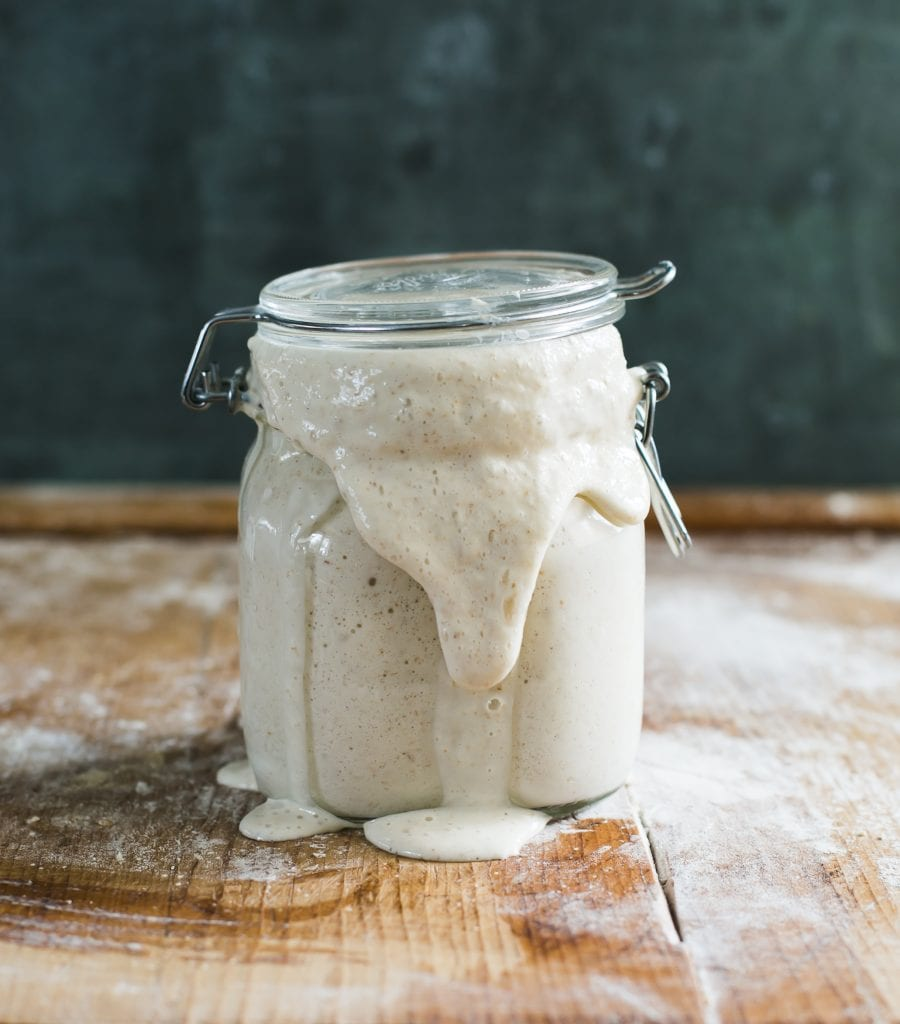
Figure 1. Sourdough starter after fermenting. As a result of alcohol fermentation, the starter will rise and become bubbly, a visible sign that CO2 and ethanol have been formed, while lactic acid fermentation creates sourdough’s signature flavour (Calvert et al. 2021; Raffa 2019).
In lactic acid fermentation, pyruvate accepts electrons from reduced nicotinamide adenine dinucleotide (NADH) produced in glycolysis, allowing the cell to continue making energy with the NAD+ (Figure 2a; Calvert et al. 2021). As a result, the pyruvate becomes reduced lactate. Conversely, in alcohol fermentation, the pyruvate is converted to acetaldehyde and carbon dioxide (CO2). The acetaldehyde then oxidizes NADH back to NAD+ and is converted to ethanol (Figure 2b).
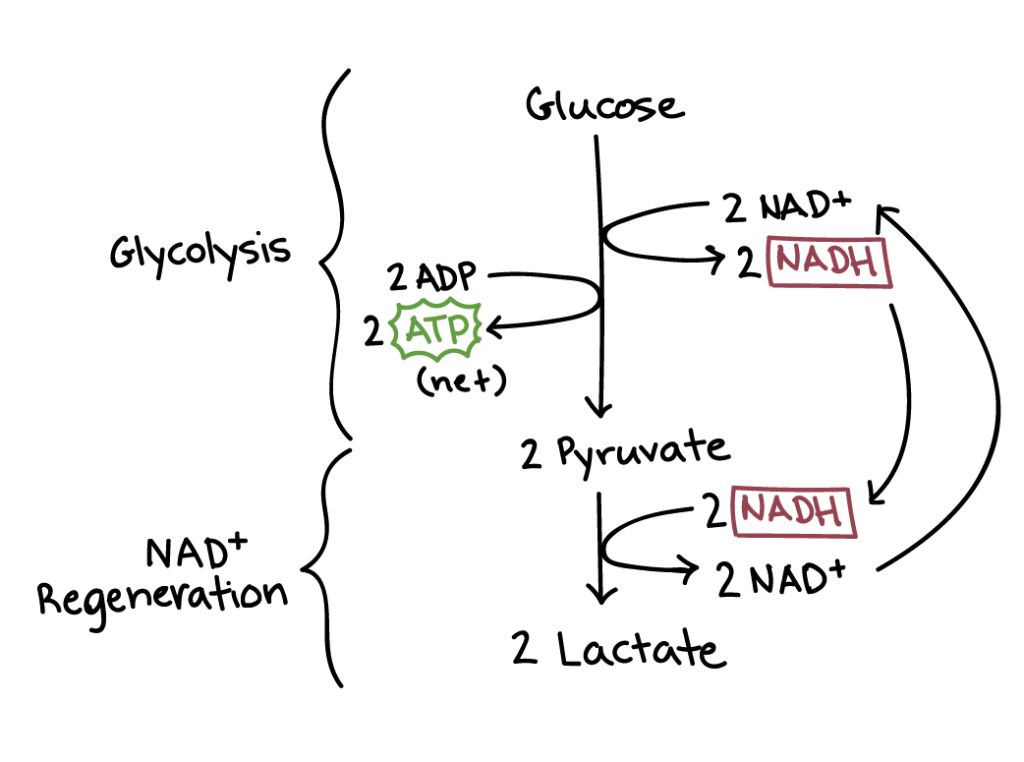
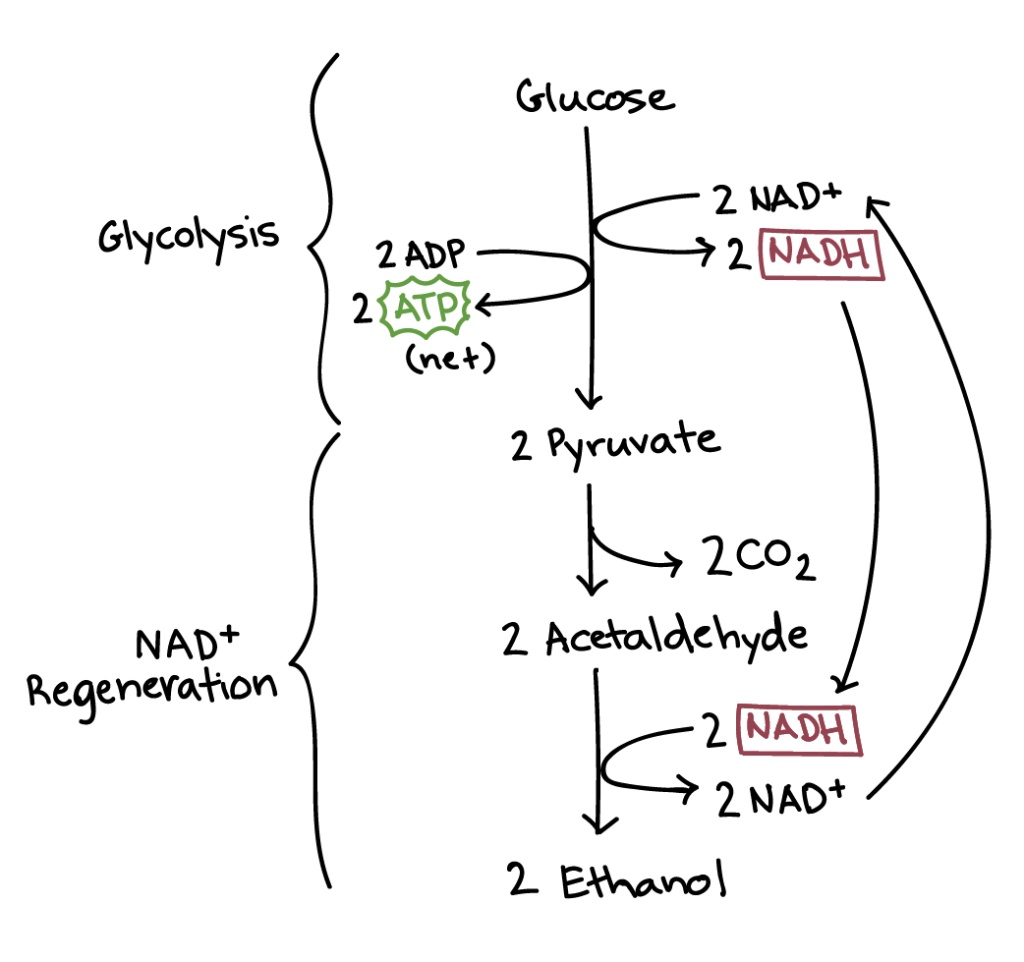
Figure 2a. A diagram expressing the lactic acid fermentation process, including the byproduct lactate made. Figure 2b. A diagram expressing the alcohol fermentation process, including the byproducts ethanol and CO2 made (Khan academy 2016).
From here, you have completed the most challenging part. For the remaining 5 days, you must feed your sourdough. This is also referred to as back-slopping or propagation, in which you remove half of the starter and mix in an additional 60g of bread flour and 60g of water (Calvert et al. 2021). A good indication for feeding is your starter collapsing (Arora et al. 2024). This indicates that the bacteria and yeast has consumed all of the carbohydrates and is entering a dormant phase due to a lack of nutrients and acidity.
Why is it important to wait the entire week?
Aged sourdough starter is much more stable, contains a complex colony of wild yeast and lactic acid bacteria and creates a more reliable fermentationprocess and complex flavour profile.
What is the dark stuff on my starter?
This is known as hooch, an alcohol-rich byproduct made mostly of ethanol and indicates that your starter has run out of food (Guerzoni et al. 2012).
With this, you have now created a sourdough starter and have the facts to back up how it works! For a recipe on making sourdough bread, follow Emilie’s Sourdough Bread: A Beginner’s Guide.
Works Cited
Arora, Kashika, Carlo Giuseppe Rizzello, and Marco Gobbetti. 2024. “How to Prepare, Propagate, and Use the Sourdough.” Methods and Protocols in Food Science, January, 3–14. https://doi.org/10.1007/978-1-0716-3706-7_1.
Behera, Sudhanshu S., Ramesh C. Ray, Urmimala Das, Sandeep K. Panda, and P. Saranraj. 2019. “Microorganisms in Fermentation.” Essentials in Fermentation Technology, 1–39. https://doi.org/10.1007/978-3-030-16230-6_1.
Calvert, Martha D., Anne A. Madden, Lauren M. Nichols, Nick M. Haddad, Jacob Lahne, Robert R. Dunn, and Erin A. McKenney. 2021. “A Review of Sourdough Starters: Ecology, Practices, and Sensory Quality with Applications for Baking and Recommendations for Future Research.” PeerJ 9 (May): e11389. https://doi.org/10.7717/peerj.11389.
Cappelle, Stefan, Lacaze Guylaine, Michael Gänzle, and Marco Gobbetti. 2023. “History and Social Aspects of Sourdough.” Springer, Cham, January, 1–13. https://doi.org/10.1007/978-3-031-23084-4_1.
De Vuyst, Luc, and Patricia Neysens. 2005. “The Sourdough Microflora: Biodiversity and Metabolic Interactions.” Trends in Food Science & Technology 16 (1): 43–56. https://doi.org/10.1016/j.tifs.2004.02.012.
Khan academy. 2016. “Fermentation and Anaerobic Respiration.” Khan Academy. 2016. https://www.khanacademy.org/science/ap-biology/cellular-energetics/cellular-respiration-ap/a/fermentation-and-anaerobic-respiration.
Kulp, Karel, and Klaus J Lorenz. 2003. Handbook of Dough Fermentations. CRC Press EBooks. 1st ed. Boca Raton: Informa. https://doi.org/10.1201/9780203911884.
M. Elisabetta Guerzoni, Diana I Serrazanetti, Pamela Vernocchi, and Andrea Gianotti. 2012. “Physiology and Biochemistry of Sourdough Yeasts.” Springer EBooks, October, 155–81. https://doi.org/10.1007/978-1-4614-5425-0_6.
Raffa, Emilie. 2014. “Sourdough Bread: A Beginner’s Guide.” The Clever Carrot. January 3, 2014. https://www.theclevercarrot.com/2014/01/sourdough-bread-a-beginners-guide/.
———. 2019. “Beginner Sourdough Starter Recipe.” The Clever Carrot. March 21, 2019. https://www.theclevercarrot.com/2019/03/beginner-sourdough-starter-recipe/.


Leave a Reply
You must be logged in to post a comment.