The impact of cell phones on our society’s progression is undeniable. As technology evolved from landlines to flip phones to touchscreen phones, countless advancements have been achieved that were mere dreams 50 years ago. Cell Phones are the most popular form of technology, and the interactions between humans and phones have led to countless psychological, physiological and behavioural implications (2022).
Cell phones do not require intense physical activity, yet they have countless physical impacts. Phone use causes physical and physiological side effects, primarily due to detrimental cell phone habits. One study that took about 400 students who were around 24 years old found high cell phone use users (HCPU) experienced more neck pain, weight gain, back pain, and eye strain than low cell phone use users (LCPU) (Daniyal et al., 2022). Eye strain is likely the result of the minimal distance between screens and eyes and the prolonged focus on a small illuminated object (Loebis et al., 2021). Phones are often used with bad posture, causing back and neck strain. Phones act as a distraction and stimuli, provoking changes in appetite, often increasing it (Bergman, 2023). Matched with low physical activity, this combination leads to weight gain in HCPUs.
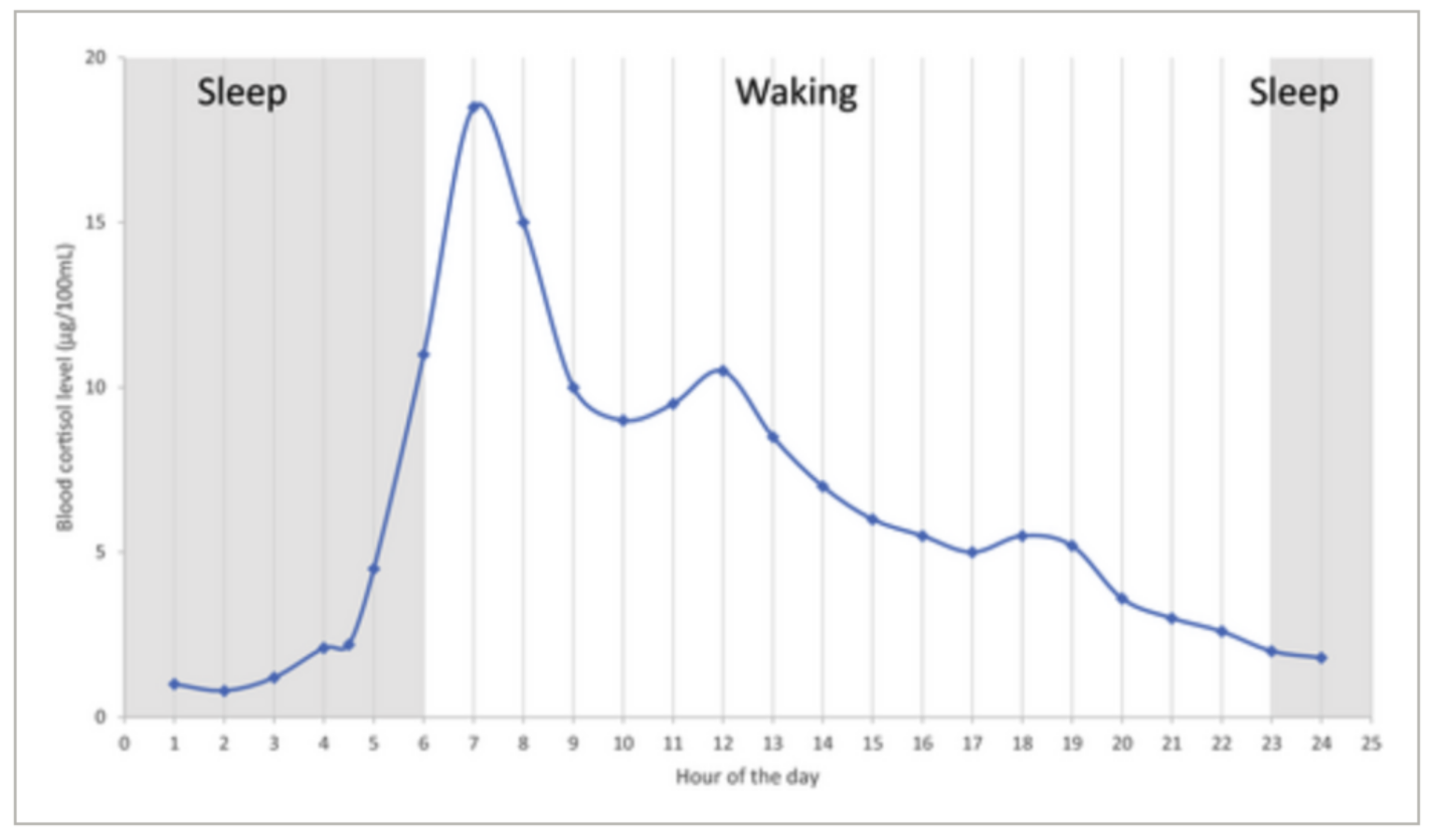
Moreover, cell phones adversely affect mental health, psychological and physiological well-being. HCPUs experience more depression, loneliness, and mood disorders (Daniyal et al., 2022). Cell phones stimulate and distract the brain, disturbing sleep patterns and possibly causing sleep deprivation (Eyvazlou et al., 2016). Cortisol, a stress hormone, increases the amount of glucose in the bloodstream, impacting energy levels (Afifi et al., 2018). Cortisol levels peak in the morning and slowly decrease thereafter as the day continues (Figure 1). However, as sleep disruptions increase, cortisol decreases, ultimately causing burnout. The Fear of Missing Out (FOMO) also increases cortisol, causing disruptions to routine function (Matthes et al., 2023). Ultimately, sleep deprivation and FOMO cause prolonged elevated cortisol levels, decreasing mental health through increasing depression, loneliness, and mood disorders.

Skepticism on whether cell phone radiation is harmful arose when the wireless phone was introduced. However, studies have confirmed that cell phone radiation has a negative effect on physical health. One study examined the effect of cell phone radiation for assorted times and distances on hydatid cyst protoscolices (a type of parasite larvae), and the longer or closer they were placed to the radiation source, the higher their mortality rate rose (Soleimani et al., 2020). Figure 2 displays a list of cell phones with the highest wireless radiation. Therefore, cell phone radiation exists; nonetheless, its harm to humans remains a mystery.

Cell phones have significantly impacted society, allowing humanity to advance to heights that once seemed impossible. However, ignoring the harmful result of cell phone use on our physical and mental well-being isn’t an option. The current trend of increasing physical, psychological and physiological side effects due to cell phone usage implies a desperate course of action is needed. Further efforts must be taken to ensure that cell phone usage is limited and that more active and healthy forms of entertainment are encouraged as alternatives.
References
Afifi, T.D., Zamanzadeh, N., Harrison, K. and Acevedo Callejas, M., 2018. The impact of media and technology use on stress (cortisol) and inflammation (interleukin IL-6) in fast paced families. Computers in Human Behavior, [online] 81, pp.265–273. Available at: <http://libaccess.mcmaster.ca/login?url=https://search.ebscohost.com/login.aspx?direct=true&db=cin20&AN=127286126&site=ehost-live&scope=site> [Accessed 11 Jan. 2024].
Anon 2022. What are the top products of Technology? [online] Simplilearn.com. Available at: <https://www.simplilearn.com/products-of-technology-article> [Accessed 11 Jan. 2024].
Bergman, M., 2023. Social Media and physical health: What’s the relationship? [online] Social Media Victims Law Center. Available at: <https://socialmediavictims.org/effects-of-social-media/physical-health/#:~:text=Common%20problems%20include%20but%20aren,vision%20difficulties%2C%20and%20eye%20strain> [Accessed 11 Jan. 2024].
Daniyal, M., Javaid, S.F., Hassan, A. and Khan, M.A., 2022. The relationship between cellphone usage on the physical and mental wellbeing of University Students: A cross-sectional study. International Journal of Environmental Research and Public Health, [online] 19(15). Available at: <https://www.ncbi.nlm.nih.gov/pmc/articles/PMC9368281/> [Accessed 11 Jan. 2024].
Eyvazlou, M., Zarei, E., Rahimi, A. and Abazari, M., 2016. Association between overuse of mobile phones on quality of sleep and general health among occupational health and Safety Students. Chronobiology International, [online] 33(3), pp.293–300. Available at: <https://www-webofscience-com.libaccess.lib.mcmaster.ca/wos/biosis/full-record/BIOSIS:PREV201600355175> [Accessed 11 Jan. 2024].
Jones, C. and Gwenin, C., 2020. Cortisol level dysregulation and its prevalence—is it nature’s alarm clock? Physiological Reports, [online] 8(24). Available at: <https://physoc.onlinelibrary.wiley.com/doi/10.14814/phy2.14644> [Accessed 11 Jan. 2024].
Loebis, R., Subakti Zulkarnain, B. and Zahra, N., 2021. Correlation between the exposure time to mobile devices and the prevalence of evaporative dry eyes as one of the symptoms of computer vision syndrome among senior high school students in East Java, Indonesia. Journal of Basic and Clinical Physiology and Pharmacology, [online] 32(4), pp.541–545. Available at: <http://libaccess.mcmaster.ca/login?url=https://search.ebscohost.com/login.aspx?direct=true&db=cin20&AN=151215557&site=ehost-live&scope=site> [Accessed 11 Jan. 2024].
Matthes, J., Stevic, A., Koban, K., Thomas, M.F., Forrai, M. and Karsay, K., 2023. Fear of missing out, reflective smartphone disengagement, and loneliness in late adolescents. Cyberpsychology, Behavior, and Social Networking, [online] 26(10), pp.731–738. Available at:<http://libaccess.mcmaster.ca/login?url=https://search.ebscohost.com/login.aspx?direct=true&db=cin20&AN=172969859&site=ehost-live&scope=site> [Accessed 11 Jan. 2024].
McCarthy, N., 2018. Which smartphones emit the most radiation? [infographic]. [online] Forbes. Available at: <https://www.forbes.com/sites/niallmccarthy/2018/03/01/which-smartphones-emit-the-most-radiation-infographic/?sh=76aba6a61b04> [Accessed 11 Jan. 2024].
Soleimani, H., Hajihossein, R. and Eslamirad, Z., 2020. Mobile phone radiation: Its efficacy as protoscolicidals. Turkish Journal of Parasitology, [online] 44(4), pp.203–206. Available at: <http://libaccess.mcmaster.ca/login?url=https://search.ebscohost.com/login.aspx?direct=true&db=cin20&AN=147523089&site=ehost-live&scope=site> [Accessed 11 Jan. 2024].