Saunas are definitely very relaxing, however what exactly are their health benefits? Scientific research suggests that exposure to high heat in a sauna can produce several physiological responses that positively affect cardiovascular health, detoxification processes, and overall well-being (Henderson et al. 2021). Evidence from systematic reviews indicates that repeated sauna use may function as a form of whole-body thermotherapy which can trigger beneficial adaptations similar to those produced by moderate physical exercise.
One of the most noted benefits of sauna use is its impact on the cardiovascular system. During sauna exposure, the body experiences a significant increase in skin and core temperature, which activates thermoregulatory mechanisms controlled by the hypothalamus and central nervous system (Hussain and Cohen 2018). This process stimulates the autonomic nervous system and leads to increased heart rate, cardiac output, and skin blood flow. These responses are comparable to those experienced during moderate physical activity. As a result, regular sauna bathing may improve circulation and vascular function while helping regulate blood pressure (figure 1). Studies included in a systematic review of dry sauna interventions also report improvements in conditions such as chronic heart failure, peripheral arterial disease, and other cardiovascular disorders (Henderson et al. 2021). Improvements in walking distance, reduced blood pressure, and enhanced endothelial function have been observed in individuals undergoing repeated sauna therapy. These findings suggest that sauna bathing may provide a supportive therapy for cardiovascular health, particularly for individuals who have difficulty performing regular exercise.
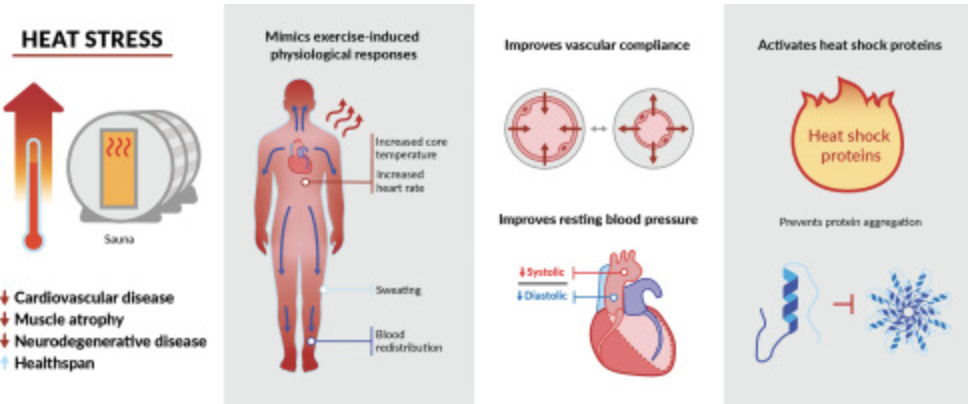
Figure 1. The graphic above depicts all the physiological effects and health benefits of sauna bathing regularly (Patrick and Johnson 2021).
On a cellular level, exposure to heat stress stimulates the production of heat shock proteins which help protect cells from damage and support protein repair mechanisms (Hu et al. 2022). In addition, sauna bathing has been associated with increased nitric oxide availability, reduced oxidative stress, and decreased inflammation pathways in the body (Henderson et al. 2021). These physiological responses contribute to improved endothelial function and better metabolic regulation, including increased insulin sensitivity. Such adaptations may explain why regular sauna use is linked to improved metabolic health and reduced risk of chronic diseases.
Another proposed health benefit of sauna use involves detoxification through sweating. Sweat glands help excrete toxins and heavy metals from the body. Research examining sweat composition has shown that toxic elements such as arsenic, cadmium, lead, and mercury can be excreted through perspiration (Sears et al. 2012). In some cases, concentrations of these metals in sweat were found to exceed levels measured in blood plasma or urine – particularly in individuals with higher exposure to these substances. This suggests that sweating induced by sauna bathing may also contribute to the elimination of harmful environmental contaminants.
Sauna bathing offers multiple potential health benefits by stimulating cardiovascular responses, promoting cellular protective mechanisms, and supporting detoxification through sweating. While further high-quality research is still needed to determine optimal sauna protocols and confirm long-term outcomes, current findings indicate that sauna bathing can be a valuable lifestyle practice for enhancing physical and mental well-being.
References
“Heat Shock Proteins: Biological Functions, Pathological Roles, and Therapeutic Opportunities – PMC.” n.d. Accessed March 9, 2026. https://pmc.ncbi.nlm.nih.gov/articles/PMC9345296/.
Henderson, Kaemmer N., Lauren G. Killen, Eric K. O’Neal, and Hunter S. Waldman. 2021. “The Cardiometabolic Health Benefits of Sauna Exposure in Individuals with High-Stress Occupations. A Mechanistic Review.” International Journal of Environmental Research and Public Health 18 (3): 1105. https://doi.org/10.3390/ijerph18031105.
Hussain, Joy, and Marc Cohen. 2018. “Clinical Effects of Regular Dry Sauna Bathing: A Systematic Review.” Evidence-Based Complementary and Alternative Medicine : eCAM 2018 (April): 1857413. https://doi.org/10.1155/2018/1857413.
Patrick, Rhonda P., and Teresa L. Johnson. 2021. “Sauna Use as a Lifestyle Practice to Extend Healthspan.” Experimental Gerontology 154 (October): 111509. https://doi.org/10.1016/j.exger.2021.111509.
Sears, Margaret E., Kathleen J. Kerr, and Riina I. Bray. 2012. “Arsenic, Cadmium, Lead, and Mercury in Sweat: A Systematic Review.” Journal of Environmental and Public Health 2012: 184745. https://doi.org/10.1155/2012/184745.


Leave a Reply
You must be logged in to post a comment.