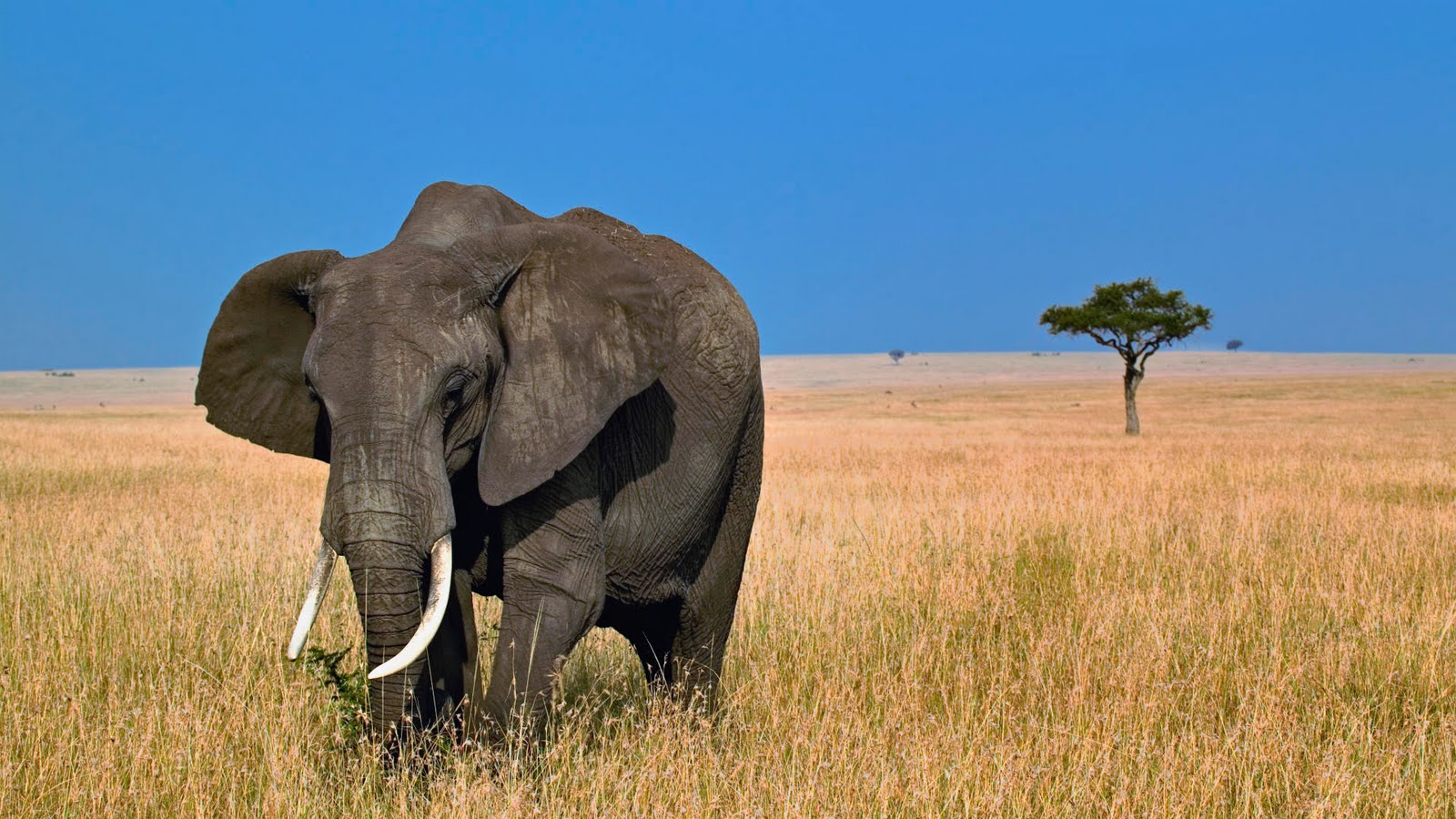
As ecosystem engineers, humans have not only altered, but deformed the ecological dynamics of natural environments. The innocent victims of these unsustainable practices are subject to reap the consequences of unethical behaviour. African elephants, in particular, are an extant manifestation of this crisis; what was once a unique and distinguishing feature of these majestic creatures is becoming a rarity, and humans are undeniably culpable. Elephant tusks are a highly coveted commodity and the unfortunate motive behind poaching and human harvest of wild populations (Allendorf and Hard, 2009). The ivory obtained from these tusks is illegally traded for profit and production of high-quality consumer products, inducing a thriving trend on illegal tusk harvesting (Raubenheimer and Miniggio, 2016). This ivory harvesting increases the pressure on the African elephant genome, and is the root promoter for the phenotypic shift to tusklessness, which acts as a biological advantage against unnatural forces (Raubenheimer and Miniggio, 2016).
Harvesting of wild elephant populations imposes human-induced evolution of morphological, behavioral, and physiological traits that may compromise natural or sexual selection. This prompts a variety of direct and indirect genetic effects that influence population viability (Chiyo, Obanda and Korir, 2015). The non-random victimization of tusk-bearing elephants is a form of selective morphological removal that provokes gene pool changes involving the selected phenotype (Allendorf and Hard, 2009). Since individuals bearing the most desirable traits are harvested, elephants possessing the less desirable traits, such as tusklessness, are left to reproduce and contribute to the gene pool of future generations (Figure 1) (Maggiacomo, Poole and Smit, 2018). Therefore, harvest of wild elephant populations increases the frequency of less desired phenotypes in the genetic environment (Allendorf and Hard, 2009).

Figure 1: These charts depict the trends in tusklessness prevalence, highlighting the decrease in tusk-bearing females in Africa, as it offers a biological advantage in the face of increasing poaching pressure (Maggiacomo, Poole and Smit, 2018).
Consequently, over time, natural selection works to eliminate the trait that decreases the fitness of the elephant population in response to poaching, in this case, the possession of tusks. The changes that occur within the exploited population are consequences of human selectivity (Allendorf and Hard, 2009). However, humans act to their own detriment because unintended selection through exploitation imperils sustainable harvest by reducing the frequency of phenotypes that are valued by humans (Allendorf and Hard, 2009).
Evidently, there are diverse effects associated with the increase in tuskless African elephants that exceed simple morphological alterations. For instance, the removal of this phenotype disrupts the natural social hierarchy and discipline that exists among elephant herds, which requires months to re-establish (Raubenheimer and Miniggio, 2016). Furthermore, the percentage of tuskless elephants is evidence of the pressure induced by ivory harvesting within a population. Specifically, in the Kruger National Park where hunting is forbidden, about 3% of elephants are tuskless, compared to 10 % in Mana Pools in Zimbabwe and over 70 % in the Addo Elephant Park in the Eastern Cape (Raubenheimer and Miniggio, 2016). The high percentage of tusklessness in the Addo elephant population is due to intense ivory harvesting during the nineteenth century when the elephants first interacted with humans who possessed rifles and profit-making interests (Raubenheimer and Miniggio, 2016). Nevertheless, this genetic shift is the only spark of hope for the enduring survival of African elephants since the tuskless individuals are unattractive to poachers (Raubenheimer and Miniggio, 2016).

As poaching pressure augments and harvesting continues, genetic change, such as alteration of population subdivision, loss of genetic variation, and selective genetic changes are probable consequences, leading to a complex system of repercussions (Figure 2) (Allendorf et al., 2008). This can also impact sexual selection, as harvesting targets individuals with characteristics, such as large, hefty tusks, thus removing them from the breeding pool and preventing their contribution to the genetics of the filial generation (Allendorf and Hard, 2009). Acting in tandem with natural selection, sexual selection can work to favour the tuskless individuals in order to decrease vulnerability to poaching (Allendorf and Hard, 2009).
The intimate and delicate connection between nature and anthropogenic forces merits recognition, balance, and mindfulness. These two complex systems are inherently intertwined and interdependent, therefore the evolutionary effects of harvest on the genetics and sustainability of wild elephant populations must be mitigated through rigid law enforcement. Human‐induced environmental changes and poaching of wild populations act as agents of contemporary evolution that must be regulated in order to shift the reign back to the natural promotion of phenotypic change and preserve the ivory-bearing gene.
Works Cited
Allendorf, F., England, P., Luikart, G., Ritchie, P., and Ryman, N. 2008. Genetic Effects of Harvest on Wild Animal Populations. Trends in Ecology and Evolution, [e-journal] 23(6), pp.327–37. https://doi.org/10.1016/j.tree.2008.02.008
Allendorf, F., and Hard, J. 2009. Human-Induced Evolution Caused by Unnatural Selection Through Harvest of Wild Animals. [e-book] Washington: National Academies Press (US). Available at: <https://www.ncbi.nlm.nih.gov/books/NBK219730/> [Accessed 3 March 2019].
Chiyo, P.I., Obanda, V. and Korir, D.K., 2015. Illegal tusk harvest and the decline of tusk size in the African elephant. Ecology and Evolution, [e-journal] 5(22), pp.5216–5229. https://doi.org/ 10.1002/ece3.1769
Maggiacomo, J., Poole, J., and Smit, J., 2018. Under poaching pressure, elephants are evolving to lose their tusks. The National Geographic. [image] Available at: <https://www.nationalgeographic.com/animals/2018/11/wildlife-watch-news-tuskless-elephants-behavior-change/> [Accessed 3 March 2019].
Raubenheimer, E.J. and Miniggio, H.D., 2016. Ivory Harvesting Pressure on the Genome of the African Elephant: A Phenotypic Shift to Tusklessness. Head and Neck Pathology, [e-journal] 10(3), pp.332–335. https://doi.org/ 10.1007/s12105-016-0704-y