If you visit Lake Texcoco in Mexico or Lake Kosorum in west-central Africa, you might see a layer of blue-green algae at the surface of the water (AlFadhy et al. 2022). This cyanobacteria consists of two species, Arthrospira maxima and Arthrospira platensis, that thrive in high alkaline, freshwater and sunny environments (Karkos et al. 2010). When dried, the cyanobacteria’s biomass is known as spirulina and has been harvested by the Indigenous peoples living in these areas for centuries. Today, spirulina may offer a potential treatment for those with allergies.
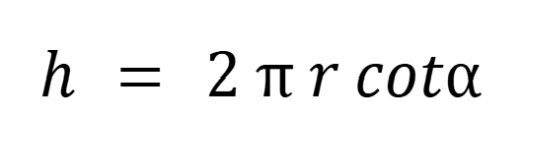
The Arthrospira cyanobacteria grow in a filamentous structure with trichomes, rows of cells, arranged in a helix (Vonshak 1997). Each trichome is enclosed in a thin sheath that resembles a net. During reproduction, a few cells spontaneously lyse to form biconcave discs, and the trichome fragments at these points to produce chains of two to four cells (Ciferri 1983). Each small chain multiplies through cell fission, extending into its own new helix with a diameter ranging from 30-70 μm (Vonshak 1997). Depending on the size of the diameter and the radius, the helix pitch or the height of one loop of the helix will vary accordingly (Equation 1).
The blue-green colour of the helix arises due to the presence of the phycocyanin pigment-protein complex in the cells, which is well-known for its health benefits in humans (Spinola et al. 2024). The compound inhibits inflammatory enzymes such as cyclooxygenase-2 and prevents the production of pro-inflammatory cytokines, proteins that cause swelling and tissue damage. In addition, polyunsaturated fatty acids including γ-linolenic acid are present which modulate immune system activity. Spirulina is also a source of Vitamin A, Vitamin E, iron and calcium. The high vitamin and mineral content may address nutritional deficiencies, indirectly regulating cytokine production and antibody response (Karkos et al. 2010).
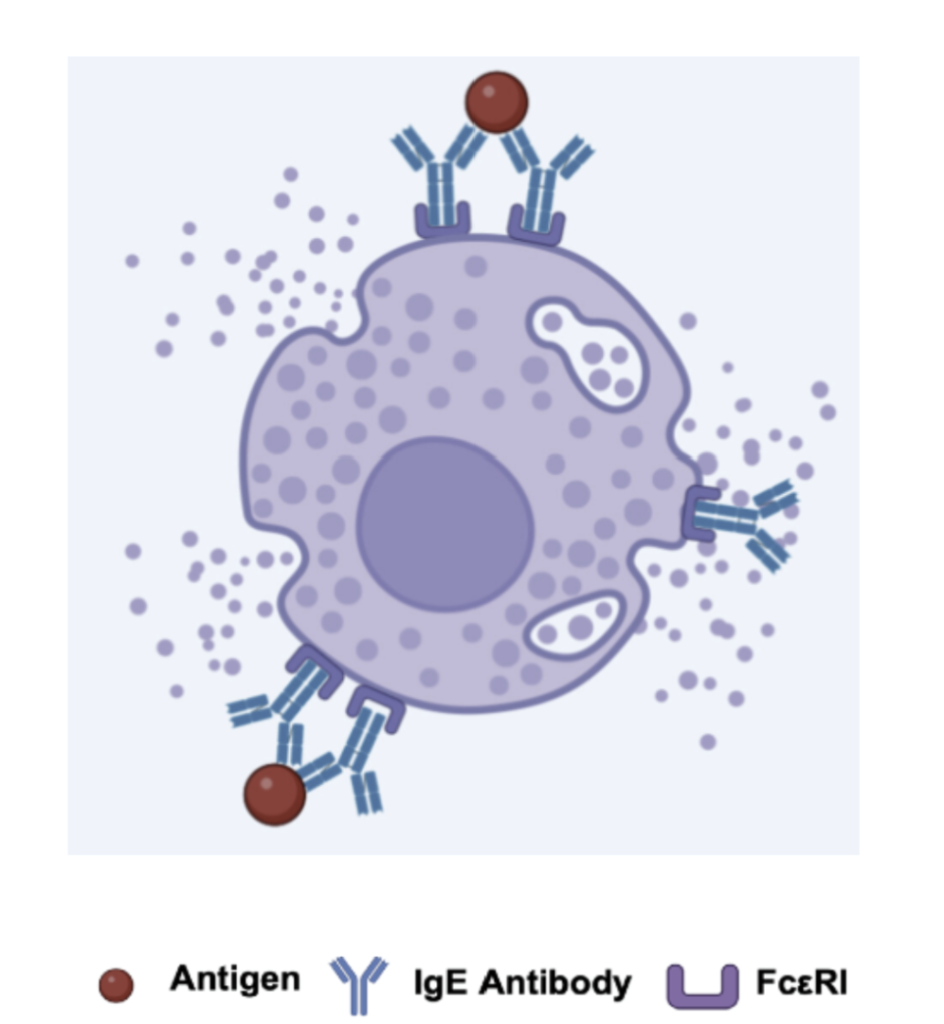
Given spirulina’s anti-inflammatory properties, researchers are exploring its potential for allergic rhinitis. This condition affects over 10% of the world’s population and is characterized by inflammation of the airways when exposed to allergens such as pet dander and pollen (Kakli & Riley 2016). Upon entry into the respiratory tract, the allergen triggers the production of IgE antibodies that bind to receptors found on the surface of basophils and mast cells (Figure 2) (Weber 2008). The allergen links two neighbouring antibodies, activating the cells to release chemicals such as histamines and prostaglandins. This leads to symptoms of nasal congestion, sneezing and watery eyes which patients have reported to affect their quality of sleep, work performance and school activities.
Spirulina has demonstrated promise as a treatment for this condition (Karkos et al. 2010). In a mouse model, spirulina prevented the release of histamine from mast cells. In a human trial, daily spirulina for 12 weeks reduced the cytokine levels by over 30%. Most importantly, over a 6 month period, patients consuming spirulina reported significantly reduced physical symptoms of allergic rhinitis.
Spirulina demonstrates the potential for natural products to be a source of anti-inflammatory treatment. Further research on spirulina may explore whether this algae can be beneficial for other allergies or auto-immune conditions.
References
AlFadhly, Nawal K. Z., Nawfal Alhelfi, Ammar B. Altemimi, Deepak Kumar Verma, and Francesco Cacciola. 2022. “Tendencies Affecting the Growth and Cultivation of Genus Spirulina: An Investigative Review on Current Trends.” Plants 11 (22): 3063. https://doi.org/10.3390/plants11223063.
Ciferri, O. 1983. “Spirulina, the Edible Microorganism.” Microbiological Reviews 47 (4): 551–78. https://doi.org/10.1128/mr.47.4.551-578.1983.
Kakli, Hasan A., and Timothy D. Riley. 2016. “Allergic Rhinitis.” Primary Care: Clinics in Office Practice, Allergy Primer for Primary Care, vol. 43 (3): 465–75. https://doi.org/10.1016/j.pop.2016.04.009.
Karkos, P. D., S. C. Leong, C. D. Karkos, N. Sivaji, and D. A. Assimakopoulos. 2011. “Spirulina in Clinical Practice: Evidence-Based Human Applications.” Evidence-Based Complementary and Alternative Medicine : eCAM 2011: 531053. https://doi.org/10.1093/ecam/nen058.
Levick, Scott P. 2025. “IgE and Cardiac Disease.” Acta Physiologica 241 (2): e14281. https://doi.org/10.1111/apha.14281.
Spínola, Maria P., Ana R. Mendes, and José A. M. Prates. 2024. “Chemical Composition, Bioactivities, and Applications of Spirulina (Limnospira Platensis) in Food, Feed, and Medicine.” Foods 13 (22): 3656. https://doi.org/10.3390/foods13223656.
Vonshak, Avigad. 1997. Spirulina Platensis Arthrospira: Physiology, Cell-Biology And Biotechnology. CRC Press.
Weber, Richard W. 2008. “Allergic Rhinitis.” Primary Care: Clinics in Office Practice, Allergy, Asthma, and Immune Deficiency, vol. 35 (1): 1–10. https://doi.org/10.1016/j.pop.2007.09.001.


Leave a Reply
You must be logged in to post a comment.