Many people take for granted their ability to freely walk, move and experience the world without pain holding them back. However, individuals with neurological conditions experience the world around them with additional challenges. Multiple sclerosis(MS) is a chronic autoimmune condition that mainly affects the central nervous system(CNS)(Tafti et al. 2024). Essentially, the immune system causes degradation of the myelin sheath, leading to symptoms such as vision impairments, bladder dysfunction and muscle weakness (Tafti et al. 2024).
The current treatment options focus on controlling and alleviating physical symptoms of MS. Disease-modifying treatments (DMTs) are a popular pharmaceutical treatment option that are known to reduce the amount of MS disease and can slow its progression(Minen and Karceski 2011). However, they have certain limitations. The current drugs target the peripheral immune mechanisms of MS rather than on the CNS(Machado and Valado 2026). Thus, their ability to stop actual progression of the disease is rather weak. DMTs also come with adverse effects and risks such as menstrual disorders, alopecia and rashes(Robertson and Moreo 2016).
These limitations display the need for alternative treatments that address the underlying mechanisms of MS rather than solely managing the symptoms. One promising option is autologous hematopoietic stem cell transplantation(aHSCT), which involves deriving a patient’s own hematopoietic stem cells(HSCs) to “reset” the immune system by removing pathogenic cells(Kazmi et al. 2025). During aHSCT, the patient’s peripheral whole blood is collected, and the white blood cells are separated several weeks or months before the procedure(Basharat and Loshak 2021). Roughly 10 days before the transplant, the patient undergoes chemotherapy with multiple other regimens to prepare the immune system.
The British Society of Blood and Marrow Transplantation and Cellular Therapy(BSBMTC) conducted a retrospective analysis that evaluated aHSCT at 14 different centres between 2002 and 2023. The study included 364 participants with MS, with 58% of them being female(Kazmi et al. 2025). Stem cell mobilization was mainly performed using cyclophosphamide, a chemotherapy drug, followed by G-CSF, another drug. The results showed that the progression-free survival (PFS) across all the patients was 83.5% at 2 years post-transplant and 62.4% at 5 years post-transplant. Relapse-remitting MS shows the highest PFS rate over the five years, as displayed by Figure 1, with roughly 70% of relapse-remitting individuals remaining MS-free over the time period(Kazmi et al. 2025).
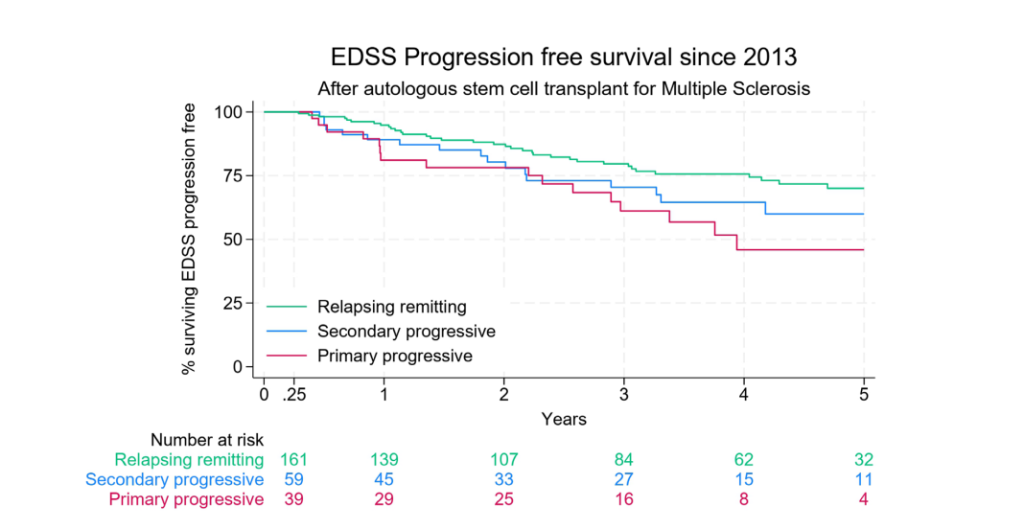
Figure 1: Kaplan-Meier graph displaying the progression-free survival by the subtype of MS(Kazmi et al. 2025)
Despite its promising results, aHSCT still carries some risks and cannot be considered a complete cure for MS. Since this procedure does involve using chemical regimens, there is a risk of respiratory and urinary tract infections(UTIs) along with gastrointestinal damage(Basharat and Loshak 2021). There is also the concern of infertility; however, it varies based on the type of treatment and patient characteristics(Basharat and Loshak 2021). Overall, further research is required to establish aHSCT as a safe and effective treatment for MS.
References
Basharat, Sinwan, and Hannah Loshak. 2021. “Autologous Hematopoietic Stem Cell Transplantation for the Treatment of Multiple Sclerosis.” Canadian Journal of Health Technologies 1 (7). https://doi.org/10.51731/cjht.2021.101.
Kazmi, Majid, Paolo A. Muraro, Varun Mehra, et al. 2025. “Autologous Haematopoietic Stem Cell Transplantation for Multiple Sclerosis in the UK : A 20‐year Retrospective Analysis of Activity and Haematological Outcomes from the British Society of Blood and Marrow Transplantation and Cellular Therapy ( BSBMTCT ).” British Journal of Haematology 207 (3): 977–91. https://doi.org/10.1111/bjh.20199.
Machado, Carolina, and Ana Valado. 2026. “Therapeutic Strategies in Multiple Sclerosis: A Systematic Review of Current and Emerging Approaches.” Exploration of Neuroprotective Therapy 6 (February): 1004138. https://doi.org/10.37349/ent.2026.1004138.
Minen, Mia T., and Steven Karceski. 2011. “Multiple Sclerosis and Disease-Modifying Therapies.” Neurology 77 (4): e26–e26. https://doi.org/10.1212/WNL.0b013e318229e6ca.
Robertson, Derrick, and Natalie Moreo. 2016. “Disease-Modifying Therapies in Multiple Sclerosis: Overview and Treatment Considerations.” Federal Practitioner 33 (6): 28–34.
Tafti, Dawood, Moavia Ehsan, and Kathryn L. Xixis. 2024. “Multiple Sclerosis.” In StatPearls. StatPearls Publishing. http://www.ncbi.nlm.nih.gov/books/NBK499849/.


Leave a Reply
You must be logged in to post a comment.