Love is a beautiful and complex feeling that seems incapable of being described from an enlightenment perspective, but in reality, it is a result of microscopic molecular processes occurring within you and, literally, altering your brain chemistry.
To begin, feelings of romantic attachment and attraction are a result of many neurochemicals and their specific roles in emotional regulation (Babková and Repiská 2025, 1). For instance, cortisol is a large part of love, particularly in the beginning stages of a relationship where fear of rejection is prominent and the feeling of “butterflies in your stomach” emerges. Cortisol is a glucocorticoid (a class of steroid hormone) regulated by the hypothalamic–pituitary–adrenal axis (HPA) and is released as a stress response (Babková and Repiská 2025, 3). New relationships, although exciting, are a key stressor and alter an individual’s behaviour and biological stress response and therefore raise the individual’s average cortisol levels.
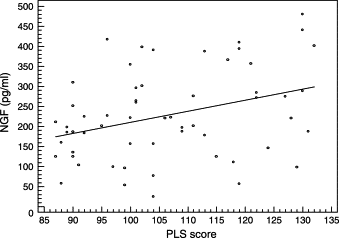
Other molecules involved in romantic attraction are neurotrophins, which are involved in neuronal survival in both the central and peripheral nervous systems (Emanuele et al. 2006, 291). A particular type of neurotrophin is nerve growth factor (NGF), which has been observed to be more present in new couples (227 pg/mL) versus singles (149 pg/mL). Additionally, long lasting couples with a high passionate love scale (PLS)- the amount of love between individuals in a relationship as measured by survey answers- also displayed a high NGF (Figure 1). NGF is responsible for new emotional growth due to increased neural plasticity (Chan et al. 2001, 14662). As a person experiences the anticipation and uncertainty of forming a romantic connection, their brain is more engaged and involved in emotional learning and growth. NGF is the physiological driver of this process (Chan et al. 2001, 14661).
Additionally, dopamine gets people hooked romantically, serotonin makes it hard to stop thinking about your significant other, and oxytocin is affiliated with trust and emotional connection (Esch and Stefano, 2005, 177). These all play a role in the extremely complex yet extraordinary feeling of being in love. If we investigate these chemical messengers from a psychological perspective, we will consider the emotional connection and pleasure-seeking behaviour between couples. But from a chemical and biological view, these external behaviours are a result of internal processes. Specifically, microscopic molecules in your body and their intricate chemical structure.
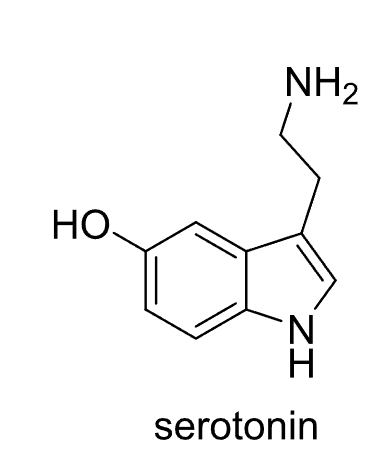
An interesting chemical structure that plays a romantic role is serotonin (5-hydroxytryptamine, 5-HT) – a type of neurotransmitter synthesized from the amino acid tryptophan (Trybała et al. 2026, 9789). The signaling of serotonin occurs at the active sites of presynaptic neurons and when released, causes a series of mood regulations. The 5-HT1 receptors are the result of this, as they inhibit adenylyl cyclase and hyperpolarize neurons, which signal for excitatory reactions and moods. Some studies have shown that couples have lower serotonin levels, making it harder to regulate their excitement around their partner or their constant thoughts surrounding them (Babková and Repiská 2025, 4). This is due to their chemical structure and “lock and key” fit to their receptors (figure 2).
Overall, romance is influenced by the combined affects of neurotrophins, neurotransmitters, and hormones, which results in emotional and behavioural responses like missing your partner’s presence, craving intimacy and physical closeness, and deeply caring for their well-being. When we consider the great effect that these tiny molecules have on everything we as humans do, it’s easy to see why love is such a difficult feeling to describe.
References
Babková J and Repiská G. 2025. “The Molecular Basis of Love.” International Journal of Molecular Sciences 26 (4):1533. https://doi.org/10.3390/ijms26041533
Chan, Jonah R., José Miguel Cosgaya, Yong Jian Wu, and Eric M. Shooter. 2001. “Neurotrophins Are Key Mediators of the Myelination Program in the Peripheral Nervous System.” Proceedings of the National Academy of Sciences 98 (25): 14661–68. https://doi.org/10.1073/pnas.251543398.
Emanuele, Enzo, Pierluigi Politi, Marika Bianchi, Piercarlo Minoretti, Marco Bertona, and Diego Geroldi. 2006. “Raised Plasma Nerve Growth Factor Levels Associated with Early-Stage Romantic Love.” Psychoneuroendocrinology 31 (3): 288–94. https://doi.org/10.1016/j.psyneuen.2005.09.002.
Esch, Tobias and Stefano, George. 2005. “The Neurobiology of Love.” Neuroendocrinology Letters 26 (3): 176-92.
Martínez-Afani, Darío, Soares, Breno, Mella-Raipán, Jaime et al. 2026. “N -Benzyl-Tryptamine Derivatives as Serotonin 5-HT2 Receptor Ligands: Synthesis and Structure-Affinity/Activity Relationships.” ACS Omega 11 (20): 29638–53. https://doi.org/10.1021/acsomega.5c13162.
Trybała, Wojciech, Katarzyna Grychowska, Natalia Malikowska-Racia, Agnieszka Nikiforuk, Piotr Popik, and Paweł Zajdel. 2026. “Dually Acting Ligands Targeting Serotonin Receptors: Implications in CNS Disorders.” Journal of Medicinal Chemistry 69 (9): 9789–814. https://doi.org/10.1021/acs.jmedchem.5c03094.


Leave a Reply
You must be logged in to post a comment.