Genocide is not history, it is still happening today. The Uyghur Muslims in Xinjiang China are subjected to forced sterilizations, surveillance in re-education camps, and sexual abuse (The Associated Press 2020; Maizland 2022). While science perturbates genocide, from the psychology driving the perpetrators to the scientific advancement that help them with their oppression, it can also be used to prevent genocide through mapping software.
Genocide begins with perpetrators, however, attributing their behaviour to personality and preferences alone is a fundamental attribution error (Suedfeld 2000). The desire for material gains or removing competition, all serve as motives to exacerbate intergroup hostility. China’s oppression is their way to eliminate any threats to China’s territorial integrity and government (Maizland 2022). They want autonomy and for other religions to conform to their atheist party. When leaders’ narrative is based on intergroup competition, the consequent us-vs-them mentality that arises produces hostility and aggression (Suedfeld 2000). Evolutionary psychology suggests, ingroup-outgroup biases lead to the desire to maximize survival of the group’s own genes and reproductive fitness, leading to increased hostility. The mentality where measures to prevent the presence of “alien” genes in the gene pool, makes participating in genocide easy for the perpetrators (Suedfeld 2000).
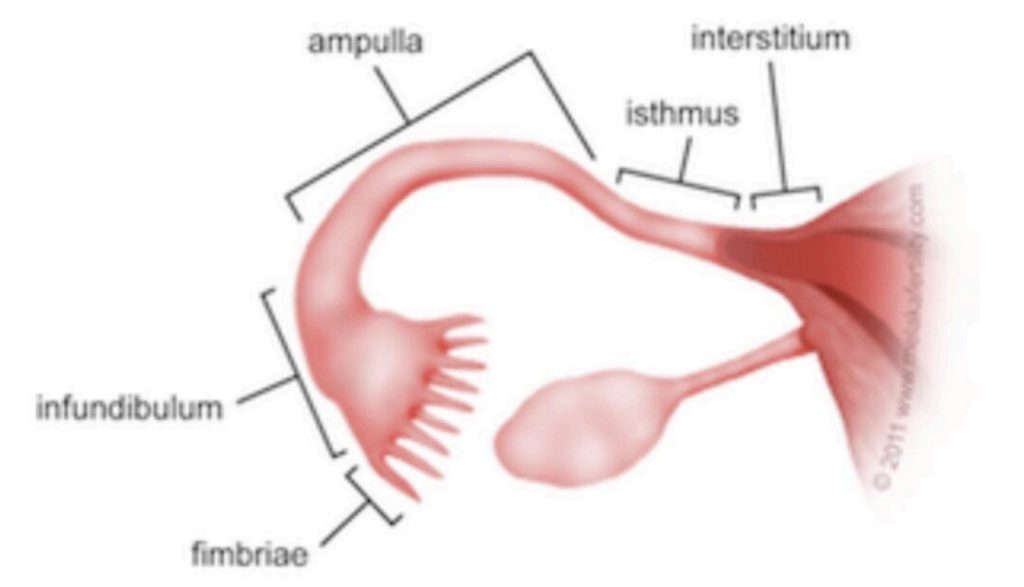
Often, sterilization serves as an effective tool for genocide. The highly invasive and unethical surgical sterilization, tubal ligation, is when non-consensual sterilizations are forced upon women through threats, like how Uyghur Muslims were threatened into the procedure (The Associated Press 2020). In this procedure, the fallopian tubes, reproductive organs responsible for transporting sperm to the ovum and the now fertilized egg to the uterus, are either blocked or removed (Marino et al. 2024). The segment of the fallopian tubes that is cut is the isthmus, the region between the uterus and the segment where the sperm typically fertilizes the ovum, the ampulla (Figure 1). Even if the sperm enters the fallopian tube, it won’t reach the region of fertilization. Consequently, during the end of the Secretory Phase of the menstrual cycle, in spite of the presence of sperm, the lack of fertilized ovum implantation leads to a decline in hormones levels needed for pregnancy and natural menstruation proceeds (Thiyagarajan, Basit, and Jeanmonod 2022).
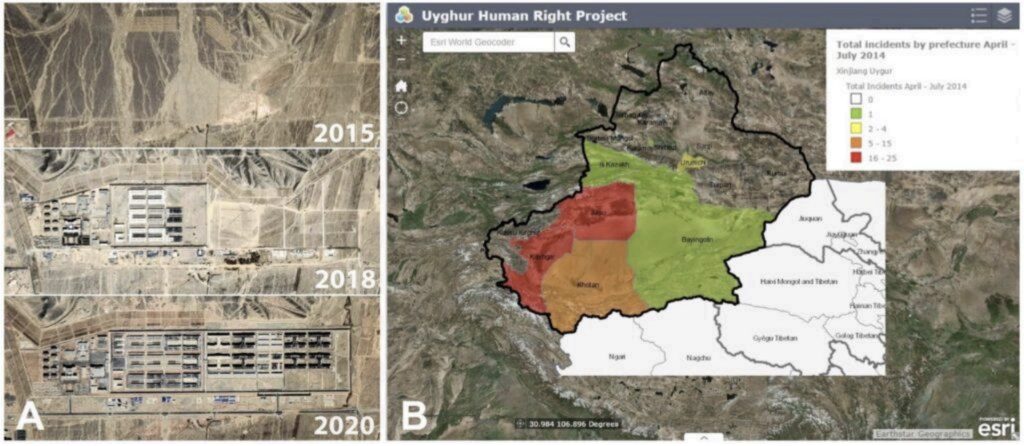
Sometimes understanding that genocide is happening is hard when we are so far removed from where it’s occurring. Geographical Information Systems (GIS) technology and virtual globes, like Google Earth, can provide better “situational awareness” for government officials and humanitarian NGOs (Levinger 2009). Through documenting real-time data of atrocities and violations, GIS provides concrete evidence to rival the claims by the regimes that perpetrate genocidal violence and attempt to hide their crimes (Figure 2). Images are known to be effective in mobilizing people worldwide and the information that GIS and virtual globes provide can serve advocacy efforts (Levinger 2009). Further, civilians can use the information for better conflict analysis and take active measures to protect themselves from impending attacks.
Understanding the complexity of genocide will allow us to predict a genocide before it happens, and to see when it is occurring even when the perpetrators try to hide it. When we understand what drives genocide, we may get closer to stopping it.
Resources
BBC News. 2013. “Who Are the Uyghurs and Why Is China Being Accused of Genocide?” BBC News, April 24, 2013, sec. China. https://www.bbc.com/news/world-asia-china-22278037.
Fay, Greg. 2016. “Mapping Tool Showcases Research on Incidents in the Uyghur Homeland.” GISCorps (blog). January 30, 2016. https://www.giscorps.org/uyghur_159/.
Levinger, Matthew. 2009. “Geographical Information Systems Technology as a Tool for Genocide Prevention: The Case of Darfur.” Space and Polity 13 (1): 69–76. https://doi.org/10.1080/13562570902781249.
Maizland, Lindsay. 2022. “China’s Repression of Uyghurs in Xinjiang | Council on Foreign Relations.” Council on Foreign Relations. September 22, 2022. https://www.cfr.org/backgrounder/china-xinjiang-uyghurs-muslims-repression-genocide-human-rights.
Marino, Sarah, Christinne D. Canela, Suzanne M. Jenkins, and Noor Nama. 2024. “Tubal Sterilization.” In StatPearls. Treasure Island (FL): StatPearls Publishing. http://www.ncbi.nlm.nih.gov/books/NBK470377/.
North Carolina Center for Reproductive Medicine. 2012. “Fallopian Tube Anatomy.” NCCRM. December 12, 2012. https://www.nccrm.com/getting-started/understanding-infertility-conditions/fallopian-tube-anatomy/.
Suedfeld, Peter. 2000. “Reverberations of the Holocaust Fifty Years Later: Psychology’s Contributions to Understanding Persecution and Genocide.” Canadian Psychology / Psychologie Canadienne 41 (1): 1–9. https://doi.org/10.1037/h0086853.
The Associated Press. 2020. “China Cuts Uighur Births with IUDs, Abortion, Sterilization.” AP News. June 29, 2020. https://apnews.com/article/ap-top-news-international-news-weekend-reads-china-health-269b3de1af34e17c1941a514f78d764c.
Thiyagarajan, Dhanalakshmi K., Hajira Basit, and Rebecca Jeanmonod. 2022. “Physiology, Menstrual Cycle.” In StatPearls. Treasure Island (FL): StatPearls Publishing. http://www.ncbi.nlm.nih.gov/books/NBK500020/.