Somewhere at the back of the fridge is a container that was supposed to be tomorrow’s lunch. The meal has been postponed, perhaps more than once. Keeping it cold buys time, but it does not put everything inside it on hold. Listeria monocytogenes, a bacterium that can cause foodborne illness, can continue growing at refrigeration temperatures (Edgcomb et al. 2000). It can take up unsaturated fatty acids from its surroundings and incorporate them into its cell membrane, helping maintain fluidity in the cold. Fatty acids available in food could therefore help the bacterium tolerate the cold environment inside of a fridge (Touche et al. 2023).
To understand that possibility, consider what cooling does to the membrane. Proteins embedded in the membrane help move substances into and out of the cell. Their functions depend partly on membrane fluidity, how freely its molecular components move. Membrane lipids contain fatty-acid tails that pack alongside one another. Cooling reduces their movement, making the membrane more rigid. Branched tails disrupt tight packing and help preserve fluidity. In Listeria, the branched fatty acid anteiso-C15:0 plays this role (Julotok et al. 2010). A cold-sensitive mutant, a genetically altered strain deficient in branched-chain fatty acids, had less fluid membranes than other strains. Supplying 2-methylbutyric acid, a molecule used to make these fatty acids, restored fluidity towards that of the other strains (Edgcomb et al. 2000). Taking up a compound used in fatty-acid production could therefore help restore membrane fluidity.
The next question is whether supplying these compounds also affects growth. Adding isoleucine, an amino acid used to produce anteiso-branched fatty acids, increased the proportion of anteiso-C15:0 and slightly stimulated growth at 10°C (Figure 1; Julotok et al. 2010). A later experiment supplied fatty acids themselves, which Listeria incorporated into its membrane. Unsaturated fatty acids, containing carbon-carbon double bonds, helped maintain fluidity and promoted growth at 5°C. The saturated fatty acids tested, which lack those double bonds, reduced fluidity and prevented growth at that temperature (Touche et al. 2023). The type of fatty acid available mattered. Unsaturated fatty acids offered no corresponding growth benefit at 37°C, supporting a role in compensating for cold stress rather than simply providing extra nutrients (Touche et al. 2023).
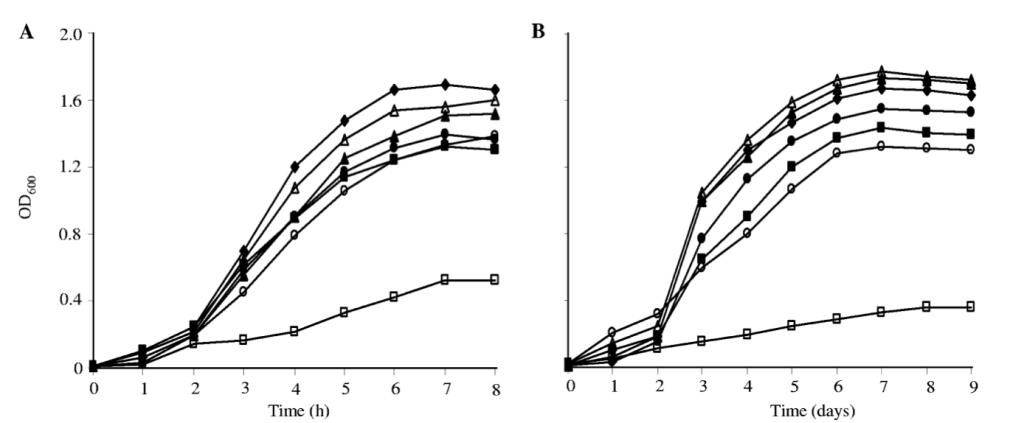
These findings suggest that food composition could influence refrigerated bacterial growth through its effects on membrane chemistry. They do not establish which foods would have that effect. The experiments used laboratory media, where supplied fatty acids may be more accessible than those within food, and responses varied between bacterial strains (Touche et al. 2023). Testing actual foods would help determine whether the same mechanism matters during storage. If it does, the food being preserved could also help bacteria withstand the cold meant to preserve it. Tomorrow’s lunch might be helping more than one organism get through the night.
References
Edgcomb, Michelle R., Samanthi Sirimanne, Brian J. Wilkinson, Drouin Pascal, and Morse, Reef (Philip D.II. 2000. “Electron Paramagnetic Resonance Studies of the Membrane Fluidity of the Foodborne Pathogenic Psychrotroph Listeria Monocytogenes.” Biochimica et Biophysica Acta (BBA) – Biomembranes 1463 (1): 31–42. https://doi.org/10.1016/S0005-2736(99)00179-0.
Julotok, Mudcharee, Atul K. Singh, Craig Gatto, and Brian J. Wilkinson. 2010. “Influence of Fatty Acid Precursors, Including Food Preservatives, on the Growth and Fatty Acid Composition of Listeria Monocytogenes at 37 and 10°C.” Applied and Environmental Microbiology 76 (5): 1423–32. https://doi.org/10.1128/aem.01592-09.
Touche, Cécile, Sarah Hamchaoui, Aurore Quilleré, Maud Darsonval, and Florence Dubois-Brissonnet. 2023. “Growth of Listeria Monocytogenes Is Promoted at Low Temperature When Exogenous Unsaturated Fatty Acids Are Incorporated in Its Membrane.” Food Microbiology 110 (April): 104170. https://doi.org/10.1016/j.fm.2022.104170.


Leave a Reply
You must be logged in to post a comment.