Two murders, six confessions, and mysteriously, the absence of any recollection of the crime in the minds of the accused (Cox, 2018). The Reykjavik Confessions, where solitary confinement was a constant for the accused during said period, serve as a prime example for extreme isolation and its effects. Despite there being no physical evidence, and all of them having unclear memories, all suspects confessed to, not only the disappearances, but murder of 2 people (Cox, 2018). Additional details of the case may be referred to here: BBC – The Reykjavik Confessions.
The primary focus of this post is on solitary confinement and how this leads to neurological changes that back up the Memory Distrust Syndrome (MDS) which is relatively new in the world of forensic psychology. This syndrome is when a person fails to recall the occurrence of an event and distrust their memory as a consequence, leading them to be very susceptible to others suggestions (van Bergen, Jelicic, & Merckelbach, 2008). Some causes for this syndrome that van Bergen, Jelicic, and Merckelbach mention, in relation to law enforcement, fall under the broad category of interrogation techniques, such as solitary confinement. In a situation like this, all social interaction is cut off and the only people the suspects see are the police investigators.
The danger of a situation like this is that social isolation on a much lower scale is already known to lead to many risks. This includes risks relevant in police investigations like poor cognitive function and higher risk for dementia (U.S. Department of Health and Human Services, 2021). The brain’s waves and changes in its electric charges can both be detected using an electroencephalogram (Johns Hopkins Medicine, n.d.). The peak alpha wave frequency is responsible for detecting changes in one’s cognitive ability where a higher frequency means better cognitive performance (Rathee, S. et al., 2020). It has been shown that a 120 day isolation period reduces this frequency and so one’s cognitive ability, like memory, is likewise reduced (Weber, J. et al., 2020). However, the peak alpha frequency was increased again after release.
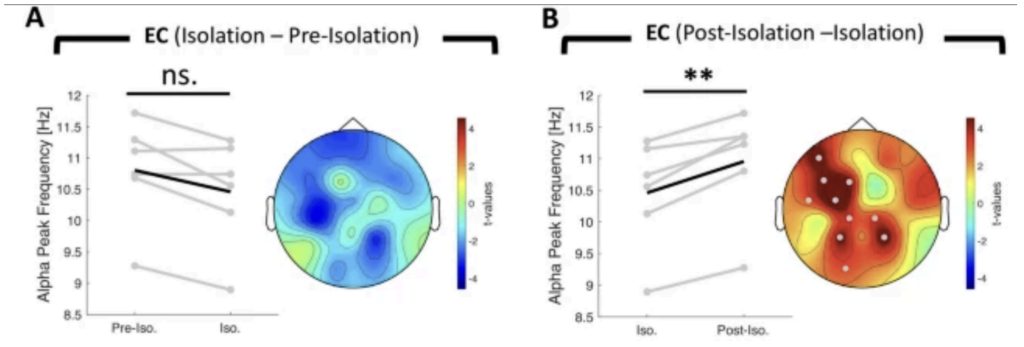
However, solitary confinement is an extreme case of isolation. In the Reykjavik Confessions case, the longest time one of the suspects, Tryggvi Leifsson, was there for was 655 days (Cox, 2018). All suspects likely suffered from MDS hence why they confessed. Later, once away from isolation, retracted their confessions because their peak alpha frequencies had likely increased again.
When a person is isolated and consequently suffers from cognitive performance decrease, it is likely that memory is one of the cognitive functions that is affected. When memory is affected, it’s hard to recall events about the day in question and so the suspect can develop MDS, where they can’t trust their memories because their memories are hazy and so become susceptible to others. When there is no one to reinforce their memories but the police investigators, suspects may slowly accept the investigators words and eventually confess falsely.
When it comes to legal ethics and criminal justice specifically, it’s necessary for law enforcement and the judiciary to adhere to the evidence surrounding MDS and its relation to solitary confinement. We don’t want false confessions leading to unjust convictions because that would mean that innocent people may be punished and those deserving of punishment may remain unpunished.
Work Cited
Cox, S., 2018. The Reykjavik Confessions. BBC News, [online] 6 October. Available at: [Accessed 28 September 2023].
Johns Hopkins Medicine, n.d. Electroencephalogram (EEG). [online] Available at: [Accessed 28 Sep. 2023].
Rathee, S. et al., 2020. Peak Alpha Frequency in Relation to Cognitive Performance. Journal of Neurosciences in Rural Practice. [Online] 11 (3), 416–419. https://doi.org/10.1055%2Fs-0040-1712585
U.S. Department of Health and Human Services, 2021. Loneliness and social isolation – tips for staying connected. [online]. Available at: [Accessed 28 Sep. 2023].
van Bergen, S., Jelicic, M., & Merckelbach, H., 2008. Interrogation techniques and memory distrust. Psychology, Crime & Law, [e-journal] 4(5), 425–434. https://doi.org/10.1080/10683160701822533
Weber, J. et al., 2020. Shifts in broadband power and alpha peak frequency observed during long-term isolation. Scientific Reports. [Online] 10 (1), 17987–17987. https://doi.org/10.1038/s41598-020-75127-0