Deep beneath the vast ocean, there lies an extremophile along hydrothermal vents on the East Pacific Rise: Alvinella pompejana (or the Pompeii worm). This small polychaete makes its home on the walls of active “black smoker” chimneys, where hot fluid, which is rich in minerals, pours into the sea (Desbruyères et al. 1998). Its environment is not suitable for the average organism, the temperatures can fluctuate, the water is acidic, and chemicals like hydrogen sulfide and heavy metals are present at levels that would kill most animals (Grzymski et al. 2008).
A conspicuous feature of the Pompeii worm is the thick layer of bacteria living on its back. These episymbionts form thin strands of projections from mucous glands along the worm’s dorsal surface. This consortium is composed primarily of Epsilonproteobacteria and displays strain-level diversity(Grzymski et al. 2008). Metagenomic analysis indicate that the symbiotic relationship between the Pompeii worm and its bacteria provide a stable source of nutrients and vitamins, and can even help detoxify harmful chemicals like reactive heavy metals and free hydrogen sulfide in the worm’s immediate environment (Grzymski et al. 2008; Tasiemski et al. 2014). The Pompeii worm’s success is greatly attributed to these microorganisms.
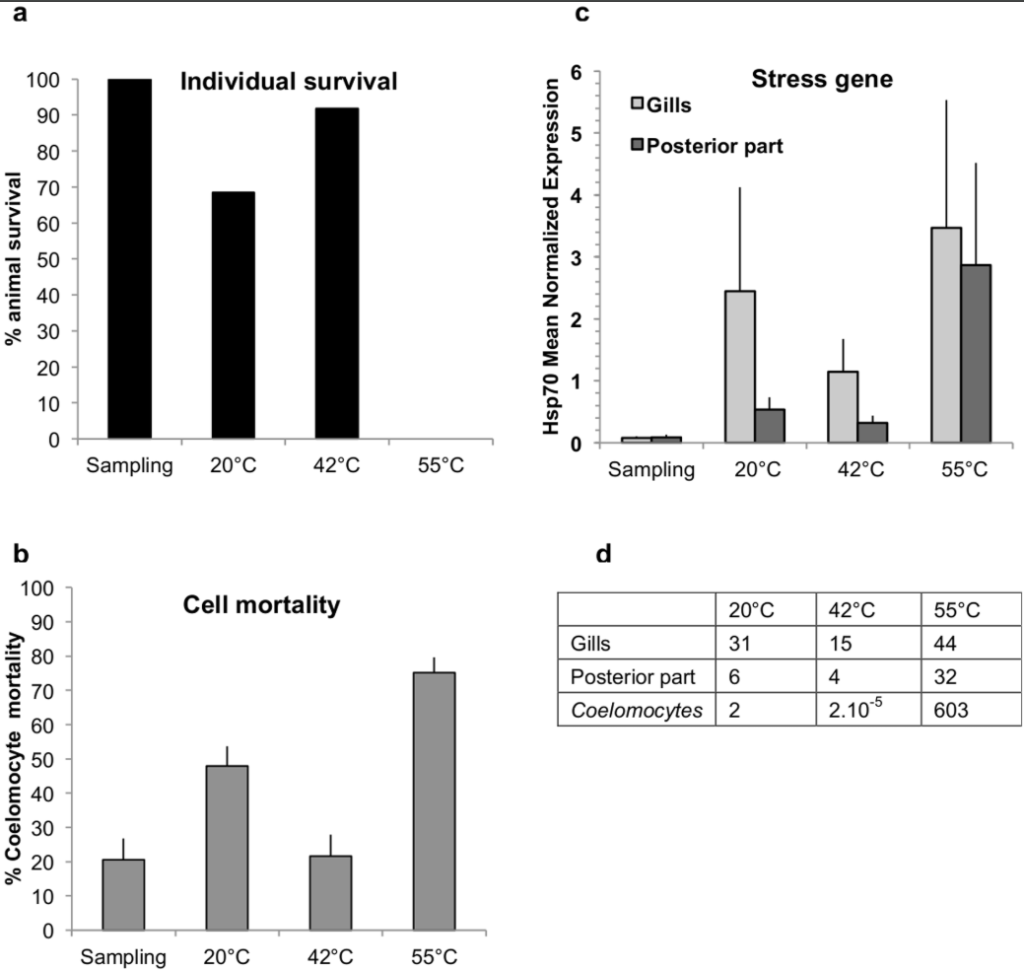
For years, the thermal biology of the Pompeii worm has been of considerable debate since temperature probes near the worms sometimes recorded readings above 60°C (Ravaux et al. 2013). Using isobaric sampling and a pressurized aquarium system, researchers exposed live specimen to controlled thermal areas while maintaining pressure similar to its environment. A two hour exposure to 55°C resulted in great mortality, damaged tissue, and a marked induction of the heat-stress gene hsp70 (figure 1). Exposure to 42°C produced higher survival rates and lower stress-response to heat (Ravaux et al. 2013). These findings indicate that the Pompeii worm’s optimal temperature would therefore be in between 40°C to 50°C, even though it can tolerate temperature above it for at least an hour (Ravaux et al. 2013). Related alvinellid worms, like Paralvinella sulfincola, actually prefer temperatures of 40–50°C and can endure short exposures to 55°C, showing that this whole group is among the most heat tolerant marine animals known (Girguis and Lee 2006).
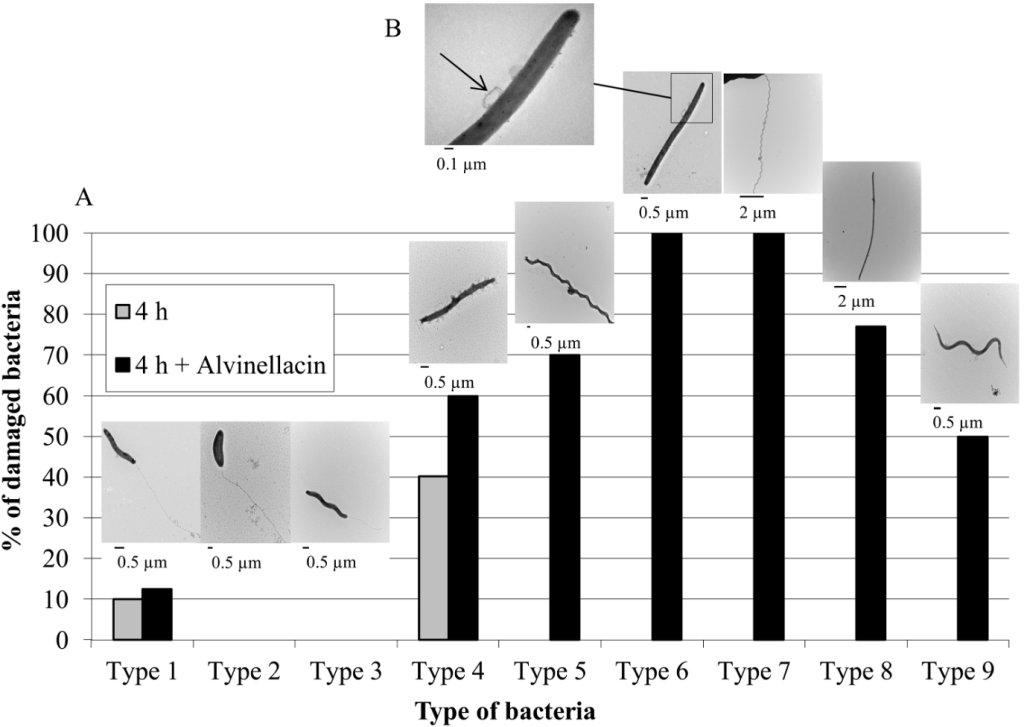
The Pompeii worm is consistently regulating its epibiotic community through the production of alvinellacin, an antimicrobial peptide isolated from its coelomocytes. This peptide exhibits selective bactericidal activity, killing the most abundant filamentous epibiont morphotypes while leaving others unaffected (figure 2). This selectivity leads researchers to believe that the host mitigates the composition of its epibiotic community rather than random colonization occurring (Tasiemski et al. 2014).
Both these studies show that Pompeii worms living in hydrothermal vent ecosystems is akin to their extremophile attributes, specifically within the very warm temperatures, and also how metabolically versatile they are. The Pompeii worm is exemplary for looking at the mechanisms by which multicellular life adapts to some of the most extreme environments on Earth.
References
Desbruyères, D., P. Chevaldonné, Alayse, A.-M, et al. 1998. “Biology and Ecology of the ‘Pompeii Worm’ (Alvinella Pompejana Desbruyères and Laubier), a Normal Dweller of an Extreme Deep-Sea Environment: A Synthesis of Current Knowledge and Recent Developments.” Deep Sea Research Part II: Topical Studies in Oceanography 45 (1): 383–422. https://doi.org/10.1016/S0967-0645(97)00083-0.
Girguis, Peter R., and Raymond W. Lee. 2006. “Thermal Preference and Tolerance of Alvinellids.” Science 312 (5771): 231–31. https://doi.org/10.1126/science.1125286.
Grzymski, Joseph J., Alison E. Murray, Barbara J. Campbell, et al. 2008. “Metagenome Analysis of an Extreme Microbial Symbiosis Reveals Eurythermal Adaptation and Metabolic Flexibility.” Proceedings of the National Academy of Sciences 105 (45): 17516–21. https://doi.org/10.1073/pnas.0802782105.
Ravaux, Juliette, Gérard Hamel, Magali Zbinden, et al. 2013. “Thermal Limit for Metazoan Life in Question: In Vivo Heat Tolerance of the Pompeii Worm.” PLoS ONE 8 (5). https://doi.org/10.1371/journal.pone.0064074.
Tasiemski, Aurélie, Sascha Jung, Céline Boidin-Wichlacz, et al. 2014. “Characterization and Function of the First Antibiotic Isolated From a Vent Organism: The Extremophile Metazoan Alvinella Pompejana.” PLoS ONE 9 (4): e95737. https://doi.org/10.1371/journal.pone.0095737.


Leave a Reply
You must be logged in to post a comment.