The human body is a marvel. And when it comes to the digestive tract, a human gut microbiome is a prime example of symbiosis, containing many single-celled organisms contributing to digestive processes (Bull and Plummer 2014). Unique to each individual, the microbes colonize the digestive tract of the host, forming an interdependent symbiotic relationship (Reynoso-García et al. 2022). But with an average stomach pH of 2, how are these organisms able to survive, are these cells extremophiles, and why are they important to our survival?
Within the human gut microbiome, there is typically a large combination of primarily bacteria, as well as archaea and fungi, contributing to digestive processes by breaking down many organic molecules. Most of these cells are strictly anaerobic and undergo metabolic processes in catabolizing complex carbohydrates often difficult to digest otherwise, such as starches and fibers. This process often results in short chain fatty acids useable by the host for numerous biological processes, often essential to healthy function (Hills et al. 2019).
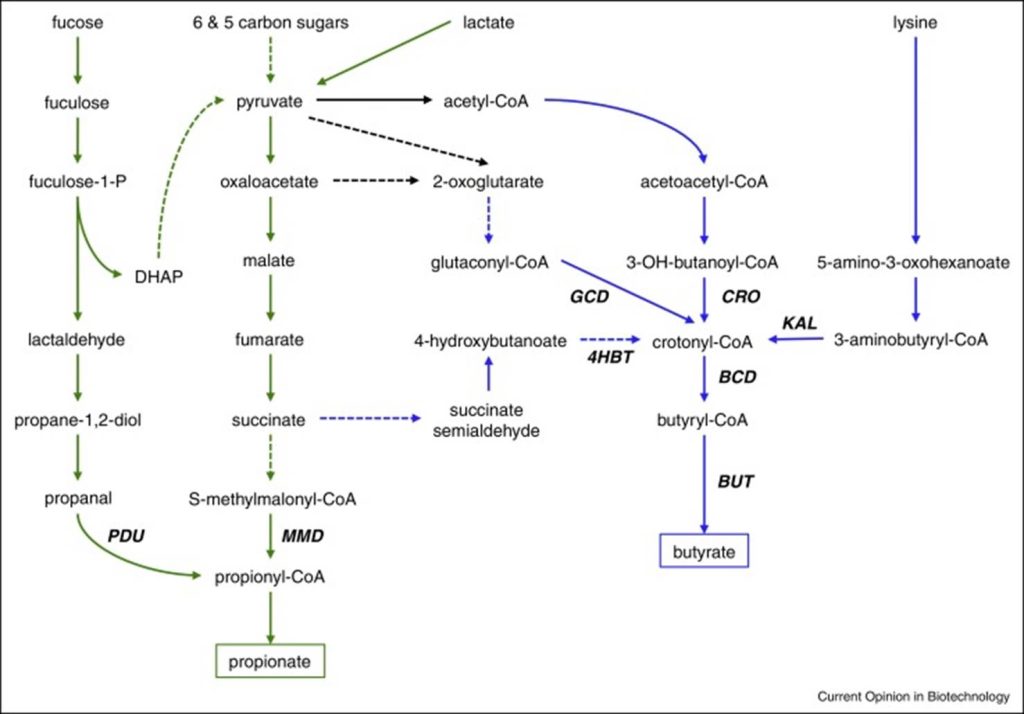
Figure 1) The chemical pathways taken by gut microbiome organisms to result in some necessary SCFAs for humans (Krishnan et al. 2015)
These metabolic pathways taken by the microbiome organisms demonstrate the symbiotic relationship they possess with humans: the cells catabolize the complex compounds, thereby gaining energy, and leaving a waste product that the human body uses to regulate homeostasis, and maintain health (Hills et al. 2019; Krishnan et al. 2015). This easily explains the way the bacteria, archaea and fungi are able to gain energy within the extreme conditions of the human body. However, does their survival within the human body grant these microbes the right to be dubbed extremophiles? This has to do with the manner in which the microbiome is formed.
The human microbiome begins forming at birth from organisms passed by the mother and immediately encountered upon leaving the body. These microbes begin to colonize the microbial organs within the human body, immediately shaping and developing numerous processes for the maintenance of health (Reynoso-García et al. 2022). This is because these microbes tend to function more effectively within the harsh conditions of the human digestive tract. Regardless, these conditions are shown not to be necessary for the survival of the organisms, meaning that the human body is not colonized by extremophiles. That is to say, they can live elsewhere. This factor doesn’t mean that they are unessential to human health, but the opposite: Humans wouldn’t survive without these microbes.
This is due to the role the microbiome plays in the human body. The human microbiome acts as a mediator within the body. Not only do they play a role in digestive processes, but also carry out immune responses against foreign pathogens and microbes within the biome (Hunter 2009). Additionally, a healthy gut microbiome also plays a role in preventing conditions such as obesity, diabetes, and some forms of cancer (Reynoso-García et al. 2022).
The human microbiome may not contain any extremophiles, but provides great insight into health, wellness and the metabolic processes carried out in extreme environments. Though you can’t look close to study extremophiles, the microbes within humans may just carry even more secrets to survival than the ones in volcanoes, frozen lakes, or deep sea trenches.
Citations
Bull, Matthew J., and Nigel T. Plummer. 2014. “Part 1: The Human Gut Microbiome in Health and Disease.” Integrative Medicine: A Clinician’s Journal 13 (6): 17–22.
Hills, Ronald D., Benjamin A. Pontefract, Hillary R. Mishcon, Cody A. Black, Steven C. Sutton, and Cory R. Theberge. 2019. “Gut Microbiome: Profound Implications for Diet and Disease.” Nutrients 11 (7): 1613. https://doi.org/10.3390/nu11071613.
Hunter, Philip. 2009. “The Secret Garden. The Human Digestive System Is Teeming with Microbiotic Life, but Just How Important Are These Interlopers for Health and Disease?” EMBO Reports 10 (10): 1082–86. https://doi.org/10.1038/embor.2009.204.
Krishnan, Smitha, Nicholas Alden, and Kyongbum Lee. 2015. “Pathways and Functions of Gut Microbiota Metabolism Impacting Host Physiology.” Current Opinion in Biotechnology, Pathway engineering, vol. 36 (December): 137–45. https://doi.org/10.1016/j.copbio.2015.08.015.
Reynoso-García, Jelissa, Angel E. Miranda-Santiago, Natalie M. Meléndez-Vázquez, et al. 2022. “A Complete Guide to Human Microbiomes: Body Niches, Transmission, Development, Dysbiosis, and Restoration.” Frontiers in Systems Biology 2: 951403. https://doi.org/10.3389/fsysb.2022.951403.


Leave a Reply
You must be logged in to post a comment.