Imagine lying ready to fall fast asleep after a long day of classes and assignments. Then you suddenly notice a small black anomaly moving ever so slowly. Your eyes lock onto it, and within seconds you realize it is a spider crawling across the wall. Even though it is tiny and probably harmless, your body reacts almost instantly. Your heart beats faster, you become more alert, and sleep is suddenly the last thing on your mind. But why can such a small creature trigger such a strong reaction? Spiders are widely feared despite having posed relatively little danger to humans compared with many other animals (Nikakhtar et al. 2026).
To understand where this fear may have come from, it helps to look back at where humans first evolved. Fossil evidence suggests that Homo sapiens were present in Africa around 300,000 years ago (Hublin et al. 2017). From an evolutionary perspective, fear may have developed as a survival mechanism that helped our early human ancestors recognize and avoid dangerous threats. Individuals who reacted quickly to potentially venomous animals may have had a better chance of surviving and reproducing. Over generations, this could have created a natural tendency to pay extra attention to certain threatening shapes or animals. Researchers have questioned whether spiders themselves posed enough of an evolutionary threat to explain such a widespread fear and if fear of spiders equals the potential harm to human life, are spiders really the reason we have this sweat-inducing fear?
Venomous spiders are found across many parts of the world, with some of the most medically significant species occurring in Australia and South America (Vetter and Isbister 2008). However, only a small fraction of spider species are actually considered dangerous to humans.
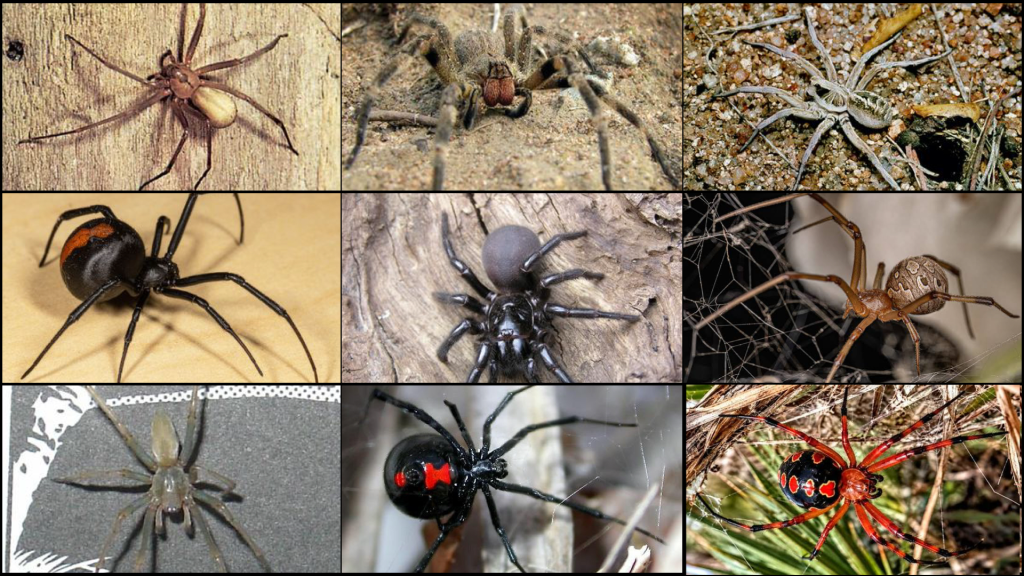
This makes it difficult to explain why the fear of spiders is so common. Researchers have therefore suggested that spiders themselves may not have been the original threat. Instead, the fear may have developed from our ancestors’ responses to scorpions, which are closely related to spiders but historically posed a greater danger to humans (Frynta et al. 2021). Since spiders and scorpions share similar features, this fear may have generalized from scorpions to spiders over time.
In a cross-cultural experiment, 134 participants from Somaliland and the Czech Republic viewed images of grasshoppers, spiders, and scorpions while researchers tracked their gaze. Results showed a greater attention bias toward scorpions in participants from Somaliland compared with participants from the Czech Republic (Rudolfová et al. 2022). This supports the possibility that scorpions were an important ancestral threat and that attention toward spiders could partly be a generalization of that older response.
From a psychological perspective, this idea can be explained through fear generalization, where fear toward one dangerous stimulus can spread to other things that look similar. Humans may also be especially prepared to notice and learn fear of threats that were important during our evolutionary history. This fear system can react automatically to evolutionarily relevant threats, which may help explain why animals such as spiders can trigger strong reactions even when they are not actually dangerous (Öhman and Mineka 2001).
References
Frynta, Daniel, Hassan Sh Abdirahman Elmi, Kateřina Rexová, Markéta Janovcová, Veronika Rudolfová, Iveta Štolhoferová, David Král, David Sommer, Daniel Alex Berti, and Petra Frýdlová. 2023. “Animals Evoking Fear in the Cradle of Humankind: Snakes, Scorpions, and Large Carnivores.” The Science of Nature110 (4). https://doi.org/10.1007/s00114-023-01859-4.
Shochat, E., W. L. Stefanov, M. E. A. Whitehouse, and S. H. Faeth. 2004. “Urbanization and Spider Diversity: Influences of Human Modification of Habitat Structure and Productivity.” Ecological Applications 14 (1): 268–80. https://doi.org/10.1890/02-5341.
Ashworth, James. 2021. “When and How Did Modern Humans, Homo Sapiens, Spread out of Africa and around the World? | Natural History Museum.” Nhm.Ac.Uk. 2021. https://www.nhm.ac.uk/discover/when-how-did-modern-humans-homo-sapiens-spread-out-of-africa.html.
Nikakhtar, Alireza, Pavol Prokop, Abbas Zabihzadeh, Arash Monajem, and Mohammad Mahdi Afshar Azad. 2026. “From Scorpion to Spider: Tracing the Origin of Fear of Spiders and Other Chelicerates through Perceptual Fear Generalization Gradients across Chelicerates.” Evolution and Human Behavior 47 (2): 106830. https://doi.org/10.1016/j.evolhumbehav.2026.106830.
Rudolfová, Veronika, Iveta Štolhoferová, Hassan S. A. Elmi, Silvie Rádlová, Kateřina Rexová, Daniel A. Berti, David Král, et al. 2022. “Do Spiders Ride on the Fear of Scorpions? A Cross-Cultural Eye Tracking Study.” Animals 12 (24): 3466. https://doi.org/10.3390/ani12243466.
Öhman, Arne, and Susan Mineka. 2001. “Fears, Phobias, and Preparedness: Toward an Evolved Module of Fear and Fear Learning..” Psychological Review 108 (3): 483–522. https://doi.org/10.1037/0033-295x.108.3.483.
Frynta, Daniel, Markéta Janovcová, Iveta Štolhoferová, Šárka Peléšková, Barbora Vobrubová, Petra Frýdlová, Hana Skalíková, Petr Šípek, and Eva Landová. 2021. “Emotions Triggered by Live Arthropods Shed Light on Spider Phobia.” Scientific Reports 11 (1). https://doi.org/10.1038/s41598-021-01325-z.
Hublin, Jean-Jacques, Abdelouahed Ben-Ncer, Shara E. Bailey, et al. 2017. “New Fossils From Jebel Irhoud, Morocco and the Pan-African Origin of Homo Sapiens.” Nature 546 (7657): 289–92. https://doi.org/10.1038/nature22336.
Zhang, Xiao-Qing, Xin-Yu Li, Yuri M Marusik, et al. 2025. “Spider Taxonomy: A Historical and Global Perspective.” Zoological Research (China) 46 (6): 1387–95. PubMed. https://doi.org/10.24272/j.issn.2095-8137.2025.229.
Natural History Museum Bern. 2019b. “NMBE – World Spider Catalog.” Nmbe.Ch. https://wsc.nmbe.ch/.
Nmbern. 2026. “50,000 Spider Species Discovered | Natural History Museum of Bern.” April 27. https://www.nmbe.ch/en/recherche-et-collections/50000-spider-species-discovered.
Rafferty, John. 2019. “9 Of the World’s Deadliest Spiders.” In Encyclopædia Britannica. https://www.britannica.com/list/9-of-the-worlds-deadliest-spiders.
Comments
5 Responses to “From Ancient Threats to Modern Fears”
Hi Afaf!
I really enjoyed reading your blog post. The opening scenario was very engaging and immediately drew me in because it’s such a relatable experience. I also found the discussion about fear generalization from scorpions to spiders super interesting.
I just have a few suggestions that might help strengthen the post:
In paragraph 2, in the sentance, “Through fossil records and genetic tracking.” I think it would be better to use a comma and connect it to the next sentance like this: “Through fossil records and genetic tracking, we know that Homo sapiens originated in Africa around 300,000 years ago.”
In paragraph 3, you mention that only a small number of spider species are dangerous to humans. I think it would be a good idea to add a statistic or specific example to help strengthen the point.
Also, the conclusion is effective but I feel it sounds a bit rushed. Maybe you could add one final sentence connecting the discussion back to modern-day arachnophobia or everyday experiences so it leaves readers with a stronger takeaway.
And don’t forget to leave a comment explaining why you chose this topic and how it relates to concepts discussed in iSci.
Great job overall. Can’t wait for your updated blog.
Ilyas
Hi Ilyas,
Thank you so much for the detailed feedback! I really appreciate your suggestions. I agree that some parts, especially the conclusion, could be stronger and more developed. I’ll also work on adding a specific example/suggestion and fixing the sentence structure you mentioned. Thanks again for taking the time to read my post and give me helpful feedback!
Hi Afaf,
Really great overview of the topic! There’s just a couple suggestions that you may want to look into:
– In your second paragraph there are no in-text citations, despite some facts being mentioned. Such as “Through fossil records and genetic tracking. We know that Homo sapiens originated in Africa around 300,000 years ago and much of early human evolution.” What are these records, or where else have they used these records to validify this?
– It may be useful to include statistics on how many people are afraid of spiders, and how many spiders are venomous vs not. For example. the primary endpoint of the cross-country study you mentioned is the fear towards scorpions. Is there a similar study that explains how many people are afraid of spiders to make a comparison between the two?
– In your final paragraph, (Öhman and Mineka 2001) should not be in brackets if starting out the sentence.
Happy editing! 🕷️
Michelle
Hi Michelle,
Thank you so much for the helpful feedback! I agree that I should add citations to support the facts in my second paragraph and explain the evidence more clearly. I also really like your suggestion of adding statistics about fear of spiders and comparing them with scorpions since that would make the discussion stronger. I’ll also fix the citation in my final paragraph. Thanks again for taking the time to read my post!
Hi iSci!
I picked this topic because I’ve always been into the psychology behind why people are scared of certain things. Since we’ve all also been learning about evolution in life science, I thought it would be interesting to connect the two. I liked looking at how fear of spiders could have came from older survival responses, and it made the topic feel more interesting to me.