Somewhere in southeastern North America, there is a carpenter ant currently, against its own will, biting on a twig so hard that it dies, remaining fixated in that position long after its death. The culprit is no other than Ophiocordyceps kimflemingiae (Ballesteros-Aguirre et. al, 2025).
Once a spore is inside the body of an ant, it begins to siphon nutrients out of the ant’s body, eventually penetrating the ants muscles. However, they do not begin to break down the ant’s body until after death, allowing the ant to continue consuming nutrients until it dies.
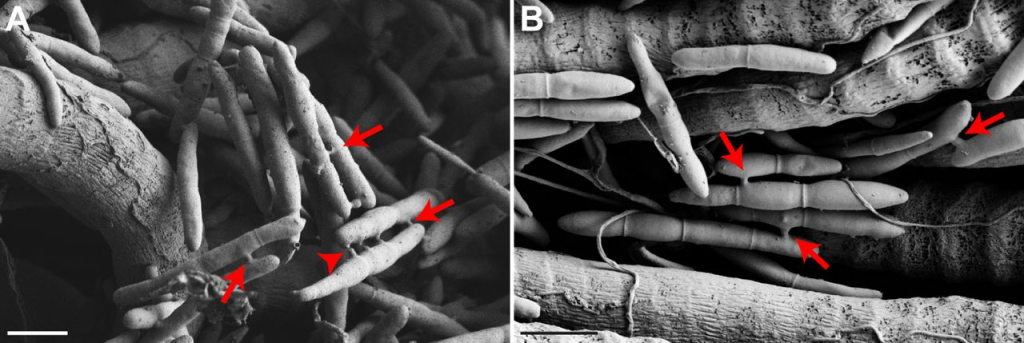
Figure 1: Ophiocordyceps kimflemingiae cells form expansive networks woven around infected ant muscle, connecting via tubes as shown by the arrows (Mangold et. al 2019).
To ensure that the ant’s muscles are strong enough to enter its death grip, the fungus coerces the muscles into a state of constant hypercontraction to compensate for their atrophy. Eventually, the ant, being puppeteered by the fungal network inside of it, climbs a tree to reach proper conditions, and bites down on a twig with the last of its strength, dying in the process. The fungus then begins to extend a stalk from the head of the ant’s corpse, and will eventually release spores to disperse and infect new victims (Mangold et. al 2019).
However, the dead ant is now prone to other microbes colonizing its corpse and stealing the nutrients the stalk needs to grow. Thus, many species of Ophiocordyceps defend their property by means of antimicrobials. One of these antimicrobials is a derivative of 1,4-naphthoquinone, which functions as an antimicrobial by inducing the production of reactive oxygen species in cells, resulting in extreme damage. (Liu et al. 2022).
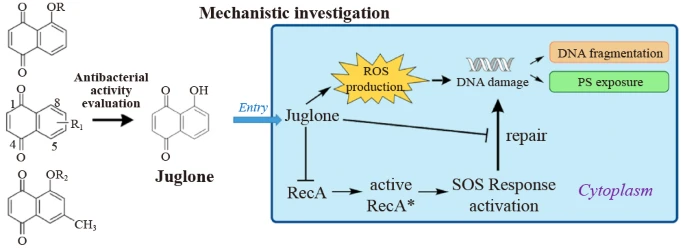
Figure 2: Juglone, a type of 1,4-naphthoquinone prompts the production of reactive oxygen species in cells (Liu et al. 2022).
Reactive oxygen species (ROS) are oxidizing agents, which readily accept electrons from various molecules in the cell, such as lipids, proteins, and DNA. When an ROS reacts with an unsaturated lipid chain such as one in the cell membrane, a series of reactions forms a peroxyl radical, which can react with adjacent unsaturated lipid chains, resulting in a destructive chain reaction which can severely impair the cell membrane.
Due to the varied nature of proteins and amino acids, effects of ROS vary depending on the molecule. Upon reacting with an ROS, amino acids may be oxidized, crucial peptide bonds may be broken, and different protein chains as a whole may cluster together.
When an ROS comes into contact with DNA, it is able to react with deoxyribose, altering the critical structure of the chain, as well as the nucleotides themselves, resulting in mutations that may severely inhibit a cell’s ability to survive and reproduce (Juan et al. 2021).
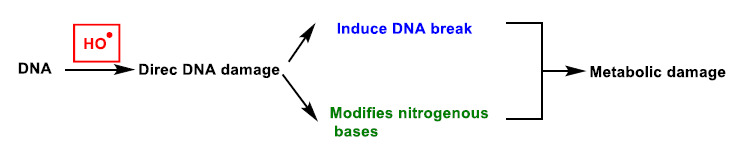
Figure 3: DNA damage caused by ROS (Juan et al. 2021).
Though 1,4-naphthoquinones are not the only way that Ophiocordyceps fungi defend their resources from other microbes, they are prominent as they are currently being studied for potential uses as antibacterial compounds in humans. Plus, Ophiocordyceps fungi are the basis for the critically acclaimed The Last of Us franchise. They are truly a gift that keeps on giving!
References
Ballesteros-Aguirre, C.E., T. Sanjuan, V. Ramírez-Cruz, A.R. Villalobos-Arámbula, M. Vásquez-Bolaños, and L. Guzmán-Dávalos. “Zombie-Ant Fungi from Western Mexico: Six New Species in the Ophiocordyceps Unilateralis Complex (Hypocreales: Ascomycota) and a New Host Association with Cephalotes Ants.” Persoonia – Molecular Phylogeny and Evolution of Fungi 55, no. 1 (December 31, 2025): 203–38. https://doi.org/10.3114/persoonia.2025.55.06.
Juan, Celia Andrés, José Manuel Pérez de la Lastra, Francisco J. Plou, and Eduardo Pérez-Lebeña. “The Chemistry of Reactive Oxygen Species (ROS) Revisited: Outlining Their Role in Biological Macromolecules (DNA, Lipids and Proteins) and Induced Pathologies.” International Journal of Molecular Sciences 22, no. 9 (April 28, 2021): 4642. https://doi.org/10.3390/ijms22094642.
Kittakoop, Prasat, Juntira Punya, Palangpon Kongsaeree, Yuwapin Lertwerawat, Amnuay Jintasirikul, Morakot Tanticharoen, and Yodhathai Thebtaranonth. “Bioactive Naphthoquinones from Cordyceps Unilateralis.” Phytochemistry 52, no. 3 (October 1999): 453–57. https://doi.org/10.1016/s0031-9422(99)00272-1.
Liu, Zhizhuo, Zhemin Shen, Shouyan Xiang, Yang Sun, Jiahua Cui, and Jinping Jia. “Evaluation of 1,4-Naphthoquinone Derivatives as Antibacterial Agents: Activity and Mechanistic Studies.” Frontiers of Environmental Science & Engineering 17, no. 3 (October 20, 2022). https://doi.org/10.1007/s11783-023-1631-2.
Lu, Yingling, Dexiang Tang, Zuoheng Liu, Jing Zhao, Yue Chen, Jinmei Ma, Lijun Luo, and Hong Yu. “Genomic Comparative Analysis of Ophiocordyceps Unilateralis Sensu Lato.” Frontiers in Microbiology 15 (April 15, 2024). https://doi.org/10.3389/fmicb.2024.1293077.
Mangold, Colleen A., Melissa J. Ishler, Raquel G. Loreto, Missy L. Hazen, and David P. Hughes. “Zombie Ant Death Grip Due to Hypercontracted Mandibular Muscles.” Journal of Experimental Biology 222, no. 14 (July 15, 2019). https://doi.org/10.1242/jeb.200683.
Wang, Wenting, Bohan Cheng, Haotian Wu, Yuhua Shi, Lan Wu, Qinggang Yin, Mengyue Wang, et al. “Composition, Biosynthesis and Pharmacological Activities of Chemical Constituents of Ophiocordyceps Sinensis: A Review.” Medicinal Plant Biology 4, no. 1 (July 25, 2025). https://doi.org/10.48130/mpb-0025-0024.
Comments
9 Responses to “Undead Arthropods: The Fungal Delivery Service”
Hi iSci!
I decided to write about Ophiocordyceps, as I found the segment on parasites and parasitoids from one of our recent Life Science lectures to be really interesting. Our sustainable chemistry unit also led me to think about ways we could exploit microorganisms to facilitate greener medicine production. Thus, I landed on these parasitic fungi! Thanks for reading.
Hi Daniel,
What a great blog post! I’ve heard of these “fungi that make ants act like zombies” before but I never knew how it worked, so I was really interested in this post.
Here are some suggestions/questions I had:
-In P3, you mention that the new fungi release “pores” to infect ants, and I’m wondering if that was meant to say spores? If not, it may be helpful to clarify what you meant by pores.
-If your word count permits, you could add some information about the science behind the fungi being able to manipulate the ants in such a way. It’s surreal how the fungi are able to coerce the ants into collecting nutrients for them, and it would be interesting to know more about how that process works (ie, what is released into the ants through the spores to make them act in a way beneficial for the fungi).
Again, this was an awesome post, thanks for teaching me more about this topic!
Happy editing,
Joud
Hi Joud,
– That was in fact a typo, the word is meant to be “spores.” Thanks for pointing it out!
– Truth be told, that was my original plan for this blog post. However, I found the literature regarding those mechanisms to be too complex for me to write about confidently. I appreciate the suggestion though!
Thanks,
Daniel
Hey Daniel!
I really enjoyed reading this. The image at the beginning immediately grabbed my attention because I was looking at it thinking “What is this that, and what exactly is happening here?” It made me want to keep reading and understand what was occuring with the ant and the fungus. I also thought the connection to The Last of Us at the end was a clever way to bring such a complex topic back to something familiar.
One area I think could be improved is the transition between the section introducing 1,4-napthoquinone and the explanation of reactive oxygen species. The first two paragraphs explain that the fungus uses antimicrobials to protect the ant corpse and introduce 1,4-napthoquinone, but the next paragraph immediately goes into the chemistry of ROS. While the information is great, I think adding a sentence connecting the two and explaining how the ROS help the 1,4-napthoquinone fight off other microbes would make the transition smoother and make it more clear as to why the ROS section is important!
I also think some of the scientific explanations could be simplified slightly. For example, the section explaining how ROS damage lipids, proteins and DNA are informative, but there is a lot of technical terminology used in a short space. Briefly explaining the main idea before jumping into the specific molecular effects may make it easier for readers to follow and stay engaged.
Overall, I thought this was a really interesting and engaging blog post! The topic was fascinating and I loved how you connected the biology of the ants with the chemistry behind how the fungus protects its resources.
Hi Audrey,
I appreciate you reading my post! Upon rereading it myself, I agree with the comment you made regarding the transition into 1,4-naphthoquinones. Thank you for the advice! As for the suggestion you made regarding the scientific explanations/terminology, I can understand why it might be a bit overwhelming without some extra explanations, though I’m not sure if I have enough room left in my word count to fit it in. I’ll try to add something though.
Thanks,
Daniel
Hi Daniel!
I really liked your post, especially your creative and engaging approach towards introducing us to the Ophiocordyceps kimflemingiae species. I like that you chose to talk about parasitic fungas, because I usually think of parasites as animal species so I definitely learned something new!
I just have a couple minor suggestions:
– In the paragraph about 1,4-naphthoquinone, I think your two first sentences can be combined, just to make it a bit more concise. I also think that you could combine this paragraph (5) with paragraph 4 above it to make the transition from the biology and chemistry aspect a little smoother.
– I think another good way to synthesize the two disciplines could be to relate back to the carpenter ants and fungus when talking about the effects of 1,4-naphthoquinone. For example, you could mention how this microbial agent works to benefit the fungus in particular in the later paragraphs where you talk about destruction of organic molecules, rather than keeping it completely broad.
All in all, your post was very interesting and I think you did a great job!
Hi Naomi,
– Upon rereading that section of my blog, I completely agree with you, and will implement that. Thank you for the suggestion!
– Regarding this suggestion, I do actually explain how 1,4-naphthoquinone benefits the fungus around the middle of the blog post. I might change the structure of the blog post to make it clearer, though.
Thanks,
Daniel
Hi Daniel,
That was a great read! I found it interesting to learn how fungi can use antimicrobials to protect the resources of their host.
You briefly mentioned that the parasitoid forces the ant to climb to reach “ideal conditions”; perhaps expanding on what those conditions are (temperature, food, or other conditions within a geographical context) would help incorporate an earth science component into your post.
Overall, great read!
Happy editing,
Praise
Hi Praise,
Thanks for reading my blog post. While I understand where you’re coming from, I don’t believe that it is relevant to the connections that I’m trying to make and the information I would like to convey. I’m also not sure if I have the word count for it. Thanks for the suggestion, regardless!
Thanks,
Daniel