Botox (onabotulinumtoxinA) is a touchy subject nowadays; a fountain of youth for some, a sign of society’s growing fear of aging for others. Yet Botox is more than an aesthetic improvement; the face is intimately linked to the brain and emotional experience, and Botox-induced facial paralysis can alter a patient’s emotional world. Botulism neurotoxin A (BoNT/A) is both the pharmaceutical ingredient in Botox and a deadly neurotoxin, a physical reminder that the dose makes the poison.
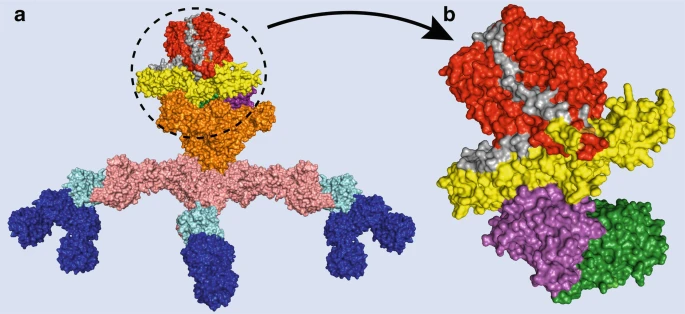
BoNT/A is made up of three domains; the C-terminal domain binds to the surface of the neuron’s membrane and to the inside of the synaptic vesicle membrane (Rossetto et al. 2020, 35-47). This dual-receptor binding ensures that BoNT/A only binds to neurons (neurospecificity). Upon binding, the metalloprotease domain of BoNT/A enters the cytosol and cuts SNAP-25, inhibiting the release of acetylcholine (neurotransmitter) into the synapse (Rossetto et al. 2020, 35-47), which causes muscle weakness (Brin et al. 2023). However, this unique property is what enables Botox’s many uses, from calming muscle spasms and smoothing wrinkles (Scott et al. 2023) to treating depression.
“The free expression by outward signs of an emotion intensifies it” (Darwin 1872, 366). This theory defines the facial feedback hypothesis, in which facial movements dull or intensify the emotion experienced, and helps identify it (Brin et al. 2023; Wollmer et al. 2012, 574-581). Based on this idea, it is hypothesised that Botox can be used to dull the negative emotional experiences of people suffering from depression, allowing them a longer-term solution that doesn’t require frequent medication, such as daily SSRIs. One clinical trial used onabotulinumtoxinA injections in the glabellar region (between the eyebrows; related to a sad facial expression) as an adjunctive treatment, after which Hamilton Depression Rating Scale scores decreased by 47.1%, compared to 9.2% in placebo-treated patients (Wollmer et al. 2012).
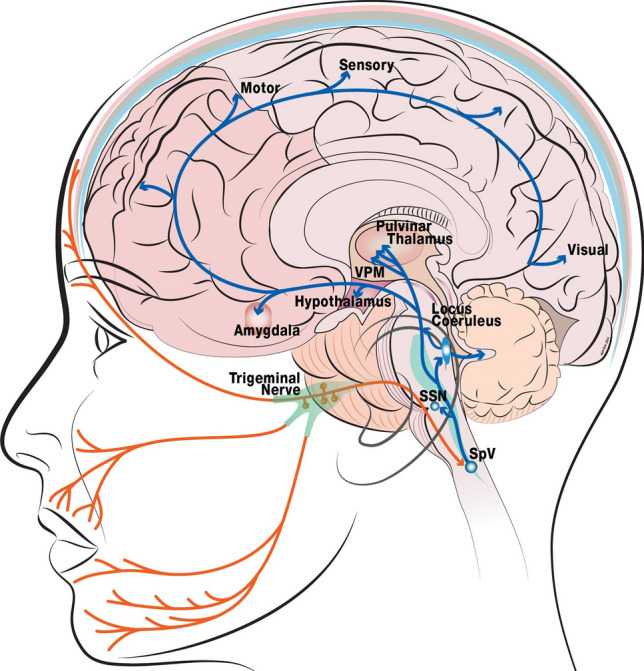
Anatomically, the facial feedback hypothesis is plausible; the trigeminal nerve—the main sensory and mastication nerve for the face—connects to the amygdala through a complex neuroanatomical pathway (Wollmer et al. 2022; Stark et al. 2023). By severing the neurofacial afferent feedback signals with onabotulinumtoxinA, scientists observed diminished amygdala activity when viewing emotionally negative faces (Kim et al. 2014), indicating a possible connection between facial movement and emotional experience.
Yet, if there is such a connection, Botox’s facial paralysis could have unintended emotional side effects. Facial emotional mimicry can help emotional identification, humour identification (Strack at al 1988), and language comprehension (Havas et al. 2010). Like standing on one’s toes and peeking through a neighbour’s window, facial mimicry is a window into another’s internal emotional world. Botox acts as a curtain over this window—emotional imitation and identification are possible, but less accurate (Neal and Chartrand, 2011).
But even with the empathy drawback, the positives may outweigh the possible empathy decline consequences; one study found that onabotulinumtoxinA treatment’s capabilities and onset speed are comparable to sertraline’s, a first-line SSRI (Selective Serotonin Reuptake Inhibitor; antidepressant) (Zhang et al. 2021).
Altogether, although onabotulinumtoxinA injections are not approved as a replacement for SSRIs, this research provides hope for the future of antidepressants and insight into the relationship between face, brain, and emotional experiences.
References
Darwin, Charles. The expression of the emotions in Man and animals. John Murray, 1872.
Havas, David A., Arthur M. Glenberg, Karol A. Gutowski, Mark J. Lucarelli, and Richard J. Davidson. “Cosmetic Use of Botulinum Toxin-a Affects Processing of Emotional Language.” Psychological Science 21, no. 7 (2010): 895–900. https://doi.org/10.1177/0956797610374742.
Kim, M Justin, Maital Neta, F Caroline Davis, et al. “Botulinum Toxin-Induced Facial Muscle Paralysis Affects Amygdala Responses to the Perception of Emotional Expressions: Preliminary Findings from an A-B-A Design.” Biology of Mood & Anxiety Disorders 4, no. 1 (2014). https://doi.org/10.1186/2045-5380-4-11.
Rossetto, O., M. Pirazzini, F. Fabris, and C. Montecucco. “Botulinum Neurotoxins: Mechanism of Action.” Handbook of Experimental Pharmacology 263 (April 11, 2020): 35–47. https://doi.org/10.1007/164_2020_355.
Scott, Alan B., Dennis Honeychurch, and Mitchell F. Brin. “Early Development History of Botox (Onabotulinumtoxina).” Medicine 102, no. S1 (2023). https://doi.org/10.1097/md.0000000000032371.
Stark, Shauna, Craig Stark, Brian Wong, and Mitchell F. Brin. “Modulation of Amygdala Activity for Emotional Faces Due to Botulinum Toxin Type A Injections That Prevent Frowning.” Scientific Reports 13, no. 1 (2023). https://doi.org/10.1038/s41598-023-29280-x.
Stark, Shauna, Craig Stark, Brian Wong, and Mitchell F. Brin. “Modulation of Amygdala Activity for Emotional Faces Due to Botulinum Toxin Type A Injections That Prevent Frowning.” Scientific Reports 13, no. 1 (2023). https://doi.org/10.1038/s41598-023-29280-x.
Strack, Fritz, Leonard L. Martin, and Sabine Stepper. “Inhibiting and Facilitating Conditions of the Human Smile: A Nonobtrusive Test of the Facial Feedback Hypothesis.” Journal of Personality and Social Psychology 54, no. 5 (1988): 768–77. https://doi.org/10.1037/0022-3514.54.5.768.
Wollmer, M. Axel, Claas de Boer, Nadeem Kalak, et al. “Facing Depression with Botulinum Toxin: A Randomized Controlled Trial.” Journal of Psychiatric Research 46, no. 5 (2012): 574–81. https://doi.org/10.1016/j.jpsychires.2012.01.027.
Wollmer, M. Axel, Michelle Magid, Tillmann H. Kruger, and Eric Finzi. “Treatment of Depression with Botulinum Toxin.” Clinical Application of Botulinum Toxin 14, no. 6 (2022): 218–22. https://doi.org/10.1017/9781009105033.027.
Zhang, Qilin, Wenqi Wu, Yuxin Fan, et al. “The Safety and Efficacy of Botulinum Toxin A on the Treatment of Depression.” Brain and Behavior 11, no. 9 (2021). https://doi.org/10.1002/brb3.2333.


Leave a Reply
You must be logged in to post a comment.