In spring 2015, newspapers around the world said eating chocolate helps you lose weight. The Daily Mail ran it. Germany’s Bild ran it. It came from a published study, so few doubted it. But the study was designed to mislead.
The study itself was real. Science journalist John Bohannon and a team of German filmmakers recruited 16 people. They split them into three groups, a control group, a low-carb group, and a low-carb group that also ate 1.5 ounces of dark chocolate a day (Bohannon 2015). The chocolate group lost weight faster. The result was “statistically significant.” Bohannon published it in the International Archives of Medicine under the name “Johannes Bohannon” (Bohannon et al. 2015).
The flaw was in the design. The team measured 18 different things. Weight, cholesterol, sleep quality, blood proteins, and more. All across just 15 people, since one subject dropped out. A short definition may help here. A p-value is the chance of getting a result at least this strong if there was really no effect. Scientists call a result “significant” when p is under 0.05. That does not mean there is a 95 percent chance the result is real. With that many measurements on that few people, the team had about a 60 percent chance of finding something “significant” purely by luck (Bohannon 2015). This is called p-hacking. Run enough tests and one of them will cross the line by chance alone. The hacking sits in the freedom of the process. A researcher can collect more data, drop a group, or report only the outcome that worked, and no number has to be faked. It is the same problem behind the replication crisis. Ioannidis warned years earlier that most published findings in fast-moving fields turn out false, mostly because of small samples and flexible analysis (Ioannidis 2005).
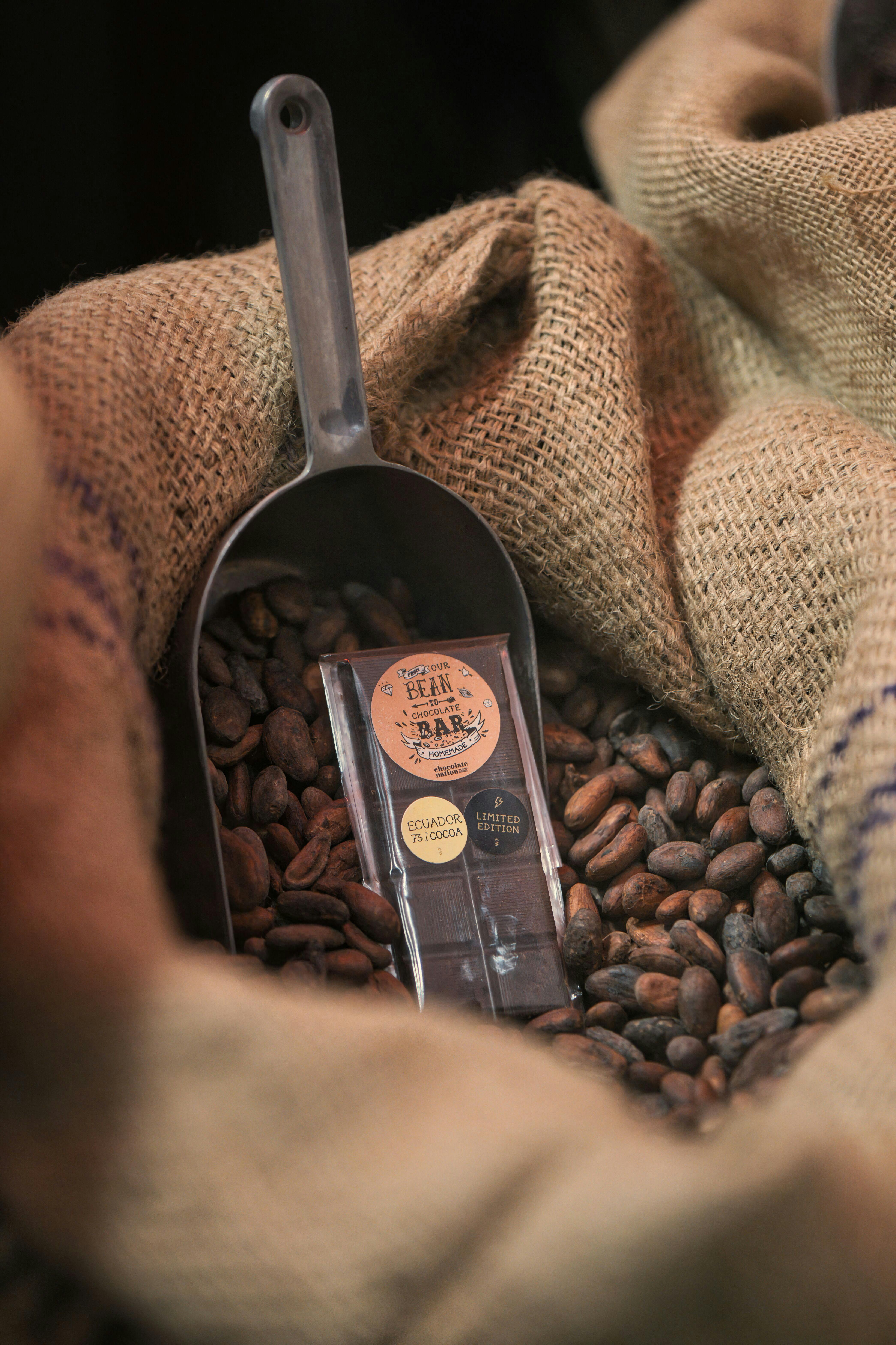
The journal charged the authors around $650 and put the paper online within two weeks, with almost no peer review (Bohannon 2015). Bohannon then wrote a press release that left out every problem with the study (Bohannon 2015). Almost no outlet that covered the story asked a difficult question. The pipeline from study to headline had no step where anyone read the paper.
This is where two course topics connect. Data literacy explains how the result was made. Eighteen outcomes on 15 people made a false positive likely from the start. Psychology explains why it spread so easily. People want to believe that something they love is also good for them. A headline that tells readers what they hope to hear faces very little doubt. A weak number met a willing audience, and millions believed chocolate causes weight loss. The solution is simple. Read the study itself, not only the headline. Find out how many people were tested and how many outcomes were measured. Keep in mind that “published” does not mean “true.” It could simply mean the fee was paid.
References:
Boekeloo, Ruben. 2025. “Premium Chocolate Bar on Cocoa Beans in Sack.” Pexels. https://www.pexels.com/photo/premium-chocolate-bar-on-cocoa-beans-in-sack-32430984/
Bohannon, Johannes, Diana Koch, Peter Homm, and Alexander Driehaus. 2015. ‘Chocolate with High Cocoa Content as a Weight-Loss Accelerator’. International Archives of Medicine 8 (December). https://doi.org/10.3823/1654.
Bohannon, John. 2015. ‘I Fooled Millions Into Thinking Chocolate Helps Weight Loss. Here’s How.’ Gizmodo, May 27. https://gizmodo.com/i-fooled-millions-into-thinking-chocolate-helps-weight-1707251800.
Godoy, Maria. 2015. ‘Why A Journalist Scammed The Media Into Spreading Bad Chocolate Science’. Food For Thought. NPR, May 28. https://www.npr.org/sections/thesalt/2015/05/28/410313446/why-a-journalist-scammed-the-media-into-spreading-bad-chocolate-science.
Ioannidis, John P. A. 2005. ‘Why Most Published Research Findings Are False’. PLoS Medicine 2 (8): e124. https://doi.org/10.1371/journal.pmed.0020124.
Comments
15 Responses to “How 15 People and a Chocolate Bar Fooled the World’s Media”
Hey iSci,
I found this study super interesting and decided to make my blog post about it so you can learn about it too. It really goes to show how a study can mislead so many people when it isn’t questioned and checked properly.
I hope you learn something cool.
Hi Ilyas,
The topic of your blog post is super fascinating, and I find it really relevant to some of the statistical analysis that you’ll do throughout iSci!
Some suggestions
–I do think you can include more science content in your blog post. Maybe explaining the actual science behind why chocolate does not help you lose weight, or finding a connection to something learned in class would help support the topic a bit more.
–A lot of your sentences are quite short, which makes it easy to follow along but may not be necessary. For example, “They split them into three groups. One was a control. One went on a low-carb diet. One went low-carb and also ate 1.5 ounces of dark chocolate a day” could be written as -> “They split them into three groups, with a control, one on a low-carb diet and one with a low-carb diet and 1.5 ounces of dark chocolate a day”.
Overall, great job and happy editing!
Hey Heer, thanks for reading it. I combined some of the short sentences so it flows better, and I reworked the course connection part near the end. Glad the topic landed.
Hey Ilyas!
Very good topic that ties into a lot of what we are learning in sci lit – and I also like your inclusion of p-values and how they can lead to insignificant conclusions if the sample size is too small.
A couple of things I would give feedback for:
– Your sentences throughout the post are very short. This helps with being concise and easy to understand, but at times it does feel choppy. Read your post out loud and combine sentences that seem awkward to read due to their length.
– It would be a nice idea to include a picture or some type of figure when discussing the actual study – this will help you explain what was done to bias the data outside of just a small sampling size.
– Like another comment said, it would be nice to combine it with some other concentration like biology or chemistry, as the main thing here is sci lit with a brief expansion with math. Talking about one specific factor they measured like blood proteins or cholesterol and what they mean for fat-loss would be a nice touch.
– A good figure to add could be the p-value formula with an explanation beneath it.
I found your blog post a good read and I’m excited to see where you take it!
Nima
Hey Nima, thanks for the feedback. I added a figure like you suggested and I explained p-hacking in more detail. I also joined up some of the choppy sentences.
Hi Ilyas,
Great topic! The fact that this study even managed to make it onto the Daily Mail and Germany’s Bild is insane to me. Here are a few suggestions for your post:
– P1S5: this phrasing is a little awkward. The set up for the twist in sentence 6 is good, but making the perspective more explicit, e.g. “To most readers, there seemed little reason to doubt it,” would make clear this is how it looked at the time rather than your own view.
– P3S2–4 (“The team measured 18 different things. Weight, cholesterol…”): the sentences here feel choppy, try combining them: “The team measured 18 different outcomes, including weight, cholesterol, and sleep quality, across just 15 people after one subject dropped out.”
– P3S6–7 (p-value definition): A p-value isn’t the chance a result happened by luck. It’s the probability of getting a result at least this extreme assuming the null hypothesis is true.
– P5S1: you should reword this to ensure it fits the voice for a general reader/scientific audience.
Overall, the post is structured well and easy to follow, great topic choice!
Best,
Brand
Hey Brand, thanks for catching the p-value mistake. You were right, my definition was wrong, and I fixed it in the edited version. I also cleaned up the sentence about the 18 outcomes.
Hi Ilyas,
Super interesting blog post! I enjoyed that you showed a real life example of a topic we learned about in sci lit.
Here are a few things I noticed when reading:
– Adding a figure may help convey your point and engage readers
– I noticed a few citations missing in P3 and P4
Overall, great blog post. Happy editing!
Tsippora Brown
Hey Tsippora, thanks for reading. I added a figure to the post and fixed the missing citations in the middle paragraphs.
Hi Ilyas,
The title of your post was super eye catching and your post is engaging to read! There’s a couple items you could keep in mind as you continue editing:
– I agree with the other commenters that some sentences feel choppy. I feel that your entire second paragraph could be rephrases into a just a few longer sentences that summarize the different aspects of this study.
– Significant doesn’t need to be in quotes! It is recognized as it is by scientists.
– It would be better to say “Other researchers like Ioannidis et al. 2008,” instead of just stating the last name of the researcher as a sentence starter.
– Your article seems to be a summary on Bohannon’s own think piece on the subject. See if you can find some broader implications of this situation to bring in something new to the conversation. Many journals have hefty prices attached to submitting for publications. How many papers get retracted, and how common in p-hacking? What are some checks that the research needs to go through to have clinical/practical use of the results?
– Several ideas could be expanded. It would be useful to include the supposed scientific mechanisms behind the study’s ‘claims’. Are there also different studies that have been published since then that disprove Bohannon’s study, and what is the conflicting scientific evidence?
Happy editing! 🍫
Michelle
Hey Michelle, thanks for the detailed comment. I reworked the shorter sentences and added more on how p-hacking actually works, so it is less of a summary of Bohannon’s piece.
Hey Ilyas!
This blog post was an interesting read! Personally, I was a little disappointed about how the relationship between chocolate and weight loss wasn’t true. Here are some suggestions for your final draft:
– P4S6: The text “Not one outlet that covered the story asked a difficult question” is a pretty strong claim that may be disproved by just a single counterexample. It would be helpful to either soften it, or provide an example. Readers can further trust the writing when the claim matches the evidence!
– Similar to other comments, specifying the connection between the sciences would be helpful to readers- you can do this by mentioning your main point in the introduction, or introducing them early on in you writing. Knowing the main point early on will help readers connect your main points instead of only realizing how they fit together in the end.
Overall, this was a fantastic read- happy editing!
Euna
Hey Euna, thanks for reading. Your point on the strong claim was fair, so I softened that line in the edit.
Hi Ilyas, I enjoyed reading your blog post, it was very interesting!
Here are some small changes you may consider when editing:
– P5S1: I would not outright state this, instead, all you need to do is write a comment showing how this connects to class content, which i see you have already done, so I would remove “This is where two course topics connect” entirely.
*Note: I would try to edit your comment to show how your blog connects a little more to concepts taught in class
– P5S2: I would make this the intro sentence for the paragraph as such: On its own, a p-hacked result is a weak paper in an obscure journal
– P6: I would combine this with P5 into 1 concluding paragraph, as they both wrap up the ideas expressed in the blog.
– P6S1: to make it a little more concise, consider rephrasing, and combining it with S2 “Rather than simply reading headlines, it is important to read the actual study, consider the sample size, and analyze the methods.
– P6S3: consider replacing “also” with “Overall” as this wraps things up for your final setnece, and avoids adding a new idea.
Overall, I found your post very interesting!
Happy editing,
Hafsah.
Hey Hafsah, thanks for the detailed feedback. I merged the last two paragraphs into one conclusion like you suggested.