Botox (onabotulinumtoxinA) can be a touchy subject—a fountain of youth for some, a sign of society’s growing fear of aging for others. Yet Botox is more than an aesthetic improvement. The face is intimately linked to the brain and emotional experience, and Botox-induced facial paralysis can alter a patient’s emotional world. Botulism neurotoxin A (BoNT/A) is both the pharmaceutical ingredient in Botox and a deadly neurotoxin, a reminder that the dosage can make the difference between a medicine and a poison.
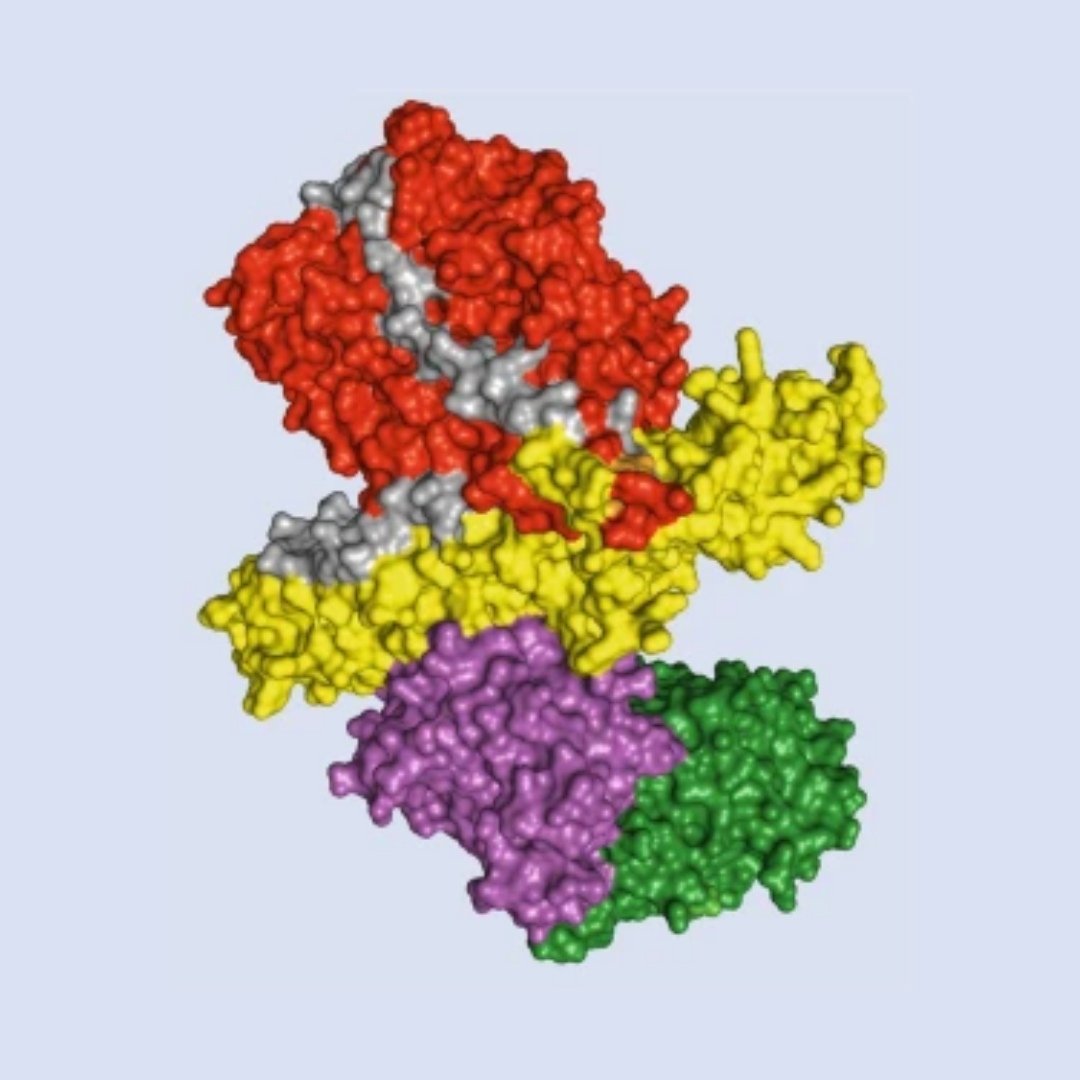
As shown in Figure 1, BoNT/A is made up of three domains; the C-terminal domain binds to the surface of the neuron’s membrane and to the inside of the synaptic vesicle membrane (Rossetto et al. 2020, 35-47). This dual-receptor binding ensures that BoNT/A only binds to neurons (neurospecificity). Upon binding, the metalloprotease domain enters the cytosol and cuts SNAP-25, inhibiting the release of acetylcholine which then causes muscle weakness (Rossetto et al. 2020, 35-47; Brin et al. 2023). However, this unique muscle-relaxant property is what enables Botox’s many uses, from calming muscle spasms and smoothing wrinkles to treating depression (Scott et al. 2023).
“The free expression by outward signs of an emotion intensifies it” (Darwin 1872, 366). This theory defines the facial feedback hypothesis, in which facial movements dull or intensify the emotion experienced, and helps identify it (Brin et al. 2023; Wollmer et al. 2012, 574-581). Based on this idea, it is hypothesised that Botox can be used to dull the negative emotional experiences of people suffering from depression, allowing them a longer-term solution that does not require frequent medication, such as daily SSRIs.
One clinical trial used onabotulinumtoxinA injections in the glabellar region (between the eyebrows; related to a sad facial expression) as an adjunct treatment, after which Hamilton Depression Rating Scale scores decreased by 47.1%, compared to 9.2% in placebo-treated patients (Wollmer et al. 2012). This clinician-administered scale assesses the severity of depressive symptoms and efficacy of antidepressants, with a 50% decrease indicating a response to the antidepressant (Lubova Renemane and Jelena Vrublevska 2021, 175-183). Furthermore, another study found that onabotulinumtoxinA treatment’s capabilities and onset speed are comparable to sertraline’s, a first-line SSRI (Selective Serotonin Reuptake Inhibitor; antidepressant) (Zhang et al. 2021).
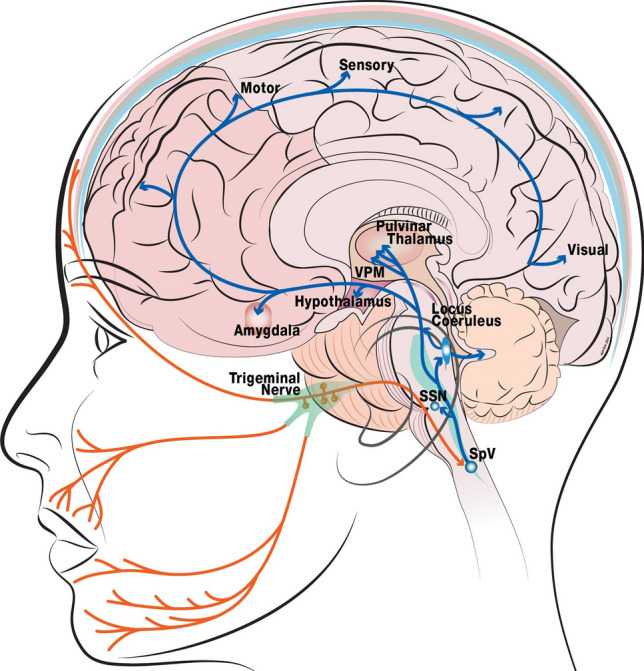
Based on Figure 2, the facial feedback hypothesis is also anatomically plausible. The trigeminal nerve—the main sensory and mastication nerve for the face—connects to the amygdala through a complex neuroanatomical pathway (Wollmer et al. 2022; Stark et al. 2023). By severing the neurofacial afferent feedback signals with onabotulinumtoxinA, scientists observed diminished amygdala activity when viewing emotionally negative faces (Kim et al. 2014), indicating a possible connection between facial movement and emotional experience.
The diversification of medicine allows for a more diverse range of patients; some people cannot take SSRIs, and others cannot have Botox. But by having more options, people are more likely to find a treatment that works. Although, although onabotulinumtoxinA injections are not approved as a replacement for SSRIs, this research provides hope for the future of antidepressants and insight into the relationship between face, brain, and emotional experiences.
References
Darwin, Charles. The expression of the emotions in Man and animals. John Murray, 1872.
Kim, M Justin, Maital Neta, F Caroline Davis, et al. “Botulinum Toxin-Induced Facial Muscle Paralysis Affects Amygdala Responses to the Perception of Emotional Expressions: Preliminary Findings from an A-B-A Design.” Biology of Mood & Anxiety Disorders 4, no. 1 (2014). https://doi.org/10.1186/2045-5380-4-11.
Renemane, Lubova, and Jelena Vrublevska. “Hamilton Depression Rating Scale: Uses and Applications.” The Neuroscience of Depression, 2021, 175–83. https://doi.org/10.1016/b978-0-12-817933-8.00019-0.
Rossetto, O., M. Pirazzini, F. Fabris, and C. Montecucco. “Botulinum Neurotoxins: Mechanism of Action.” Handbook of Experimental Pharmacology 263 (April 11, 2020): 35–47. https://doi.org/10.1007/164_2020_355.
Scott, Alan B., Dennis Honeychurch, and Mitchell F. Brin. “Early Development History of Botox (Onabotulinumtoxina).” Medicine 102, no. S1 (2023). https://doi.org/10.1097/md.0000000000032371.
Stark, Shauna, Craig Stark, Brian Wong, and Mitchell F. Brin. “Modulation of Amygdala Activity for Emotional Faces Due to Botulinum Toxin Type A Injections That Prevent Frowning.” Scientific Reports 13, no. 1 (2023). https://doi.org/10.1038/s41598-023-29280-x.
Wollmer, M. Axel, Claas de Boer, Nadeem Kalak, et al. “Facing Depression with Botulinum Toxin: A Randomized Controlled Trial.” Journal of Psychiatric Research 46, no. 5 (2012): 574–81. https://doi.org/10.1016/j.jpsychires.2012.01.027.
Wollmer, M. Axel, Michelle Magid, Tillmann H. Kruger, and Eric Finzi. “Treatment of Depression with Botulinum Toxin.” Clinical Application of Botulinum Toxin 14, no. 6 (2022): 218–22. https://doi.org/10.1017/9781009105033.027.
Zhang, Qilin, Wenqi Wu, Yuxin Fan, et al. “The Safety and Efficacy of Botulinum Toxin A on the Treatment of Depression.” Brain and Behavior 11, no. 9 (2021). https://doi.org/10.1002/brb3.2333.
Comments
15 Responses to “Botox for the wrinkles in your brain: BoNT/A as an antidepressant”
Hi iSci!
I was really inspired by Heather’s psych lecture on neurons for my post, since she mentioned Botox. I originally wanted to write a piece about the “dark side” of Botox by expanding on the diminished emotional perception part of my post. However, after further research, the antidepressant properties of Botox really fascinated me! It’s a cross-section between psychology, biology, and chemistry, which also drew me to discuss it as a blog topic. I think it’s especially cool how BoNT/A uses chemistry to increase it’s potency!
I hope you enjoy reading my post (and have lots of edits)!
Emily Martin
Hi Emily!
Great post and an extremely interesting topic, especially in today’s world. I especially liked your section with the clinical trial and the Hamilton Depression Rating Scale – it quantified the qualities you explained!
Here are some small improvements that you could implement during your edits to make it even better:
– P1S2 “Yet Botox is more than aesthetic improvement…” should be “Yet Botox is more than an aesthetic improvement…”
-P1S1 if you are planning on using complicated terminology that most readers won’t understand like ‘gerascophobia,’ you should define it.
-Figure 1 and P2S1: You should clarify and strictly state what BoNT/A is. Besides your figure caption and title, it is mentioned once but is the central piece of your blog.
-In P2, you go from how BoNT/A bonds to ensure neurospecifity (define!) to the metalloprotease enzyme cleaving the SNAP-25 protein to inhibiting neurotransmitter release. I recognize that it’s a complicated process, but I had to search up a lot of these terms to understand your paragraph. Try to cut down on unnecessary jargon and explain the process with definitions 🙂
-P3S2 I would edit “…the emotion experienced and helps with…” to “…the emotion experienced, and helps with…” The comma helps make the sentence flow better.
-Explain what the VPM is (labelled in Figure 2).
– I know it’s hard to fit all of this incredibly interesting information, but it generally is bad practice to introduce new information in your final paragraph! Try to shorten preceding paragraphs and keep your final paragraph as a conclusion that connects all of your other paragraphs to a main idea.
Great work overall!
Happy editing,
Berk 🙂
Hi Berk!
I’m glad you liked the post, and I definitely agree that the second paragraph has way too much unnecessary jargon. I trimmed it down, and hopefully it’s more self-explanatory now. I’ve also added a definition of BoNT/A. I really liked the conclusion paragraph, but I do agree that new information in the last paragraph is very messy, so I’ve chopped the conclusion in half. Hopefully that allows the conclusion to be more “concluding”!
Thanks so much for editing!
Emily Martin
Hi Emily,
This was a super fascinating blog post! I really enjoyed your ability to apply the chosen topic to many disciplines. In particular, I found the impacts of Botox on depression levels and the analysis of neurological pathways surprising and interesting to learn more about!
Here are a few things I noticed while reading:
P2S3- Here it might be better to add the citation after the fragment ‘’From causing muscle spasms and smoothing wrinkles to treating depression. ‘’ as it would improve readability.
P3S3- It may be useful to include a diagram/explanation for the Hamilton Depression Rating Scale as readers may be not familiar with it. Since you use this scale to substantiate the point made earlier in the paragraph it is important that readers can understand what the scale measures and what a change in value implies.
References – if you want to make your references section larger and more noticeable you can format them as a title/subheading in WordPress by clicking the ‘’transform to’’ in the top left corner!
That’s all, overall your blog post was captivating and I really enjoyed reading it. Looking forward to your next!
– Brianna 🙂
Hi Brianna!
I know. I found this research really interesting! I’m glad you agree.
I moved the citation over and added an explanation for the Hamilton Depression Rating Scale—that definitely helps support the point better, so thanks for the suggestion!
I think that I’ll leave the references as is for now, but thanks for the tip!
Thank you so much for reviewing my post,
Emily Martin
Hi Emily!
I really enjoyed reading this blog! The use of anecdotes in your hook was really clever! It was interesting to see the impact of botox on emotions through facial movement and how it can stretch as far as to being an antidepressant. Here are a few suggestions:
– You mention in your comment how this post was also inspired by evolution, specifically pre-zygotic behavioural isolation. Perhaps you can draw a clear connection to that in your blog?
– In P3, I believe it could be beneficial to define the criteria of Hamilton’s Depression Rating Scale. This way, the reader can better interpret and understand the percentages given.
– For your in-text citations, I would remain consistent by putting commas in all of them or not. For example, (Neal and Chartrand, 2011) uses a comma whereas (Zhang et al. 2021) does not.
Happy editing!
Nica
Hi Nica!
I’m glad you liked the post!
I changed my comment—I don’t think I phrased my inspiration right. Thanks for noticing that! I’ve also added the definition of the Hamilton Depression Scale and changed up the citations.
Thanks for reviewing my post!
Emily Martin
Hi Emily,
Amazing job with your first blog post. You did a great job breaking down some complex neuroscience, and your writing style is clear and scientific. I have a few suggestions:
P1S2: Your first two sentences both include semi-colons. You may to avoid this, just to improve flow. You could replace the semicolon in the second sentence with an em dash, or simply split S2 where the semi colon is.
P1S3: The last part of this sentence, “a physical reminder that the dose makes the poison”, is a bit unclear. What does it mean that “dose makes the poison”? To rectify this, you could clarify this statement by saying: “a reminder that the dose can decide the difference between medicine and poison”. Also, you need a citation after this sentence!
Figure 1: Be sure to mention your figure in text before it appears.
P2S3: Instead of having “neurotransmitter”, I would incorporate this word into the sentence by saying “acetylcholine, a neurotransmitter”. Also, instead of citing Rosetto et al. in the middle of the sentence, you can use a semi-colon to cite both Rosetto et al. and Brin et al. at the end, like this: (Rossetto et al. 2020; Brin et al. 2023).
P2S4: Cite Scott et al. at the end of the sentence.
P3S4: Instead of saying “adjunctive treatment”, just say “adjunct treatment”.
P4S1: Instead of using a semi-colon here, just start a new sentence.
P5S2: You can combine your citations at the end of your sentence like this: (Strack at al 1988; Havas et al. 2010).
P6S1: Usually, it is best practice to avoid starting sentences with “But”. Try “However” instead.
Overall, amazing job! I can’t wait to read the final draft. Happy editing 🙂
– Clara
Hi Clara!
I’m glad the neuroscience was broken down well!
I changed up the first paragraph to remove the semicolons and removed the “neurotransmitter” part of my acetylcholine sentence. These edits were super helpful!
Thanks for reading my post!
Emily Martin
Hello Emily,
I really enjoyed reading your blog! Your title really caught my eye and your introduction was very engaging and provided a nice transition into your topic. Your figures were very eye-catching as well! However, I would recommend expanding on your figure captions and providing a more clear explanation on what the figures are representing. For example, in Figure 1 you write:
“Figure 1. a) 3D molecular structure of BoNT/A toxin with it’s progenitor complex and b) BoNT/A toxin. b) displays the three main toxic domains: metalloprotease L domain (red), the C-terminal domain (green) and it’s N-terminal subdomain (purple), and the translocation N-terminal domain. Also featured is the peptide belt (white).”
When I first read this, I was very confused on certain terms like “progenitor complex” and what the three main toxic domains represent. I would recommend expanding on what these terms mean or providing more clarity in your explanation.
Moreover, your conclusion is a little bit short. I would recommend expanding more on how the studies you analyzed connect to your main idea and summarize your points. However, since there is a word count limit, I understand if this may not work.
Also, there are some minor spelling and grammatical errors I would address. You wrote with ” it’s N-terminal subdomain” when it should be “its” and one of your citations say “(Strack at al 1988)” instead of (Strack et al 1988).
Overall, I really enjoyed reading your blog. I found the concept really interesting and I am glad to have learned something new! Happy editing!
Kind regards,
Vanessa Salazar
Hi Vanessa,
I’m glad you liked the post! I’ve fixed the figures. Also, thanks for mentioning the “progenitor complex”—I think it’s unnecessary for my post, so I removed it. I also expanded on my conclusion to add more information on the importance of this research.
Thanks for reviewing!
Emily Martin
Hi Emily,
That was a very fun read! I never knew that Botox could be used like that.
Just a few suggestions:
On P3L6, you use a contraction in your writing, which isn’t very formal.
Across your post, you use certain terms, such as metalloprotease, that aren’t familiar to the average student.
All in all, this was a very enjoyable read; happy editing!
Praise
Hi Praise,
Thanks for the edits! I fixed the contraction, but I’m going to leave the “metalloprotease” part, just because I think it’s the most descriptive word I can use for the domain.
Emily Martin
Hi Emily!
Amazing blog post and such a cool topic to write about!! I really enjoyed reading it and was pleasantly surprised through it!
Just a few comments:
– In your references, you have a duplicate entry for Stark et al. 2023 just make sure to cut one of them out.
– P2S3: Since this sentence explains the mechanisms of how botox works, i think cutting it in half after SNAP-25 can make it a little smoother to read and easier to understand.
– In P5, i think you should just give a quick transition talking about facial emotional mimicry for smoother flow.
– A quick fix for Figure 1 caption, it has an extra space after toxin before the period.
Overall, you did spectacular!! This was super interesting!
Happy editing 🙂
-Hala
Hi Hala!
I’m glad you liked the post! I’ve fixed my references and the caption, and shortened the sentence.
Thanks so much for reviewing!
Emily Martin