Earthquakes have worldwide implications, destroying infrastructure, displacing populations, and disrupting society. They are particularly devastating because they cannot be predicted. What if there were a way to warn communities using the very animals that live within them? An early account from 373 BC reports that burrowing animals, like snakes, weasels, and rats, fled to seek shelter before a destructive earthquake in Greece (U.S. Geological Survey n.d.). But can this information be used in real time, or will it remain retrospective?
Before humans feel surface waves, primary (P) and secondary (S) body waves travel faster through the Earth. Modern seismometers can detect these body waves, and triangulation technology locates the earthquake’s epicentre. However, the time difference between the arrival of these body waves and destructive surface waves is not significant enough to warn communities of the onset of destructive vibrations.
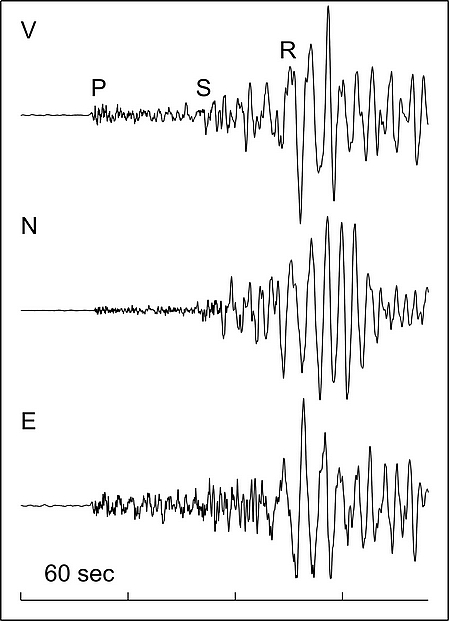
Integrating bio-monitoring with seismography offers a potential solution. Chinese studies as far back as the 1960s researched the usefulness of animals as bio-sentinels for seismic activity (Fan 2018). Some evidence suggests that animals in seismically active regions have evolved a sensory response during the S-P interval and may have increased sensitivity to precursor earthquake signals, beyond ground shaking (Kirschvink 2000). Elephants, for instance, have detected low-frequency infrasound caused by a tsunami breaking (Garstang and Kelley 2017). Similar infrasonic signals have also been investigated as earthquake precursors and potential indicators of faults (Wang et al. 2021).
Researchers from the Max Planck Institute of Animal Behaviour tagged cows, sheep, and dogs in earthquake-prone regions of Northern Italy to observe their activity (Max Planck Institute of Animal Behaviour 2020). They found that collective abnormal behavioural patterns emerged up to 20 hours before an earthquake, and these changes occurred earlier in groups closer to the epicentre. Although researchers have not identified the earthquake precursors that trigger these responses, one hypothesis suggests that animals respond to air ionization at pressurized rock surfaces (Wikelski et al. 2020).
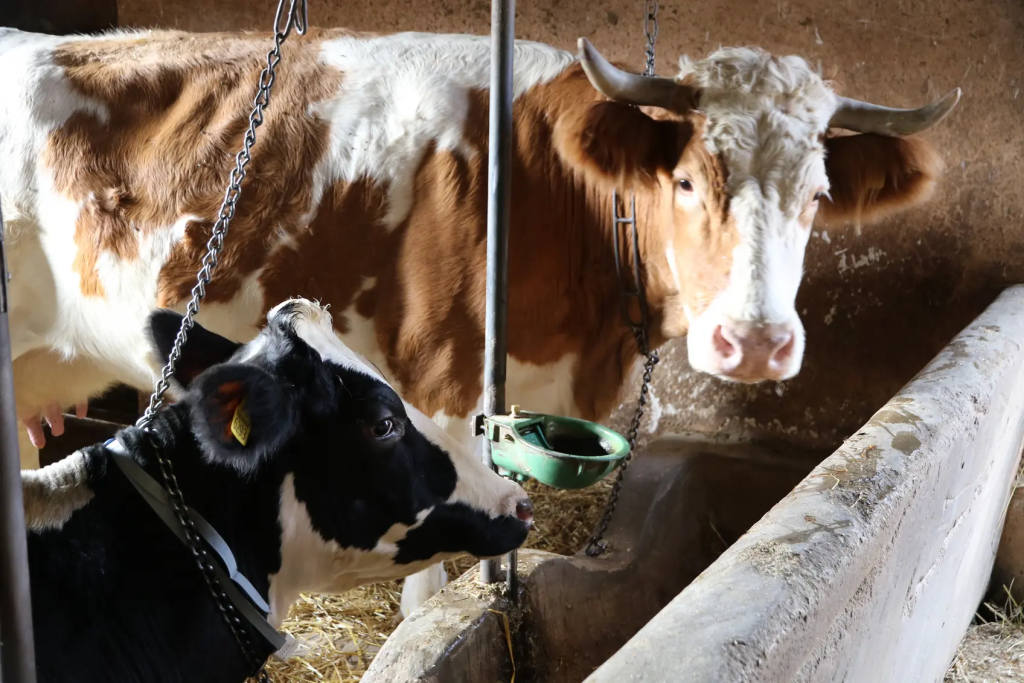
These results align with the collective behaviour theory, because the animals’ individual anticipatory behaviours were amplified by the reactions of those around them (Averett 2020). Many species exhibit collective cognition, which allows them to act as a group for the group’s benefit (Couzin 2009). This response lets animals sense and adapt to their environment by processing more information than any one individual could on its own. The collective reaction is less likely to be influenced by individual error, increasing response accuracy. This mechanism is observed in schools of fish, flocks of birds, and, it seems, in farm animals responding to earthquake precursor signals.
While an ancient account from 373 BC shows animals fleeing before disaster, and studies in Italy, China, and elsewhere continue to show that animals exhibit abnormal pre-seismic behaviour, using them as tools in modern society presents its own set of challenges. Relying on human understanding and interpretation of animal instincts is not ideal. The behaviour patterns themselves may be difficult to identify depending on the animal’s environment (Wikelski et al. 2020), and further research is needed to determine whether non-seismic events influence these patterns. By advancing our knowledge of behavioural psychology and earthquake precursor signals, we can better appreciate (and maybe even use) the early-warning systems that live among us!
References
Averett, Nancy (Scientific American). 2020. “Do Animals Really Anticipate Earthquakes? Sensors Hint They Do.” July 31. https://www.scientificamerican.com/article/do-animals-really-anticipate-earthquakes-sensors-hint-they-do/.
Couzin, Iain D. 2009. “Collective Cognition in Animal Groups.” Trends in Cognitive Sciences 13 (1): 36–43. https://doi.org/10.1016/j.tics.2008.10.002.
Fan, Fa-ti. 2018. “Can Animals Predict Earthquakes?: Bio-Sentinels as Seismic Sensors in Communist China and Beyond.” Studies in History and Philosophy of Science Part A, Experiencing the Global Environment, vol. 70 (August): 58–69. https://doi.org/10.1016/j.shpsa.2018.05.009.
Garstang, Michael, and Michael C. Kelley. 2017. “Understanding Animal Detection of Precursor Earthquake Sounds.” Animals 7 (9): 66. https://doi.org/10.3390/ani7090066.
Government of Canada, Natural Resources Canada. 2026. “Seismic Waves.” January 21. https://www.seismescanada.rncan.gc.ca/info-gen/smeters-smetres/seismicwaves-en.php.
Kirschvink, Joseph L. 2000. “Earthquake Prediction by Animals: Evolution and Sensory Perception.” Bulletin of the Seismological Society of America 90 (2): 312–23. https://doi.org/10.1785/0119980114.
Max Planck Institute of Animal Behaviour. 2020. “An Early Warning System for Earthquakes?” July 3. https://www.mpg.de/15126191/an-early-warning-system-for-earthquakes.
U.S. Geological Survey. n.d. “Animals & Earthquake Prediction.” Accessed October 23, 2026. https://www.usgs.gov/programs/earthquake-hazards/animals-earthquake-prediction.
Wang, Wei, Xiaorong Xue, Weisheng Chen, and Xiaoyan Xue. 2021. “Study on the Characteristic Mechanisms of Infrasonic Precursors during the Damage Process of Impending Earthquake Sources.” PLoS ONE 16 (10): e0257345. https://doi.org/10.1371/journal.pone.0257345.
Wikelski, Martin, Uschi Mueller, Paola Scocco, et al. 2020. “Potential Short-Term Earthquake Forecasting by Farm Animal Monitoring.” Ethology 126 (9): 931–41. https://doi.org/10.1111/eth.13078.
Comments
10 Responses to “Nature’s Seismometers: Can animals detect earthquakes better than we can?”
Hi iSci,
This blog post is inspired by our lecture in earth science (about earthquakes) and the psychology textbook readings about animals being conditioned for human purposes (like detecting landmines, for example). I wanted to see if animal psychology could be useful to humans for earthquake detection, and, turns out, it has the potential be!
Naomi
Hey Naomi!,
I really enjoyed reading your blog and thought it was really interesting on how humans can’t even detect earthquakes incoming with the technology we have today, yet many animals are able to! Here are some improvements I believe can be made:
I think if you were able to input a figure or diagram showing the relationship between seismic activity and its effect on animals from the Max Planck Institute of Animal Behaviour to help the readers could better conceptualize your topic and understand the process better.
Additionally, I think it would be great if you could expand on your explanation of current earthquake early-warning systems and clarify the difference between earthquake prediction and early warning. This would help readers understand the limitations of current technology and how monitoring animal behaviour could potentially complement existing systems.
Also, I believe it would be beneficial if you talked about the limitations of your study, not just pros. For example, discussing whether similar behavioural changes occur in the absence of earthquakes would make your argument a more nuisance approach to see if using animals is a reliable predictive tool.
I also think it would be great if you expanded your conclusion to explore how animal monitoring could realistically be incorporated into existing earthquake early-warning systems (potential use of wearable sensors/ or automated behavioural analysis) to see how it would work on a practical level.
Overall very interesting research!
Aanya
Hi Aanya,
Thank you so much for your feedback! Unfortunately, due to word count limitations I tried my best to compare current systems with animals as early-warning systems, but I could not go into extensive detail. Since the studies are very rudimentary at the moment, researchers aren’t aware of all the limitations, but I did touch on some in my conclusion. For that same reason, I can’t say for sure how animals would be incorporated into current earthquake warning systems, since our technology and findings still need a lot of refinement before it becomes a practical approach.
Thank you again for commenting!
Naomi
Hi Naomi!
Good job on your blog post! The concepts of Earth Science and Psychology was weaved together almost seamlessly with animal conditioning and seismic data. The blog is concluded with a great thought provoking question and reflection for the reader on the possible and practical use of these animals as earthquake warning procedures. Here are a few suggestions:
– In P3, you mention how animals “may have increased sensitivity to precursor earthquake signals”. Since you mentioned how the time difference between the arrival of body waves and surface waves is not significant enough to warn communities, I believe it would be beneficial to explain how these precursor earthquake signals, in contrast, can. Is there an estimate of how long between the identification of these precursors and the arrival of surface waves could be? Does this then allow civilization to better prepare for surface waves?
– In P5, I would combine your two citations for Couzin 2008 followed by your explanation as to improve the flow.
– For your in-text citations, I noticed you do not use commas to separate the name and date except for (USGS Earthquake Hazards Program, n.d.). I would remove the comma here to keep the consistency, or add commas to all your in-text citations.
– I would suggest adding a figure. Perhaps a figure of body waves compared to surface waves as a visual explanation of how the time in between them is insignificant. You could also add a figure from the study by the Max Planck Institute of Animal Behaviour detailing the increase of abnormal behavioural patterns closer to the epicentre. Then, you can add your explanation in your figure caption which does not go toward the word count. This is a great way to improve the reader’s understanding of the text!
– At the beginning of your conclusion paragraph I would also quickly summarize the theories and ideas of your blog in one or two sentences! This helps the reader to remember the main points of your blog which will further assist their reflection on the topic.
Happy editing!
Nica
Hi Nica,
Thank you for your feedback! I tried to incorporate your first point as best as possible while remaining within the word limit. The precursor signals that animals detect are not well known and it’s difficult to estimate the time that it would take, but the Max-Planck Institute mentioned that behaviour changes take place well in advance (up to 20 hours) so I talked about that. It’s still uncertain how effective the animals would be at helping civilizations prepare for earthquakes, since it’s still relatively novel research.
Thanks again for the help!
Naomi
Hi Neomi!
Great blog post – really interesting topic. I have a few comments for you during your editing process.
– P1S4: remove the brackets around “like snakes, weasels, and rats”. I don’t think they are necessary.
– P3S1: avoid writing “some” twice in one sentence. Change one of these to reduce redundancy
– I would agree with other commenters that your post could benefit from a figure, but do not try to force it. I think figures can be a great addition but you do a good job of explaining the concepts and you do not necessarily need one. Look at some of the papers you have cited to see if there is a suitable figure for your post that explains/expands on the concepts you have touched on.
Overall, amazing job with this post. I love the topic you chose and it is very impressive how you involved so many disciplines and explained their concepts while staying within word count.
I look forward to reading your final draft!
– Keira
I have an editing suggestion for my own comment! Maybe spell the author’s name correctly. Apologies, NAomi!!
Hi Keira,
I implemented all of your feedback, thank you so much for the help!
Hi Naomi!
I really enjoyed reading your post. It was interesting to see how animals might pick up on things that our technology currently can’t, and the way you connected the Italian farm study to collective behaviour made the science easy to follow. Here are some improvements I believe could be made:
Your title asks whether animals can predict earthquakes “better than we can”, but the post mostly describes what animals do rather than comparing this with human methods. I think it would help to return to this question in your conclusion and say whether the evidence suggests animals could outperform, supplement, or only support our current tools.
Additionally, I think the elephant example in P3 could be clarified. It describes detecting low-frequency sounds from a tsunami rather than an earthquake, so readers might wonder how it supports your argument. A sentence explaining why it is relevant, or why it shows that animals can sense signals humans miss, would make the connection clearer.
I also think your conclusion would be stronger if it addressed the practical risks of relying on animal behaviour. For example, discussing what would happen if animals react for reasons unrelated to earthquakes, such as hunger or weather, would show readers why a false alarm could be costly and why more research is needed before communities could depend on this.
Finally, you open with the story from ancient Greece, which is a great hook, but it does not appear again. I believe that bringing it back at the end could tie your post together and show how much (or how little) has changed since then.
Overall, great job on this post! I look forward to reading your final draft.
Emily
Hi Emily,
Thank you for your comment! In terms of your first suggestion, I tried to outline how human technology fails to predict earthquakes due to the short interval between the detection of body waves and surface waves–I tried to show throughout the rest of the post outlines that earlier detection may be possible through animal monitoring. Also, there are definitely inherent risks to using animals, but the sources I used reported a pretty high level of accuracy in using animals to anticipate earthquakes, and they did not discuss any outside factors that produced similar results. I think further research definitely needs to be done on this topic, which I addressed in the conclusion.
Thank you again for your feedback!
Naomi