Obsession, or rather limerance is the acute, involuntary, and all-consuming cognitive infatuation with a target individual known as the “Limerent Object” (Willmott and Bentley, 2015, 20), sustained by uncertainty surrounding possible reciprocation, seperating it from love and lust in that capacity due to its independence from genuine love or care for the person (Drevitch, 2025). The neurological activity of limerence is centered in the mesolimbic reward center of the brain, activating the exact same physiological reward pathways seen in gambling addictions and chemical dependency (Bradbury, 2024, 418). Further, What’s interesting in the film Obsession is the representation of this fixation, not in “Freaky Nikki” but rather in the characterization of Bear Bailey, the main protagonist of the film.
Unremarkably, Bear’s fixated state is fundamentally catalyzed by a profound threat to his masculinity, like films of this genre. In the film, in the opening of the film, it depicts the Bear Bailey and Nikki Freeman at a bar with their friends where bear attempts to tell Nikki that he likes her, a few scenes later Nikki realizes that he has been acting quite oddly and straight fowardly states that she thinks of him like a little brother (Barker, 2026). Facing this rejection even without stating his feelings explicitly takes a toll on Bears psyche, a status threat on his sense of masculinity. For a healthy relationship evolutionarily open mate choice sustains healthy pair bonding (Grant, 2025, 2) and due to Bears feelings regarding his rejection he forgoes the idea of giving Nikki romantic autonomy for his own benefit (Rowland, 2023). This is not only a result from his own rationale but also supported by media, with chasing tropes and Heterosexual Sexual Scripts (HSS) in Rom-Coms especially condition men to believe that persistance post rejection is many or a representation of true love instead of what it really is; unwanted harassment (Hassim, 2024, 70). With this in mind we can now understand that it was likely cowardice and self-centeredness that compelled him to break the “One Wish Willow” bypassing Nikkis autonomy entirely.
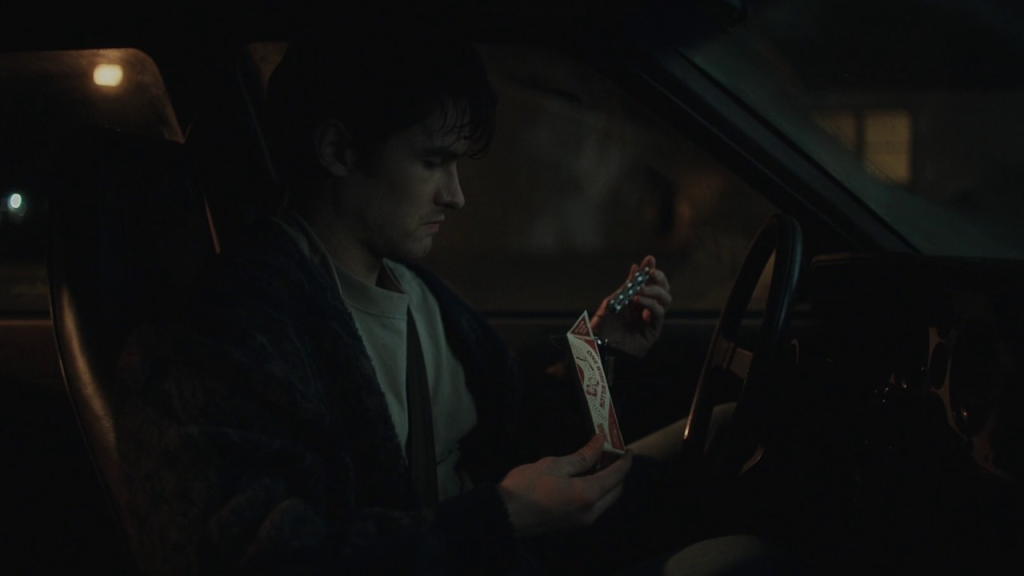
As I stated above, Limerence isn’t reliant on the Limerant Object actually caring about the individual, it is simply the need to be desired from the Limerant Object since the individual truly believes the LO is perfect, resultant of the Halo effect— when initial positive feelings cause an individual to gloss over severe negative attributes (Fagan, 2025). Which is one reason why Bear was willing to look over the catastrophic harm Nikki was causing to herself and to others. Limerence also engages the limbic brain system, which processes “fight or flight” survival emotions and involuntary bodily functions, effectively re-ordering the brain’s motivational hierarchy (Willmott and Bentley, 2015, 20). Both the psychological and biological effects create this ignorance that becomes the building block for Intrusive rumination—continuous intrusive thoughts often depicted as an invading “Limerbeast”—overpowering rational decision-making and making him more self-interested (Willmott and Bentley, 2015, 28), and it worked when Nikki functioned as a loving girlfriend just infatuated with Bear, and even when she began losing her original character, Bear was able to justify it cognitively, becoming ambivalent to her suffering. After all, He’s the “Nice guy”; he does not need to consider her further if she’s already so in love with him!
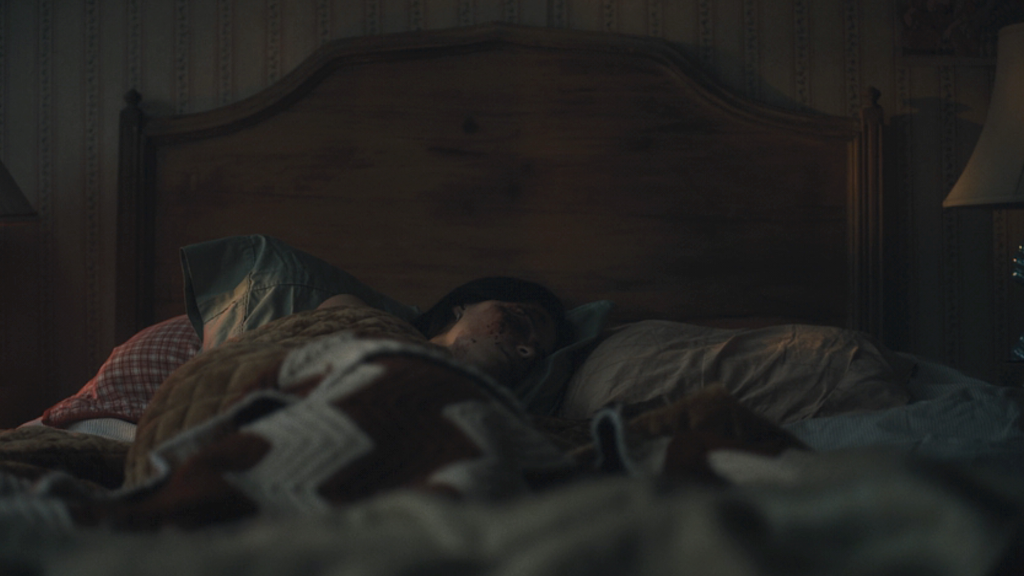
In that vein, when the real Nikki briefly surfaces from her enchanted trance and begs Bear to kill her, her plea represents a desperate bid for autonomy and relief from agonizing psychological and physical trauma. Bear’s dismissive response—asking, “What’s so bad about being with me?”—shows he doesn’t love her. Instead, his refusal demonstrates how his cowardice and male-centred selfishness reduce Nikki to a captive possession whose profound suffering is ignored as long as she remains beside him and makes him feel desired. Through this moment, the narrative reveals that Bear’s obsession relies on an idealized internal fantasy of Nikki rather than confronting the horror of her actual reality (Willmott and Bentley, 2015, 30). By allowing her to endure extreme physiological degradation and psychological torment to maintain his forced relationship, Bear proves that his actions were never motivated by love for her.
Bibliography
Barker, Curry, dir. 2026. Obsession. Horror. Focus Features. Theater, 109 minutes.
Bradbury, Paula, Emma Short, and Paul Bleakley. 2024. “Limerence, Hidden Obsession, Fixation, and Rumination: A Scoping Review of Human Behaviour.” Journal of Police and Criminal Psychology 40 (2): 417–26. https://doi.org/10.1007/s11896-024-09674-x.
Drevitch, Gary. 2025. “Limerence.” Psychology Today Canada, December 16, 2025. https://www.psychologytoday.com/ca/basics/limerence.
Fagan, Abigail. 2025. “Halo Effect.” Psychology Today Canada, November 12, 2025. https://www.psychologytoday.com/ca/basics/the-halo-effect.
Hassim, Nur Hanisah. 2024. Romance or Horror? U.S. and U.K. Perceptions of Courtship and Harassment in Romantic Comedy Films.
Grant, Ania. 2025. Evolution, Feminism, and Romantic Fiction: From Mr. Darcy to Mr. Big. Taylor & Francis Group.
Rowland, Allison L. 2023. “Small Dick Problems: Masculine Entitlement as Rhetorical Strategy.” Quarterly Journal of Speech 109 (1): 26–47. https://doi.org/10.1080/00335630.2022.2136739.
Willmott, Lynn, and Bentley, Evie. 2015. “Exploring the Lived-Experience of Limerence: A Journey toward Authenticity.” The Qualitative Report, ahead of print, January 5. https://doi.org/10.46743/2160-3715/2015.1420.


Leave a Reply
You must be logged in to post a comment.