Humans have spent much of our lives trying to avoid bacteria. We have developed many ways to eliminate bacteria in the form of many drugs. From boiling water, cooking food, using alcohol based solutions, to antibiotics, we have developed so many ways to eradicate bacteria from our lives. But, what if I told you certain bacteria might actually be the key to helping fight one of humanity’s most challenging diseases? What if bacteria could help fight cancer?
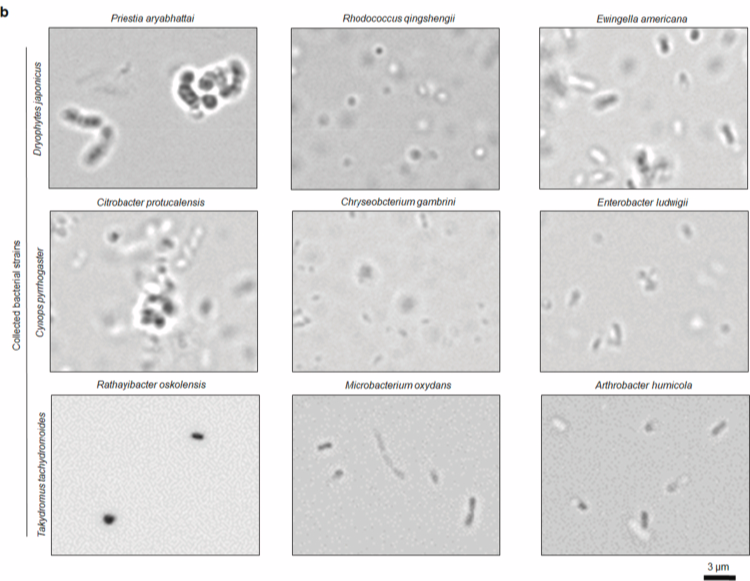
Researchers collected forty-five bacterial strains from the intestines of different amphibians and reptiles. Through rigorous biocompatibility screening procedures, nine bacterial strains were selected for antitumor evaluation: Priestia aryabhattai, Rhodococcus qingshengii, Ewingella americana, Citrobacter portucalensis, Chryseobacterium gambrini, Enterobacter ludwigii, Rathayibacter oskolensis, Microbacterium oxydan, and Arthrobacter humicola (Figure 1). Of these nine, Ewingella americana, which was isolated from Japanese tree frogs, demonstrated particularly strong anticancer properties. Researchers tested its effects in mice with colorectal tumours and a single treatment resulted in complete tumor regression in the experimental mice (Iwata et al., 2025).
How is this bacteria killing these cancer cells? There are two major mechanisms that were identified. E. americana uses both direct anticancer activity and immune system activation. E. americana is a facultative anaerobic bacteria, and was able to selectively accumulate and colonize within tumors (Iwata et al., 2025). This is because these solid tumors have an hypoxic and immunosuppressive tumor microenvironment, meaning it has very low oxygen concentrations and deficient nutrients (Luo et al., 2016). This is the perfect place for E. americana to grow. Once E. americana establishes itself within the tumour, it releases substances called cytolysins, which can damage the membranes and structures of cancer cells, disrupting their normal function and ultimately causing cell death (Iwata et al., 2025). Researchers also detected apoptosis which is a programmed cell death. In other words, rather than a cell simply being damaged, it activates an internal process that causes the cell to die. Not only does this bacteria help kill these cancer cells, it also stimulates the body’s immune response, involving T cells, B cells and neutrophils, which help to attack tumour cells (Iwata et al., 2025). Essentially, E. americana both directly and indirectly attacks the tumor by colonizing it, while simultaneously stimulating the immune system, recruiting immune cells and promoting inflammatory signals that contribute to further tumour destruction.
In the field of cancer research, this can have so many implications. Traditional cancer treatments, such as chemotherapy, can affect healthy cells alongside malignant ones. Could this bacteria offer a more targeted approach to treating tumors? What other undiscovered microorganisms might have properties that could benefit medicine? Perhaps this discovery gives us an opportunity to rethink our relationship with the microorganisms around us. Is there more we can learn from these tiny creatures? And maybe the bacterias that we’ve been trying to avoid could actually give us a window into treating one of humans most challenging diseases.
References
Iwata, S., Yamasita, N., Asukabe, K., Sakari, M., & Miyako, E. (2025). Discovery and characterization of antitumor gut microbiota from amphibians and reptiles: Ewingella americana as a novel therapeutic agent with dual cytotoxic and immunomodulatory properties. Gut Microbes, 17(1), Article 2599562. https://doi.org/10.1080/19490976.2025.2599562
Luo, C.-H., Huang, C.-T., Su, C.-H., & Yeh, C.-S. (2016). Bacteria-mediated hypoxia-specific delivery of nanoparticles for tumors imaging and therapy. Nano Lett., 16(6), 3493–3499. https://doi.org/10.1021/acs.nanolett.6b00262


Leave a Reply
You must be logged in to post a comment.