The human eye can see many different colours, using three different coloured cones to distinguish wavelengths of light, giving us our visible spectrum (Sliney, 2016). However, the human eye is limited, where the generally accepted visible spectrum is between 380nm to 700nm (Sliney, 2016). But what if the human eye could see beyond that range? Enter the mantis shrimp.
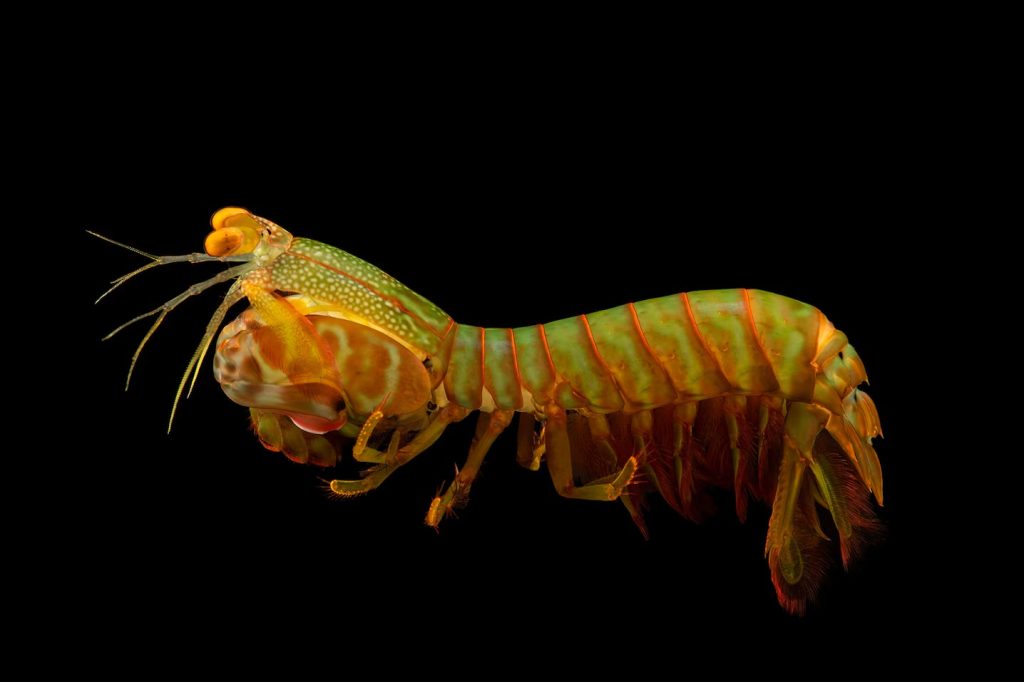
Figure 1. orange spot mantis shrimp (Gonodactylaceus ternatensis), (National Geographic, N.D.)
Considered to be one of the most unusual and fascinating organisms, this stomatopod Crustacean not only possesses a unique and deadly hunting method, but also one of the most structurally complex eyes on earth. With 12 coloured receptors, the mantis shrimp is known as the organism with the greatest range of vision so far, capable of seeing into both the ultraviolet and infrared spectrums, well beyond human vision, as well as possessing the ability to see circular polarized light (CP light) (Chiou et al, 2008). But why?
The visible spectrum of the mantis shrimp does not solely stem from having 4 times the number of cones as the human eye. Rather, the structure of the eye contributes to this range. The mantis shrimp possesses a compounded eye structure, made up of thousands of retinula. The retinula contains rhabdoms as its primary photoreceptor cell. The mantis shrimp retinula is composed of 7 primary rhabdoms, a secondary level with an eighth rhabdom, and a crystalline cone layer. Intrarhabdomal filters are present in between the primary and secondary rhabdom (Figure 2).
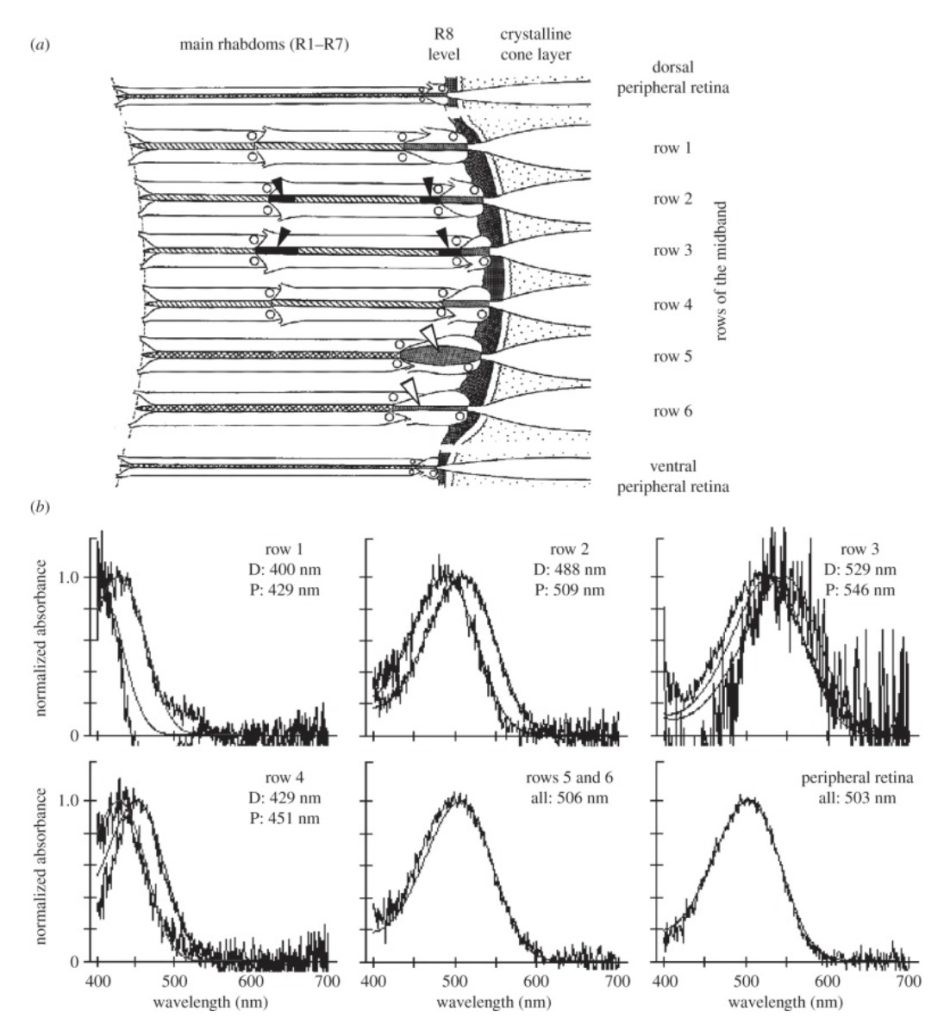
Figure 2. Retinal structure of the Odontodactylus scyllarus (Cronin et al, _)
This structure of the mantis shrimp eye allows it to filter for specific wavelengths of light, see into the ultraviolet section of the electromagnetic spectrum, and even view CP light. This is done through the use of the intrarhabdomal filters within the eye, which filter for certain ranges of wavelength beyond what the rhabdoms would permit before. These filters also permit the eye of this crustacean to view CP light (Chiou et al, 2008). Additionally, four photoreceptors within rhabdom 8 allow absorbance of certain wavelengths of ultraviolet light.
In nature, organisms must adapt to survive their environmental conditions or die. The organism most adapted to its environment will pass on its traits to following generations, meaning that for some reason, the expansive range of vision is environmentally beneficial to the mantis shrimp. Therefore, within the specific oceanic environments inhabited by the mantis shrimp, where the range of visible light has been significantly altered, possessing a wide range of vision becomes an advantageous trait for several reasons. It enables the mantis shrimp to locate both predators and prey, identify safe locations, and attract a mate. As a result, the mantis shrimp is highly adaptive to varying light levels. Simultaneously, this is why the trait is disadvantageous to humans.
Seeing beyond the current visible spectrum with the consistency of our current environment would be extremely overwhelming to the human senses. The constant change in visual stimuli would provide a significant challenge to our vision on a daily basis. Nevertheless, it still warrants wondering what the world looks like with more colours.
Citations
Thoen, H. How, M. Chiou, T. Marshall, J. 2014. “A Different Form of Colour Vision in the Mantis Shrimp.” Science C 343 (6169): https://www.science.org/doi/10.1126/science.1245824
Marshall, J. Oberwinkler, J. “Ultraviolet Vision: The Colourful World of the Mantis Shrimp.” Nature 401, no. 6756 (Oct 28, 1999): 873-4. doi: https://doi.org/10.1038/44751.
Cronin, T. Bok, M. Marshall, J. Caldwell, R. 2014. “Filtering and polychromatic vision in mantis shrimps: themes in visible and ultraviolet vision.” Phil. Trans. R. Soc. B 19 February 2014; 369 (1636): 20130032. https://doi.org/10.1098/rstb.2013.0032
Sliney, D. “What is light? The visible spectrum and beyond.” Eye 30, 222–229 (2016). https://doi.org/10.1038/eye.2015.252
Dan-Eric Nilsson; The evolution of eyes and visually guided behaviour. Phil. Trans. R. Soc. B12 October 2009; 364 (1531): 2833–2847. https://doi.org/10.1098/rstb.2009.0083
National Geographic. “Mantis Shrimp, Facts and Information.” Mantis Shrimp, Facts and Information, National Geographic, www.nationalgeographic.com/animals/invertebrates/facts/mantis-shrimp. Accessed 2 Oct. 2026.
Thoen HH, Wolff GH, Marshall J, Sayre ME, Strausfeld NJ. “The reniform body: An integrative lateral protocerebral neuropil complex of Eumalacostraca identified in Stomatopoda and Brachyura.” J Comp Neurol. 2020; 528: 1079–1094. https://doi.org/10.1002/cne.24788
Chiou, T. Kleinlogel, S. Cronin, T. Caldwell, R. Loeffler, B. Siddiqi, A. Goldizen, A. Marshall, J. “Circular Polarization Vision in a Stomatopod Crustacean.” Current Biology C18 (6). https://www.sciencedirect.com/science/article/pii/S0960982208002522?via%3Dihub
Gagnon, Y. Templin, R. How, M. Marshall, J. “Circularly Polarized Light as a Form of Communication Signal in Mantis Shrimps” Current Biology C25 (23). https://www.sciencedirect.com/science/article/pii/S096098221501310X?via%3Dihub
Goldsmith, T. “Fine Structure of the Reticulae in the Compound Eye of the Honey-bee.” Cell Biology C14 (3). https://doi.org/10.1083/jcb.14.3.489


Leave a Reply
You must be logged in to post a comment.