Isn’t it weird to think that grapes could have the potential of being useful in chemical biology, let alone as a therapeutic agent? Not anymore! What if I told you that they go further than their consumable benefits and can in fact be used to treat specific medical conditions?
When thinking about drugs and treatment, the final product is typically what is mainly talked about. However, what is often overlooked is the method of transportation for that drug to the bodily target. Extracellular vesicles (EV) are increasingly important in this topic, which includes the broad category of transport molecules (Doyle and Wang 2019). Within this umbrella, exosomes are a subdivision which include the smallest group of EVs. Organism-derived particles and exosomes have been explored since the existence of therapeutic agents, however, research has increased significantly throughout this realm during the past decade; including the discovery and usage of plant-derived exosome-like nanoparticles (PELNs) (Liu et al. 2025).
As the name implies, PELNs are a type of membrane vesicles which are natural and mirror mammalian-produced exosomes. These molecules, although small, are incredibly mighty and used as one of the most important classes of transmitters between cells (Sha et al. 2024). Mammalian-derived exosomes exist, but due to their challenges, of biological complexities, low productivity and high cost, PELNs are considered the safer alternative. In addition, they tend to have other advantages. This includes being safe for humans, as they are edible or from medicinal plants, therefore decreasing the risk of immune responses. They also retain their bioactive molecules from their sources, which can allow anti-inflammatory effects and they can serve for a wide range of therapeutics as they are natural (Liu et al. 2025). The potential biological activities and roles for drug delivery are shown below in Figure 1.
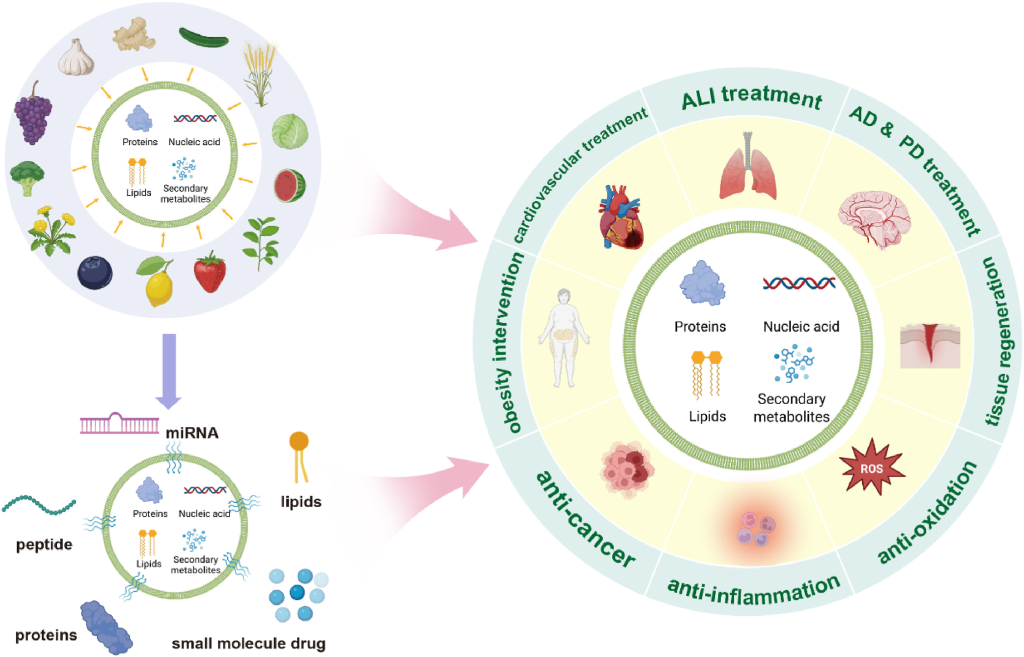
Figure 1. Schematic of the sources for PELNs as well as their contents listed below and their potential illnesses they aid (Liu et al. 2025).
It has also been found that different sources of PELNs provide various biotherapeutic applications. An example of the variations are presented in Figure 2.
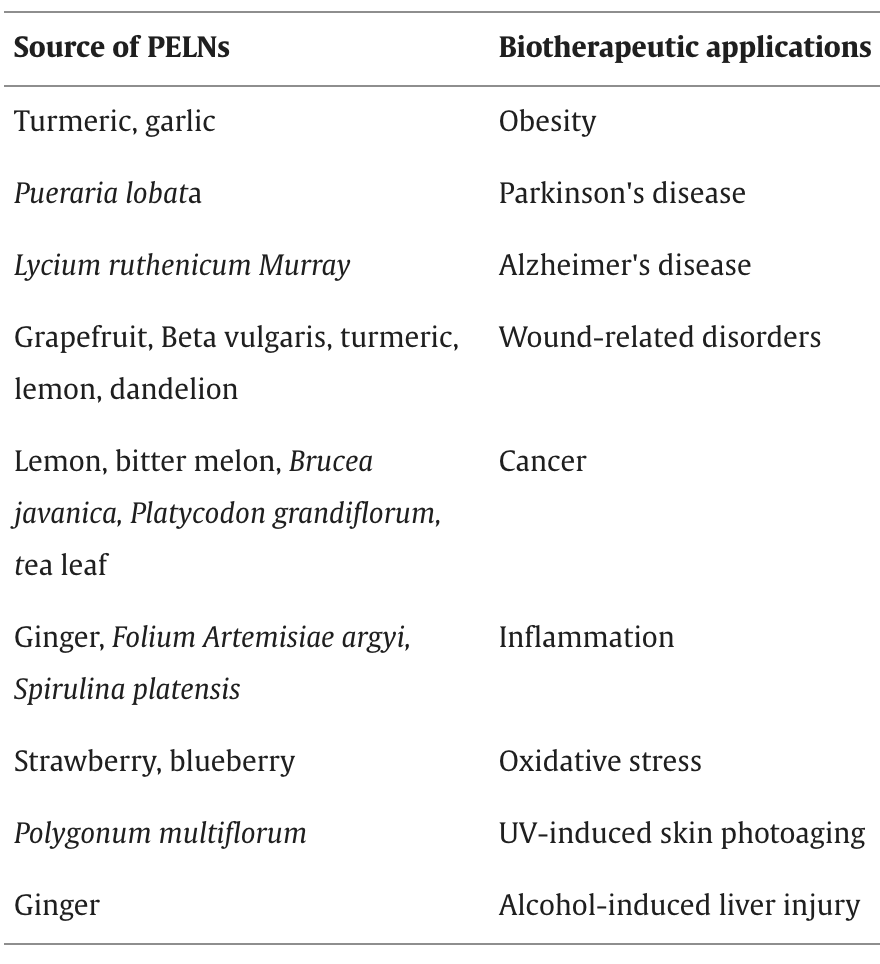
Figure 2. Table that lists the plant source on the left with their potential biotherapeutic applications listed respectively (Liu et al. 2025)
Alongside this research, grape exosome-like nanoparticles (GENS), have been considered a potential therapeutic agent for protecting against vascular and cardiovascular related diseases (Teng et al. 2022). Vascular calcification (VC) is a specific type of cardiovascular-releated illness that involves calcium and mineral build up in the walls of the vascular system (Wu et al. 2013). GENs contain lipids, proteins, RNA (mRNAs, miRNAs, and lncRNAs) and are capable of delivering drugs; miRNAs are microRNAs that non-coding and regulate gene expression after transcription (Teng et al. 2022). The miRNA from the GENs bind to those of mammalian miRNA which affect biological processes and can be used for manipulation with respect to varying treatments. Chronic inflammation is known to contribute to VC. Research shows that miRNA in GENs consist of those form the miR169 family, targeting the expression of inflammatory genes such as IL-6, IL-2, IL-5, and IL-1 (Teng et al. 2022). In addition, GENS were reported to be able to protect against damage created by reducing oxidative stress (ROS). Grape consumption has already been regularly projected to lower plasma ROS levels, further suggesting GENs ability to improve VC by reducing ROS.
Aside from grapes being a tasty snack, it is certainly interesting to see how scientific technology has grown enough that simple fruits are now being considered as potential therapeutic agents. Continuing research from this year now predicts that GENs have the potential to suppress tumors. It is still important to recognize that although the research is fairly recent, the current data provides a significant amount of potential that should not be overlooked; an important concept in the science world.
References
Doyle, Laura, and Michael Wang. 2019. “Overview of Extracellular Vesicles, Their Origin, Composition, Purpose, and Methods for Exosome Isolation and Analysis.” Cells 8 (7): 727. https://doi.org/10.3390/cells8070727.
Liu, Di, Jingxian Gao, Xueling Wu, and Lu Han. 2025. “Plant-Derived Exosome-Like Nanoparticles as Promising Biotherapeutic Tools: Recent Advances and Challenges.” Smart Materials in Medicine, ahead of print, July 1. https://doi.org/10.1016/j.smaim.2025.07.003.
Sha, Ajia, Yingyong Luo, Wenqi Xiao, et al. 2024. “Plant-Derived Exosome-Like Nanoparticles: A Comprehensive Overview of Their Composition, Biogenesis, Isolation, and Biological Applications.” International Journal of Molecular Sciences 25 (22): 12092–92. https://doi.org/10.3390/ijms252212092.
Teng, Yintong, Jiaqi He, Qingping Zhong, et al. 2022. “Grape Exosome-Like Nanoparticles: A Potential Therapeutic Strategy for Vascular Calcification.” Frontiers in Pharmacology (Switzerland) 13 (October): 1025768. PubMed Central. https://doi.org/10.3389/fphar.2022.1025768.
Wu, Meiting, Cameron Rementer, and Cecilia M. Giachelli. 2013. “Vascular Calcification: An Update on Mechanisms and Challenges in Treatment.” Calcified Tissue International 93 (4): 365–73. https://doi.org/10.1007/s00223-013-9712-z.
Zhang, Yi, Liying Zheng, Gaohan Zhu, et al. 2026. “Grape-Derived Exosome-Like Nanoparticles Suppress Nasopharyngeal Carcinoma Progression by Targeting the FASN/MAPK Axis.” Cellular Signalling 145 (September): 112621. https://doi.org/10.1016/j.cellsig.2026.112621.
Comments
7 Responses to “A Grape Experiment!”
Hi iSci!
Happy beginning of the semester! I decided to write my topic on GENs, in coordination with the third-year Wine Science research project, that we have started, and some topics that we have talked about in my Chemistry/Chemical Biology courses.
Enjoy the read. 🙂
Hi Sayana!
Amazing blog post, I really enjoyed reading it! Here are a coupe or suggestions to help make it even better:
(1) Change “Citations” to “References”
(2) P1S3: Remove “as a product” to improve readability.
(3) In your figure 2 caption, you should not reference figure 1. Figures should have the capacity to stand alone with just their figure caption.
(4) In your conclusion, you should avoid having citations (as this is essentially new information being introduced) – maybe redact or move it elsewhere.
Once again, great job – cannot wait to read the final iteration!
Happy editing,
Farwa 🙂
Hi Farwa!
I really appreciate your feedback on the inconsistencies in my citations! I have taken all of your suggestions into consideration and corrected it accordingly!
Thank you once again!
Sayana 🙂
Hi Sayana!
This was a great blog post, I was really engaged and found it easy to read. Some suggestions that you could take into consideration:
-P1S1: I don’t believe chemical biology needs to be capitalized!
-P1S3: Since you’re referring to grapes as plural, I would slightly tweak the wording of this sentence: What if I told you that they go further than their consumable benefits and can in fact be used as products to treat specific medical conditions?
-P2S1: I’m not quite sure what you mean by “emphasized product”, is there another term you could use or further explain that?
-I would change citations to references!
Otherwise, great job explaining complex topics!
Celine
Hi Celine,
I really appreciate your feedback on the inconsistencies as well as my grammatical errors! After going over my text once again, I understand where I went wrong and I have taken all of your recommendations into consideration and corrected it accordingly!
Thank you!!
Sayana 🙂
Hi Sayana!
This was an amazing post, I had a great time reading this! Here are a few pieces of feedback:
– P4S1: I would recommend using a different transition word as this one is used a few times
– I would recommend not adding any new information in the conclusion
– P3S4: This sentence is a bit long if possible I would recommend trying to split it up!
Overall, great job! Happy editing!
Maya Kumar
Hi Maya,
Thank you so much for your feedback on my contextual and grammatical errors! I have incorporated as much as I could, to improve on my blog according to your suggestions. As for next time, I will be sure to take this into consideration prior!
Thank you again!
Sayana 🙂