Alcohol and athletics are both deeply ingrained in various cultures and in many cases, intertwined. Old photographs depict Tour de France cyclists drinking beers mid-race, whereas modern examples include spraying champagne from a Formula 1 podium or opening an expensive bottle of wine to celebrate an athletic achievement. This raises the question of whether alcohol and athletics are really the ideal combination.
Outside of athletics, contradicting views exist on the health impacts of alcohol. Some studies suggest that moderate alcohol consumption can be linked to long-term cardiovascular benefits, but other research connects it with cardiovascular risk (Chiva-Blanch and Badimon 2019). Hepatic tissue damage is a well-known side effect of excessive consumption, since the liver is the main site of alcohol metabolism (Osna et al. 2017). Fermented alcohols, particularly red wine, contain high levels of bioactive compounds, such as the polyphenol resveratrol, found in grapes (Figure 1) (Chiva-Blanch and Badimon 2019; Meng et al. 2020). Resveratrol has been shown to have a variety of positive health effects including antioxidant, anti-inflammatory, anticancer, neuroprotective, and cardioprotective properties (Meng et al. 2020). Despite the health benefits of resveratrol and other compounds, alcohol is thought to have an overall negative effect on athletic recovery and performance (Vella and Cameron-Smith 2010; Kurtz 2024).
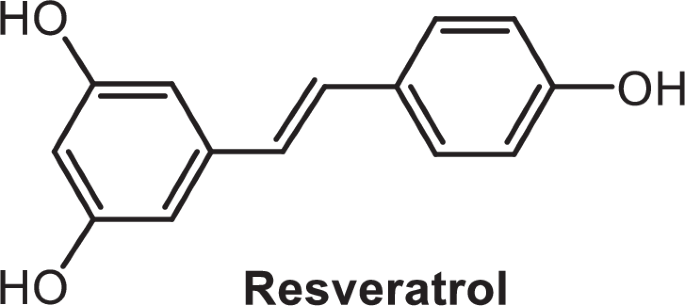
Figure 1: Chemical structure of trans resveratrol, a compound naturally found in grapes and therefore in red wine (Matsumoto et al. 2025).
One interesting paradox lies in the fact that the antioxidant properties of resveratrol mitigate exercise-induced benefits (Meng et al. 2020). It has been known for decades that physical activity causes the production of reactive oxygen species (ROS) in the human body due to increased oxygen flow to the muscles (Yavari et al. 2015). While oxidative stress is commonly viewed as detrimental, ROS production during exercise is crucial for muscle adaptation (Figure 2). ROS produced by muscles act as signaling molecules that oxidize and activate select proteins and transcription factors (Powers et al. 2024). These signaling pathways trigger exercise-induced adaptations such as mitochondrial biogenesis as well as increased levels of endogenous antioxidant enzymes and other protective proteins to combat muscular dystrophy and injury. Thus, the antioxidants found in wine can counter-intuitively decrease athletic improvements.
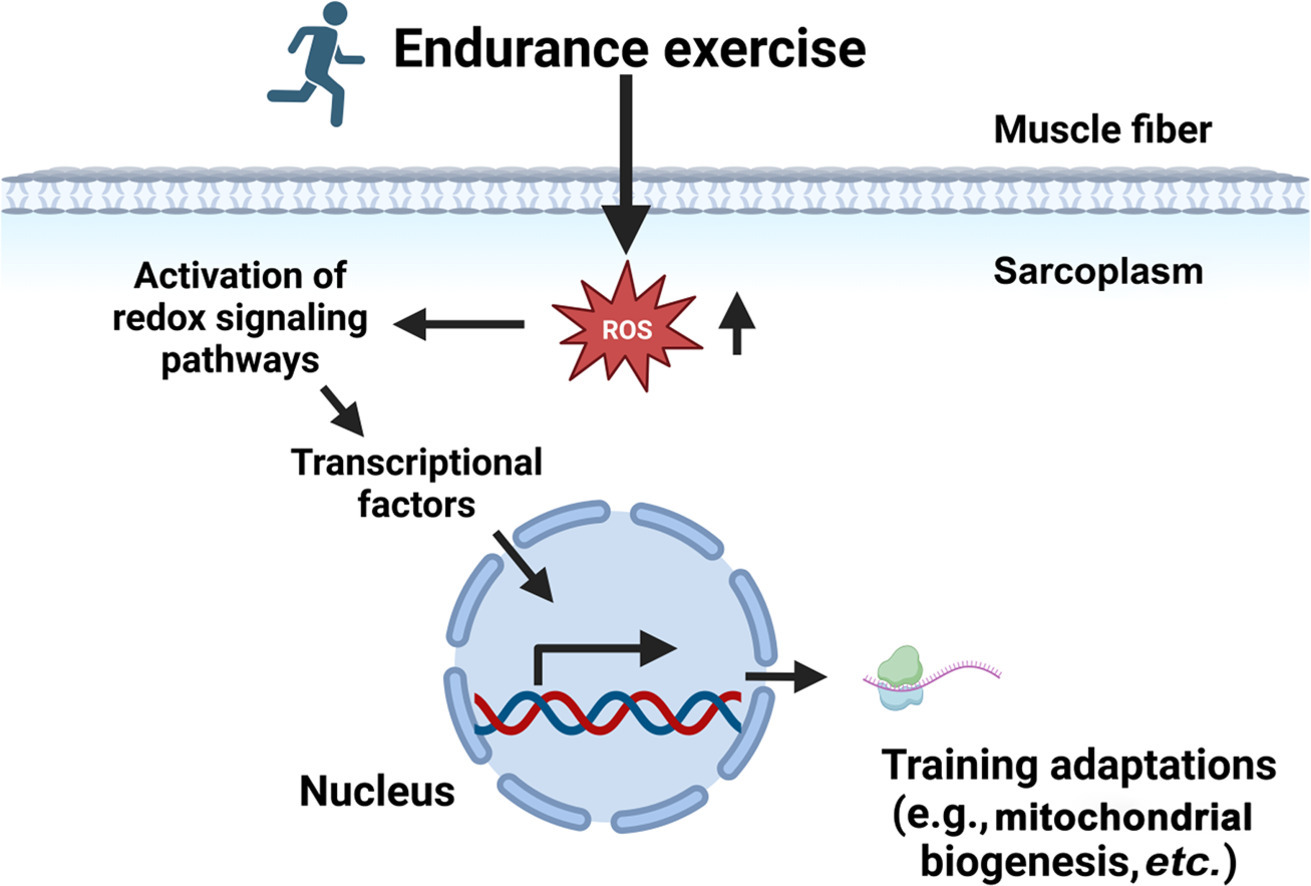
Figure 2: Signaling pathway of reactive oxygen species to induce muscular adaptations in response to physical training (Powers et al. 2024).
Alcohol consumption also impairs athletic recovery by slowing glycogen replenishment to the liver and muscles, disrupting protein synthesis, and promoting dehydration through the suppression of antidiuretic hormone (Vella and Cameron-Smith 2010; Kurtz 2024). Since the human body perceives ethanol as a toxin, alcohol metabolism is given priority over other metabolic processes such as gluconeogenesis and glucose output (Kurtz 2024; Vella and Cameron-Smith 2010). This results in hypoglycemia and an impaired ability to replenish energy stores for future use.
Alcohol also exerts both cognitive and physical effects during exercise. Cognitive impairment includes slowed reflexes and reduced balance, coordination, and motor control (Vella and Cameron-Smith 2010; Kurtz 2024). Meanwhile heart rate and blood pressure regulation is disrupted, decreasing cardiovascular efficiency and endurance, while increasing fatigue.
Despite the protective effects of certain compounds found in alcoholic beverages, such as resveratrol, alcohol has been shown to have various detrimental effects on athletic performance and recovery. So while a celebratory drink every once in a while won’t ruin an athlete’s career, it would not be the ideal choice for fuel before an important competition or recovery during a heavy training block.
References
Chiva-Blanch, Gemma, and Lina Badimon. 2019. “Benefits and Risks of Moderate Alcohol Consumption on Cardiovascular Disease: Current Findings and Controversies.” Nutrients 12 (1): 108. https://doi.org/10.3390/nu12010108.
Kurtz, Jennifer A. 2024. “Alcohol & Endurance Athletes.” First Endurance, December 24. https://firstendurance.com/blogs/articles/alcohol-endurance-athletes.
Matsumoto, Kozo, Takeo Mitoma, Iku Yamashita, and Tatsuki Watanabe. 2025. “Curing of Resveratrol-Based Trifunctional Five-Membered Cyclic Carbonate with Various Diamines and Properties of the Cured Resins.” Polymer Journal 57 (12): 1391–97. https://doi.org/10.1038/s41428-025-01077-x.
Meng, Xiao, Jing Zhou, Cai-Ning Zhao, Ren-You Gan, and Hua-Bin Li. 2020. “Health Benefits and Molecular Mechanisms of Resveratrol: A Narrative Review.” Foods 9 (3): 340. https://doi.org/10.3390/foods9030340.
Osna, Natalia A., Terrence M. Donohue, and Kusum K. Kharbanda. 2017. “Alcoholic Liver Disease: Pathogenesis and Current Management.” Alcohol Research : Current Reviews 38 (2): 147–61. https://doi.org/10.35946/arcr.v38.2.01.
Powers, Scott K., Zsolt Radak, Li Li Ji, and Malcolm Jackson. 2024. “Reactive Oxygen Species Promote Endurance Exercise-Induced Adaptations in Skeletal Muscles.” Journal of Sport and Health Science 13 (6): 780–92. https://doi.org/10.1016/j.jshs.2024.05.001.
Vella, Luke D., and David Cameron-Smith. 2010. “Alcohol, Athletic Performance and Recovery.” Nutrients 2 (8): 781–89. https://doi.org/10.3390/nu2080781. Yavari, Abbas, Maryam Javadi, Parvin Mirmiran, and Zahra Bahadoran. 2015. “Exercise-Induced Oxidative Stress and Dietary Antioxidants.” Asian Journal of Sports Medicine 6 (1): e24898. https://doi.org/10.5812/asjsm.24898.
Comments
9 Responses to “Wine-ing Won’t Make You Faster!”
Hi iSci!
In my research about resveratrol for my wine science project, I came across an interesting fact about how its antioxidant properties actually mitigate positive exercise-induced adaptations. This inspired me to learn more about the effects of alcohol in athletics, blending my wine science research with my interests in human health and athletic performance. Please feel free to leave comments with suggestions for any edits you feel I should make!
Thanks!
Kristen
Hey Kristen,
This was a great blog post. I found it interesting because my group is also doing research about resveratrol and other antioxidants. Below are some suggestions that you may want to implement:
-P1S1: you don’t need the “are” before “intertwined”
-P4S1: I believe the word “hormone” is meant to be plural
-P4S3: I recommend using the word “storage” instead of “stores” in this sentence
-P3: I’m having some struggle understanding how the topic of this paragraph related to resveratrol or red wine. Maybe a sentence bridging the two could be added!
Overall, great job!
Celine
Hi Celine,
Thank you for the feedback! I removed the word “are” before “intertwined” and added a sentence to the end of paragraph 3 to tie it back to my topic, as you suggested. However, I left the word “hormone” in its singular form since “antidiuretic hormone” is the name of a single hormone in the human body. I also decided not to change the word “stores” to “storage” as I feel the wording makes sense as is and “energy stores” is an accepted scientific term.
Thanks!
Kristen
Hi Kristen,
This was a super engaging read on a topic I hadn’t thought much about before! Your writing style is clear and concise, and you did a great job explaining the chemistry behind the benefits and disadvantages of alcohol consumption for athletes. I have a few suggestion:
P2S1: Consider changing the word ‘various’ to ‘contradicting’ to help set up for your next point.
P2S3: Add a comma between ‘consumption’ and ‘since’ to improve grammar and increase flow.
P3S5: This sentence has two ands, which can decrease readability. Consider adding an oxford comma after ‘mitochondrial biogenesis’ to help with flow.
P4S2/3: I believe you need a citation after these sentences.
P6: I think this paragraph needs at least one citation. Also, consider removing “This goes to say” in S2, and replacing it with something more condensed, like “So” or “Therefore”.
Overall, wonderful job! Happy editing 🙂
– Clara
Hi Clara,
Thank you for the feedback! I changed the word ‘various’ to ‘contradicting’ in sentence 1 of paragraph 2 and added a comma in sentence 3, as you suggested. I replaced one of the “ands” in sentence 5 of paragraph 3 with “as well as”. The citation for sentences 2 and 3 of paragraph 4 is the same as for sentence 1, but I added it again to sentence 2 since the topic changes slightly in that sentence. I changed the wording of that sentence in paragraph 6 but did not add any citations as this paragraph is my conclusion, acting as a summary of my post and not introducing any new information.
Thanks!
Kristen
Hi Kristen,
This was a really interesting read! I thought it was interesting how you explored the relationship between alcohol consumption and athletic performance and recovery.
Here are some suggestions to consider while editing:
– Make sure your figure captions are Italicized
– P1, S2: Consider changing “while more modern examples include” to “whereas modern examples include” to improve sentence flow
– P1, S3: Consider changing “one can question whether” to “this raises the question of whether” for a smoother transition into the topic
Overall, amazing job! Looking forward to seeing the final post 🙂
– Nour
Hi Nour,
Thank you for the feedback! I have implemented all your suggestions for my final copy.
Kristen
Hi Kristen,
Amazing blog post, I thought the title was really witty! It was such an interesting read, I really enjoyed how you explored the interplay between alcohol and athleticism.
It was really well-structured and well-written, I have no suggestions that have not already been stated above.
Overall, great job!
Best,
Farwa 🙂
Hi Farwa,
Thank you for the feedback and for taking the time to read my post. I’m glad you enjoyed it!
Kristen