The grand majority of us have likely played a video game at least once in our lives, whether it be the likes of Jetpack Joy Ride or a more technically demanding game like Tomb Raider. One thing’s for sure, science doesn’t really mean much to our man, Nathan Drake, from the Uncharted Series.
In Uncharted 2: Among Thieves, Drake is shot while escaping a moving train, yet he continues climbing, fighting, and eventually escaping. While this may seem like another example of video game plot armour, it raises a question I’m much more interested in: can a video game accurately simulate physical interactions without reproducing their biological consequences?
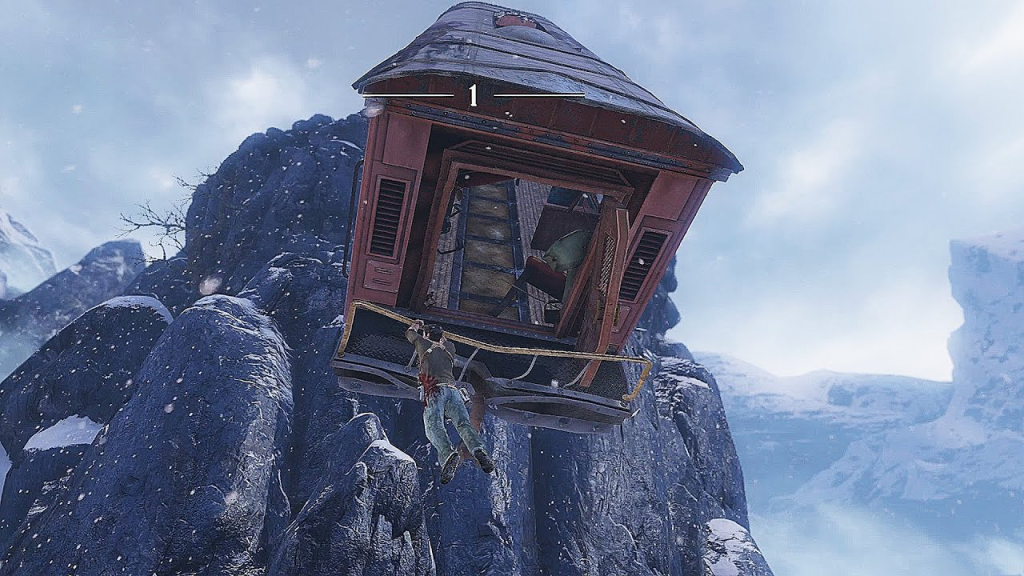
Figure 1. Nathan Drake hangs from a passenger train moments after being shot in the abdomen. Screenshot by author from Uncharted 2: Among Thieves (Naughty Dog 2009).
In Action-Adventure games, Physics engines are designed to approximate the behaviour of physical systems through computational models. Havok Physics, for example, provides tools for simulating interactions such as collisions and rigid-body dynamics (Havok n.d.). Uncharted 2 demonstrates how complex these simulations can become. According to Naughty Dog’s Richard Lemarchand, the train sequence contained 50 independently moving train cars rather than simply moving the background past a stationary train. The sequence was so technically demanding that it drove the development of new technology, including a dynamic object traversal system that allowed Drake to interact more freely with his environment (Lemarchand 2010).
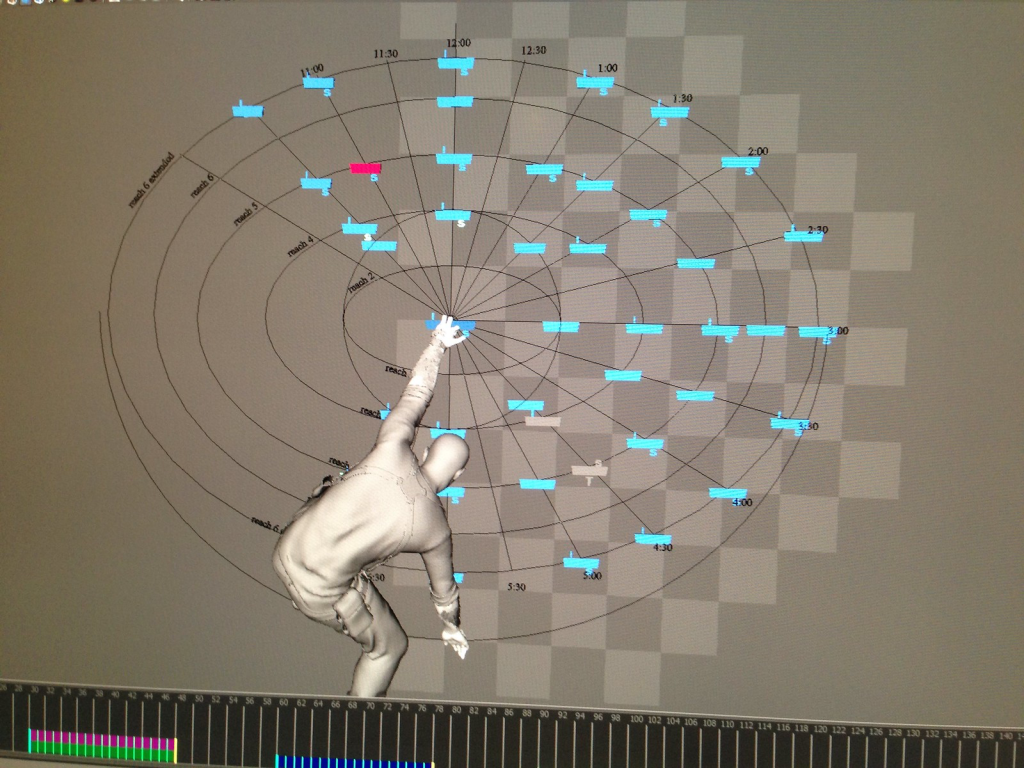
Figure 2. A depiction of the reach system used for climbing in Uncharted 4. Reproduced from Dornbush (2022).
However, simulating movement is not equivalent to simulating the human body. Naughty Dog has even discussed deliberately grounding Drake’s movements in real-world biomechanics. During the development of Uncharted 4, the animation team studied climbing in an indoor climbing gym to understand balance and weight placement. They subsequently used motion capture and full-body inverse kinematics to reproduce more natural movement (Naughty Dog 2022).
Yet this physical realism becomes more complicated when Drake is injured. A gunshot wound is not simply an interaction between a projectile and a character model. Its consequences depend on the projectile’s location and trajectory, as well as the tissues, organs, blood vessels, and bones affected. Gunshot wounds can cause severe bleeding, tissue and organ damage, fractures, infection, and paralysis (MedlinePlus 2026). More specifically, bullet trauma produces both a permanent wound cavity from direct tissue destruction and a temporary cavity caused by the displacement of surrounding tissue. The resulting damage is influenced by the projectile’s velocity, mass, construction, and the physical characteristics of the tissue it strikes (Maiden 2009).
Drake’s survival, therefore, shows a stark distinction between physical simulation and biological. Uncharted can realistically reproduce the motion of a train, the mechanics of climbing, and Drake’s interactions with his environment without modelling every physiological consequence of a gunshot. In other words, the game can simulate what happens to Drake without necessarily simulating what happens inside him. His body is, apparently, just a very durable tank for bullets and stab wounds.
References
Havok. n.d. “Havok Physics.” Accessed September 29, 2026. Havok Physics
Lemarchand, Richard. 2010. “Naughty Dog Dissects Uncharted 2.” GameSpot, April 2, 2010. GameSpot article
Maiden, Nicholas. 2009. “Ballistics Reviews: Mechanisms of Bullet Wound Trauma.” Forensic Science, Medicine and Pathology 5 (3): 204–209. https://doi.org/10.1007/s12024-009-9096-6.
MedlinePlus. 2026. “Gunshot Wounds—Aftercare.” U.S. National Library of Medicine. Reviewed April 13, 2026. MedlinePlus article
Naughty Dog. 2022. “Naughty Dog Breaks Down UNCHARTED 4’s Climbing Evolution as UNCHARTED: Legacy of Thieves Collection Launches on PC This Week.” PlayStation Blog, October 18, 2022. PlayStation Blog article


Leave a Reply
You must be logged in to post a comment.