As the world moves towards greener technology in many different areas, period products are no exception. Although slowed by stigma around the topic of menstruation, focus has been shifted from regular plastic pads into ones with biodegradable materials, especially in green chemistry to fulfill the focus of degradation in the environment. (Fourcassier et al. 2022) There has also been a worldwide growth in reusable products in the market, with the menstrual cup market growing from 1.2 million USD in 2018 to 1.7 million USD in 2026(Statista 2018). But from a science perspective, what does that mean?
Disposable pads and tampons make up a large majority of plastic waste thrown in landfills. In the United States, it is estimated that approximately 240,000 tons of solid waste is generated through the billions of plastic period products discarded every year (US EPA 2025.). In addition to this tangible pollution, menstrual products that are flushed cause microplastics to leak into waterways and sewage systems.
Pads are made up of three layers primarily:
The top layer is made up of polyethylene (PE) or polypropene (PP), which are petroleum-derived plastics. (See Figure 1) The middle layer is typically made up of bleached cotton or SAPs (super absorbent polymers) that have high water retention to further improve absorption for the user. An example of SAP is polyacrylic acid, which is another compound that is non-biodegradable in nature. Lastly, the bottom layer is composed of a thin PE layer and an adhesive coating (Sadaf et al. 2025).
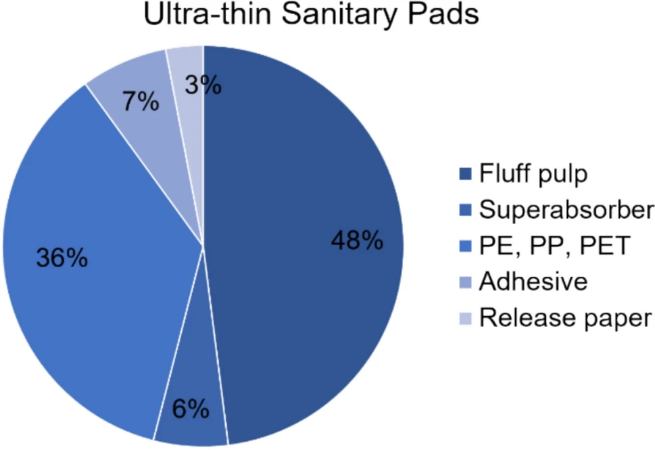
Figure 1: Pie chart of the composition of ultra-thin sanitary pads.
PE, PP, and PAA are plastic polymers, which means they come from non-renewable fossil fuel material. Like most other plastics, they do not degrade quickly, lasting around 600 years in the environment, and then leak microplastics when they do degrade. In addition to this, deodorizing chemicals in the pads enter the soil around them when disposed and kill some of the microflora. Consequently, the lack of microflora leads to slowing of the overall decomposition of plastics, increasing their environmental footprint even more.
These issues drove a shift towards greener materials, such as bamboo, hemp, and banana plant to be used as absorbent fibers in pads. (Sadaf et al. 2025) Menstrual cups and underwear have also popularized in use, leading to lower use of nonrenewable and environmentally detrimental materials. When comparing the two, measurements show that renewable products often use larger amounts of water than disposable ones, mostly due to the need for sanitization required for re-use.
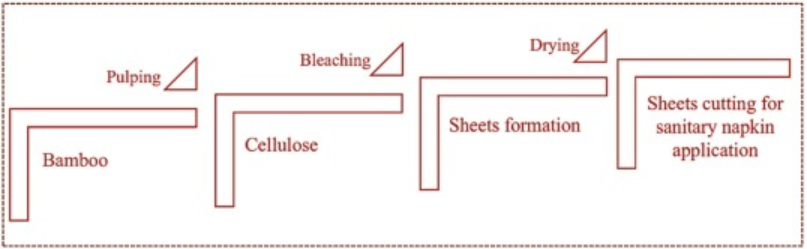
Figure 2: Simplified flowchart of typical processing steps in the making of biodegradable sanitary pads.
However, the manufacturing of biodegradable products, such as plant-fiber pads, greatly reduces menstrual products’ contributions to landfill waste and soil/water contaminations. In Figure 2, we can see that the process for manufacturing bamboo pads is relatively short and requires the use of mostly biodegradable materials, leading to a safer experience for both the environment and women. This overall shift in world focus gives hope for a more sustainable, green, and safe future in the hygiene market.
Works Cited:
Environmental Protection Agency. 2024. “National Overview: Facts and Figures on Materials, Wastes and Recycling | US EPA.” United States Environmental Protection Agency, United States Environmental Protection Agency, November 8. https://www.epa.gov/facts-and-figures-about-materials-waste-and-recycling/national-overview-facts-and-figures-materials.
Fourcassier, Sarah, Mélanie Douziech, Paula Pérez-López, and Londa Schiebinger. 2022. “Menstrual Products: A Comparable Life Cycle Assessment.” Cleaner Environmental Systems 7 (100096): 100096. https://doi.org/10.1016/j.cesys.2022.100096.
Kaur, Rajanbir, Kanwaljit Kaur, and Rajinder Kaur. 2018. “Menstrual Hygiene, Management, and Waste Disposal: Practices and Challenges Faced by Girls/Women of Developing Countries.” Journal of Environmental and Public Health 2018 (1730964): 1–9. https://doi.org/10.1155/2018/1730964.
Sadaf, Sana, Faheem Ahmad, Abher Rasheed, et al. 2025. “Sustainable Sanitary Pads: A Comprehensive Review of Natural Fibers and Bio-Based Superabsorbent Polymers for Eco-Friendly Menstrual Hygiene.” International Journal of Biological Macromolecules 327 (1730964): 147524. https://doi.org/10.1016/j.ijbiomac.2025.147524.
Statista. 2018. “Menstrual Cups: Global Market Value 2018-2026.” https://www.statista.com/statistics/920669/global-market-value-of-menstrual-cups/.


Leave a Reply
You must be logged in to post a comment.