Before the advent of modern medicine, bacterial infections ravaged human society. A lack of treatment options available rendered infections such as bacterial pneumonia deadly.
However, an accidental discovery would lead to the development of bug-fighting medications known as antibiotics. In 1928, physician Alexander Fleming was studying the bacterial genus Staphylococcus by cultivating it in petri dishes before leaving for a summer vacation (Gerberi 2024). When he returned, he noticed that one of his petri dishes was now infected with mold, the area surrounding the growth completely bacteria-free. The antibacterial agent the mold produced is known as penicillin, humanities first isolated antibiotic (Gerberi 2024).
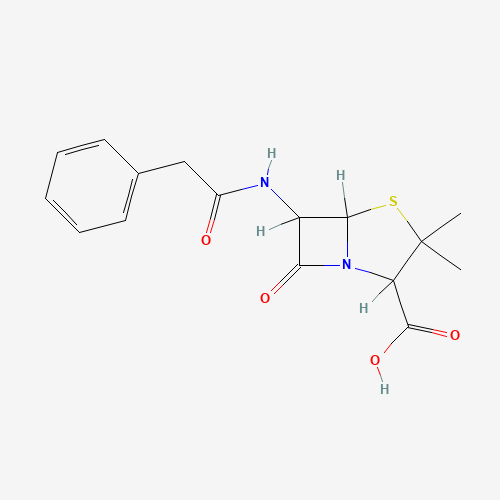
The many antibiotics available today have different molecular structures that allow them to target various bacterial functions while leaving human cells unharmed. Penicillins weaken the bacterial cell wall by inhibiting the transpeptidase that cross links peptidoglycans in the bacterial cell wall, causing the cell wall to fall apart, leading to cell death (Yocum et al. 2021). The β-lactam ring in penicillin (Figure 1.) is responsible for the enzyme binding.
However, humanity may be falling out of its honeymoon phase with antibiotics. Increasingly, overuse of antibiotics in agriculture and healthcare has led to the selection of antibiotic-resistance genes in bacteria, creating super-bugs that have developed mechanisms to defend against antibiotics (Olawoyin et al. 2026). The consequences of antibacterial resistance are devastating. In 2021, more than 4.7 million deaths were associated with antimicrobial-resistant bacteria (GBD 2021).
Like antibiotics, bacteriophages are another treatment which can be used for bacterial infections. Bacteriophages are viruses which infect bacteria as part of their life cycle. Phage therapy has been used to treat infections since the early 20th century, predating the advent of antibiotics (Ganeshan and Hosseinidoust 2019). Unlike antibiotics which can target multiple types of bacteria, bacteriophages are highly specialized to target their prey bacteria, leaving helpful or harmless bacteria behind. The viral life cycle varies, but always involves injection of the viral genome into the host cell genome. Transcription and translation of the genome then allows assembly of new viruses that can infect other cells. A major advantage to phage therapy is that it can effectively treat antibiotic-resistant bacterial infections. Additionally, the large selection of bacteriophages available means that new phages can be isolated even when bacteria develop resistance.
Importantly, phage therapy is much less impactful on earth resources than antibiotics. Pharmaceutical manufacturing contributes heavily to environmental harm by large use of unrecyclable energy, water, solvents, and creation of byproducts, measured via E-factor (WHO, 2026). In comparison, bacteriophages are composed of nucleic acids and proteins and are able to be discarded safely once deactivated (Ganeshan and Hosseinidoust 2019).
Phage therapy introduces unique challenges as opposed to antibiotics. Individual bacteriophages are hyper-specific to their host bacteria, whilst individual antibiotics can target many strains of bacteria (Ganeshan and Hosseinidoust 2019). Critically, bacteriophages haven’t received the same research and discovery as antibiotics in western medicine. Issues with phage collection and distribution are still major roadblocks in treating infections with phage therapy (Ganeshan and Hosseinidoust 2019).
There is no perfect, cure-all treatment for any medical complication, and bacterial infections are not the exception. Nonetheless, bacteriophage and antibiotic co-administration can help to impede treatment-resistant bacteria prevalence. It is unlikely that bacteriophages will completely replace antibiotics, but they host unique advantages that make them bound to go viral.
References
Ganeshan, Sharita Divya and Hosseinidoust, Zeinab. 2019. “Phage Therapy with a Focus on the Human Microbiota” Antibiotics 8, no. 3: 131. https://doi.org/10.3390/antibiotics8030131.
GBD. 2021. Antimicrobial Resistance Collaborators. Global burden of bacterial antimicrobial resistance 1990-2021: a systematic analysis with forecasts to 2050. Lancet. 2024 Sep 28;404(10459):1199-1226.
Gerberi, Danielle. 2024. “Alexander Fleming: A Second Look.” Journal of the Medical Library Association 112 (1): 55–59. https://doi.org/10.5195/jmla.2024.1780.
Olawoyin Damilare, Mushapha Lukman, Obayomi Oluwatobi, and Obayomi Kehinde. 2021. “Foodborne and environmental biofilms as drivers of antimicrobial resistance: A one health perspective.” Environmental Research 306 (125375): 1-24. https://doi.org/10.1016/j.envres.2026.125375.
PubChem, “Penicillins,” n.d., https://pubchem.ncbi.nlm.nih.gov/compound/2349.
WHO Drug Information. “Points to consider on integration of environmental sustainability strategies and metrics into pharmaceutical manufacturing.” Spring 2026, COV1+. https://link.gale.com/apps/doc/A897233152/AONE?u=ocul_mcmaster&sid=bookmark-AONE&xid=58ae1335.
Yocum, James Rasmussen, and Jack Strominger. “The Mechanism of Action of Penicillin.” The Journal of Biological Chemistry 255 No. 3 (January 2021): 3977-3986. https://doi.org/10.1016/S0021-9258(19)85621-1.
Comments
11 Responses to “Bacteria Hate This one Viral trick! Bacteriophages Against Antibiotic Resistance.”
Hi all,
Thank you for reading my post focused on the disciplines of biology and chemistry! I decided to cover this topic after attending a webinar on phage therapy hosted by McMaster’s own Dr. Hosseinidoust. I found the new R&D being done to be an innovative way to tackle an emerging issue that can have serious impacts on healthcare and agriculture. I also think that the evolution of antibiotic-resistant traits in bacteria due to the selective pressure of antibiotics intersects well with the topic of evolution learned in life science recently.
I am worried that my blog is too oriented on biology, so I am debating using ~50 words to discuss the green (or not so-green) chemistry related to antibiotics. We learned in chemistry recently that pharmaceuticals have poor sustainability metrics such as E-factor, and Dr Hosseinidoust’s publications mention this explicitly.
Please, if you have any suggestions let me know. I am looking forward to hearing your thoughts!
Hi Nima,
The story of the discovery of penicillin was so interesting to learn about! It was neat to learn about the potential co-administration of antibiotics and bacteriophages. Below are a few suggestions to help with your editing process:
– In your second paragraph, I don’t think “Physician” needs to be capitalized
– You should refer to your figure in text so the readers know what it correlates to
– In your second last paragraph, I think you should say “research and discovery” rather than “R&D” to help increase reader understanding
– You should format your references so it is a heading and stands out from the rest of your text
– For your Damilare citation, you should find a DOI link that doesn’t require the McMaster library. As well, for your Rasmussen citation, you should find the DOI rather than the science direct link.
Happy editing!
Julianna
Thanks for replying!
I have taken your feedback and implemented it into my blog!
Hi Nima,
I really enjoyed reading your post! I thought your explanation of the mechanisms behind both antibiotics and phage therapy was very informative and well written. Here are some suggestions that I hope will be helpful to your editing process:
– You mentioned co-administration at the end of your post, however it may be beneficial to mention that earlier on so you could describe this more in depth which creates the opportunity for the connection to green chemistry that you were looking to expand upon
– In your last paragraph, you write “much less,” which is shortly followed by “Nonetheless.” I think one of these could be replaced with a synonym to avoid similar wording, such as replacing “much less” with “let alone,”
– Your second paragraph might flow better if you connect two of the sentences together, I’d suggest putting an “and” between the last 2 sentences in that paragraph
I hope you find these suggestions helpful, great work!
– Aveline
Hi Aveline!
Thanks for your feedback, I implemented everything except your last point as I personally think it is better to avoid a run-on sentence.
Hi Nima,
In the end, I really like this topic. It’s a great integration of the topics we’ve learned. I definitely learned more about bacteriophage—I’d never thought of how else they could be used! Thanks so much for posting about it.
I do have some minor critiques about the flow and diction, but the science seems very thought out!
“However, an accidental discovery would lead to the development of bug-fighting medications known as antibiotics.” (Paragraph 2)
– In my opinion, “bug-fighting” is misleading. Since bacteria hasn’t been referred to as “bugs” yet in this post, I wouldn’t use the term. Just saying “medications” has the same effect.
“However, humanity may be falling out of its honeymoon phase with antibiotics as cracks begin to show” (Paragraph 3)
– The first part of the sentence is a great hook, and doesn’t need anything more. I would remove “as cracks begin to show”.
“If unaddressed, bacterial infections would become harder to treat.” (Paragraph 4)
– Use “could” or “will” instead of “would”
“Unlike antibiotics which can target multiple types of bacteria, bacteriophages are highly specialized to target their prey bacteria, leaving helpful or harmless bacteria behind.” (Paragraph 5)
– Very cool! I didn’t know this, and really like this sentence. It is concise and informative.
“Importantly, phage therapy is additionally much less impactful on earth resources than antibiotics.” (Paragraph 6)
– No need to say “additionally”. I would also say “phage therapy is more sustainable for Earth’s resources than antibiotics” to directly reference our lessons.
Happy editing!
Emily Martin
Thank you! I fixed everything that was inaccurate that you pointed out, but kept some of the choices on wording due to stylistic choice. Very insightful and thank you again!
Hi Nima,
Firstly, great work! I really enjoyed reading about the use of antibiotics and methods to fight back antibiotic resistance through bacteriophage use.
Here’s some small advice to make your writing even better:
– In P4 I would recommend expanding on what antibiotic resistance is, how superbugs are created, and include a statistic when saying. ” Just off the top of my head, McMaster’s very own Dr. Stokes mentioned that antibiotic resistance was responsible for 1.3 million deaths in 2019 (https://news.mcmaster.ca/in-the-news-jon-stokes-antibiotic-resistance-and-ai/).
– In P6, saying “…and other metrics” does not aid your argument and decreases the strength of the sentence. If you want to mention other metrics, then simply state them.
– I would change “In comparison, bacteriophages compose of decomposable nucleic acids and proteins and are able to be discarded safely once deactivated (Ganeshan et al. 2019).” to “In comparison, bacteriophages are composed of decomposable nucleic acids and proteins, meaning that they can discarded safely once deactivated (Ganeshan et al. 2019).” The change just makes it more readable and helps with flow.
– In-text citations shouldn’t have commas in between for Chicago unless mentioning a page number. There is a lot of discrepancy so be careful with that. I have made the same mistake myself previously 🙂
Good job again!
Happy editing,
Berk
Thanks! the most important thing I implemented from your comment is the statistic on AMR bacteria deaths, I think it really drives home the issues of antibiotic resistance.
Hi Nima,
Great blog post! I thought the topic you chose was really interesting. I also liked how you connected the biology of phage therapy with the chemistry and sustainability of pharmaceutical production, bringing in concepts of green chemistry. I just have a few suggestions:
– P5: The explanation of the bacteriophage life cycle is interesting, but the sentence “Transcription and translation of the genome then assembles new viruses” could be clarified a bit. For example , “transcription and translation produce the viral components, which are then assembled into new phages”.
– P6: Just a small wording issue, but in “In comparison, bacteriophages compose of decomposable nucleic acids and proteins,” I am guessing you meant to write “are composed of.” You could also replace “composed of” with “consist of” to avoid repetition with “composed” later in the sentence!
– References: One small formatting point to consider is arranging the references in alphabetical order by the authors’ last names. For example, “Ganeshan” should come before “Gerberi.”
Overall, I found your blog post very engaging! I especially liked that you did not present phage therapy as simply replacing antibiotics, instead discussing both the advantages and challenges. Looking forward to reading the final draft!
– Jhaanvi
Hi Jhaanvi,
Thank you for your feedback! Thank you in specific for the comment on the references as it was very important. I implemented pretty much all of what you said. Thanks again!