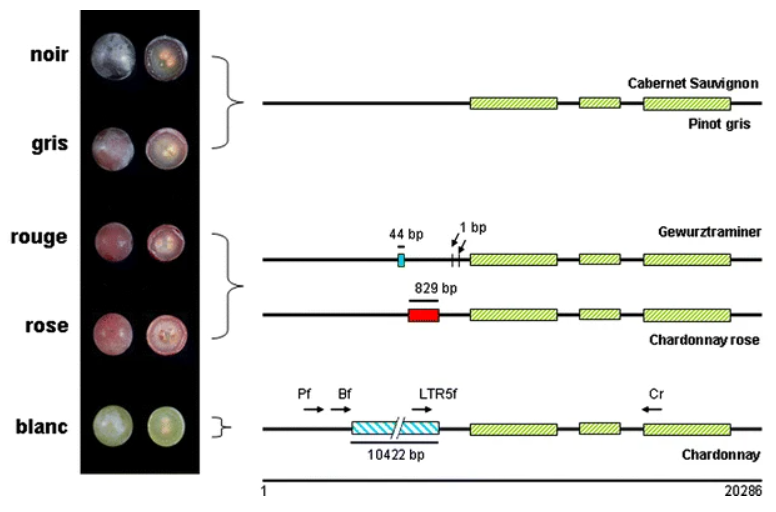
Global warming studies mainly focus on sea level rise, extreme weather conditions, ice sheets, and even general human activities, but what about viniculture and its health research potential? Grapes, though hardy, are sensitive to increases in temperature, and this is beginning to show in harvests (Roman 2026). Notably, global warming leads to more sugar formation in grapes because of quicker ripening, but also fewer secondary compounds are produced (Chrobak and Zimmer 2022). These compounds include anthocyanins (ACNs), which are polyphenol pigment compounds that give grapes their colours (n.a. 2022). Polyphenols in grapes are susceptible to oxidation, or losing electrons, due to their unsaturated double bonds and hydroxyls, so ACNs are notable antioxidants (Graham 2021). However, global warming, and variation in day-night temperatures have a strong influence on berry metabolites like ACN by repressing ACN-regulating genes (Shah et al. 2021). Heat has been shown to repress ACN biosynthesis regulators such as VviMYBA1 (Figure 1), which means reduced ACN levels and colour instability in wines (Shah et al. 2021).
ACN consumption is linked to reduced risk of cardiovascular disease (CVD), specifically ischemic heart disease (IHD), a condition characterised by oxidative stress-caused chronic inflammation (Kibel et al. 2020; Valaitienė and Laučytė-Cibulskienė 2024). This is because of its anti-inflammatory, antioxidant, and lipid-lowering properties (Vendrame and Klimis-Zacas 2019). However, epidemiological data shows a link between ACNs and BP regulation, specifically an inverse association between ACNs and CVD, and an inverse association between ACN intake and hypertension (Vendrame and Klimis-Zacas 2019).
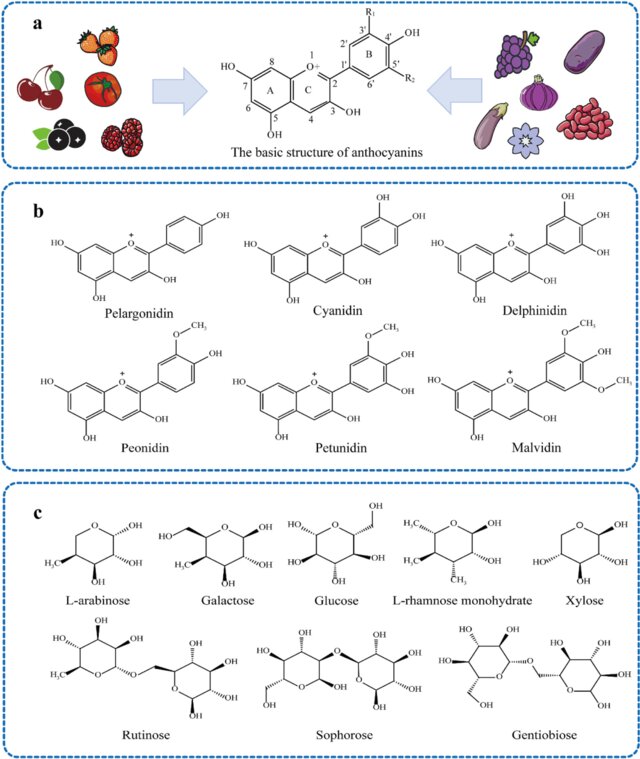
ACNs in vitro and in vivo are protective against ischemia/reperfusion-induced injury because they can remove reactive oxygen species (ROS) by direct scavenging, induction of enzymes responsible for ROS removal, and other ROS-centric methods (Liobikas et al. 2016). This antioxidant property is dependent on ring orientation, because its structure allows ACN to donate a H+ ion from its hydroxyl to a free radical (Figure 2) (Graham 2021; Liobikas et al. 2016). ACNs can also reduce oxidative stress in cells by modifying mitochondrial respiration, which attenuates mitochondrial ROS generation, which potentially prevents CVD because ROS negatively affect myocardial calcium movement. This leads to arrhythmias, or irregular heartbeats, and thus cardiac remodelling through apoptosis and necrosis of tissue (Liobikas et al. 2016). So, tissue damage of the heart leads to ischemic heart disease, a form of CVD, through oxidative stress.
Now, here’s the big picture: as the Earth continues to warm up, grape chemistry is altered because there are lower levels of ACNs available in red wines after the fermentation process. This means the final red wine product is no longer viable as a potential antioxidant-rich libation. Colour stability is also greatly lessened, and red wines lose a lot of their shelf stability and appeal. Note that CVD is accountable for 32% of global deaths, with up to 19.8 million deaths annually, of which 85% are attributed to IHD and stroke (WHO 2025). Sure, red wine isn’t a treatment or management option for IHD, but there is undeniable evidence showing that light/moderate red wine consumption can help reduce the risk of IHD (Choleva et al. 2022; Liobikas et al. 2016; Vendrame and Klimis-Zacas 2019). Thus, climate-induced changes in grape (and other berry) anthocyanins and their impacts on cardiovascular health will continue to be an area of further research.
However, all hope isn’t lost yet: winemakers are finding new ways to combat global warming and maintain the quality of viticulture. Those we’ve heard about within Ontario include the relocation of vineyards to higher altitudes for cooler temps, frost damage prevention, and earlier harvests (Roman 2026). However, there exist other strategies employed by winemakers around the world, such as using new hardier cultivars, or irrigation – bringing in fruits from outside a certain region – in order to have grape varietals that are less susceptible to changes in phenolic compound ratios throughout the vinification process (Stavins et al. 2025). If successful, this would mean ACNs in red wine grapes would remain virtually untouched, and their antioxidant properties would remain intact. So, fear not wine moms – you may drink in moderation and keep heart disease at bay for a long time still.
References
4 Health Benefits of Anthocyanins. (2022, June 2). Cleveland Clinic. https://health.clevelandclinic.org/anthocyanins
Choleva, M., Argyrou, C., Detopoulou, M., Donta, M.-E., Gerogianni, A., Moustou, E., Papaemmanouil, A., Skitsa, C., Kolovou, G., Kalogeropoulos, P., & Fragopoulou, E. (2022). Effect of Moderate Wine Consumption on Oxidative Stress Markers in Coronary Heart Disease Patients. Nutrients, 14(7), 1377. https://doi.org/10.3390/nu14071377
Chrobak, U., & Zimmer, K. (2022, September 12). How climate change is tweaking the taste of wine. BBC. https://www.bbc.com/future/article/20220825-how-climate-change-affects-wine
Graham, K. (2021, March 9). 1.15: Wine. Chemistry LibreTexts. https://chem.libretexts.org/Bookshelves/Biological_Chemistry/Fermentation_in_Food_Chemistry_(Graham)/01%3A_Modules/1.15%3A_Wine
Kibel, A., Lukinac, A. M., Dambic, V., Juric, I., & Selthofer-Relatic, K. (2020a). Oxidative Stress in Ischemic Heart Disease. Oxidative Medicine and Cellular Longevity, 2020, 6627144. https://doi.org/10.1155/2020/6627144
Kibel, A., Lukinac, A. M., Dambic, V., Juric, I., & Selthofer-Relatic, K. (2020b). Oxidative Stress in Ischemic Heart Disease. Oxidative Medicine and Cellular Longevity, 2020, 6627144. https://doi.org/10.1155/2020/6627144
Liobikas, J., Skemiene, K., Trumbeckaite, S., & Borutaite, V. (2016). Anthocyanins in cardioprotection: A path through mitochondria. Pharmacological Research, Countries in Focus: Pharmacology in the Baltic States, 113, 808–815. https://doi.org/10.1016/j.phrs.2016.03.036
Shah, M., Rafique, R., Rafique, T., Naseer, M., Khalil, U., & Rafique, R. (2021). Effect of Climate Change on Polyphenols Accumulation in Grapevine. https://doi.org/10.5772/intechopen.99779
Shi, Chenyang, Chongting Guo, Shan Wang, et al. “The Mechanism of Pectin in Improving Anthocyanin Stability and the Application Progress of Their Complexes: A Review.” Food Chemistry: X 24 (November 2024): 101955. https://doi.org/10.1016/j.fochx.2024.101955.
Stavins, R. N., Catena, L., Forrestel, E., Rivail, J.-B., Sahn, M., & Sumner, D. A. (2025). Global Climate Change and Wine Production: Industry and Academic Perspectives. Harvard Data Science Review, 7(1). https://doi.org/10.1162/99608f92.a17caeae
This, Patrice, Thierry Lacombe, Molly Cadle-Davidson, and Christopher L. Owens. “Wine Grape (Vitis Vinifera L.) Color Associates with Allelic Variation in the Domestication Gene VvmybA1.” Theoretical and Applied Genetics 114, no. 4 (2007): 723–30. https://doi.org/10.1007/s00122-006-0472-2.
Valaitienė, J., & Laučytė-Cibulskienė, A. (2024). Oxidative Stress and Its Biomarkers in Cardiovascular Diseases. Artery Research, 30(1), 18. https://doi.org/10.1007/s44200-024-00062-8
Vendrame, S., & Klimis-Zacas, D. (2019). Potential Factors Influencing the Effects of Anthocyanins on Blood Pressure Regulation in Humans: A Review. Nutrients, 11(6), 1431. https://doi.org/10.3390/nu11061431
WHO. (2025, July 31). Cardiovascular diseases (CVDs). https://www.who.int/news-room/fact-sheets/detail/cardiovascular-diseases-(cvds)
Comments
7 Responses to “Wine and Dyin’: A Surprising Link Between Global Warming, Wine, and Heart Disease”
Hi, Gavin (1st year iSci)
I really enjoyed reading this blog post, it’s so interesting that climate change is also having an effect on how healthy wine is, and it was very informative about the mechanisms of how ACNs impact cardiovascular health. One minor note is that H+ (paragraph below figure one) should usually be referred to as an H+ ion not H+ atom. Another small note is that the sentence “…has been, and will continue to be, heavily researched for being beneficial against CVD” seems a little bit unclear/redundant, since earlier in the sentence you also already said it lowers the risk of IHD. Maybe something like “meaning that this will continue to be an area of further research” would do? On the whole, I think that this was a great synthesis article. I like that you included strategies winegrowers are already using to counteract higher temperatures. I know I’m first year but hopefully something I said helped. Thanks!
Hey Gavin,
Thank you for your comment. Good catch for both of these suggestions you made! I have implemented all your feedback.
– Samiksha
Hi Samiksha! I really enjoyed reading this blog post and it was interesting to read about the connection between climate change and grape biochemistry to your cardiovascular physiology. Also, you did a great job supporting your claims with specific mechanisms (for example, the repression of the viMYBA1 and downstream genes) rather than just broader statements about climate change.
One suggestion I have is that you could make the connection to human health more clear. You establish that climate change can reduce anthocyanins and that anthocyanins may have cardiovascular effects, there’s not an explicit distinction that climate-induced reductions in wine anthocyanins actually increase cardiovascular risk. I think if you expand on the latter point a little, it could really strengthen the argument.
Additionally, another note is to break up a few of the longer sentences, especially in the 2nd paragraph, as it will make the information easier to process. For example, the sentence with “ACNs in vitro and in vivo…” could be broken up into two to help with readability.
Overall, I think it was a great synopsis article and a very interesting read! Hope some of my comments helped.
Regards,
Mansi
Hey Mansi,
Thank you for your suggestions! I tried strengthening the climate change-anthocyanin-IHD argument a bit more in my second-to-last paragraph, and broke up the second paragraph (and added another figure in-between paragraphs to help break up the monotony a bit). I hope you find the final draft informational!
– Samiksha
Hi Samiksha!
I thought this blog topic was very interesting! I liked how the specifics of grapes and their composition tied into the bigger picture of global warming.
I have a few suggestions from reading:
-In the first paragraph, I did not fully understand how the mention of the specific genes (such as VviCHI) tied into the figure. Maybe some labels on the figure or not mentioning them would make that section clearer.
-The paragraphs themselves were a bit bulky. I saw that another comment suggested smaller sentences, which is one fix, however making smaller paragraphs may also help with the flow of this post.
-In P2S3 I think you should write out blood pressure fully instead of BP since it is only mentioned once in the whole text.
-P3 as a whole used some really fun and expressive language that I though was missing from your opening hook. A re-write of your opening sentence with something like “global warming studies focus mainly on…,but what about viniculture!”
Some small nit-picks:
-Make sure to comment on your own post!
-I noticed an extra space between paragraphs 2 and 3 you may want to remove.
Again this was a great post and the topic was very specific, which always has the benefit of being unique!
Happy editing,
Brooklyn
Hi Brooklyn,
Thanks for leaving a comment. As per your suggestions, I removed mention of the downstream signaling genes (because I don’t mention them anywhere else in the paper or in the figure captions). I have also broken down, and punctuated (with images), my paragraphs, so hopefully it reads better now. Most importantly, thank you for the suggestion on my intro – I have made the change and I hope it makes for a more enticing hook now. I hope you enjoy reading my final draft!
– Samiksha
Hey iSci,
I chose to write this blog post as an attempt to connect oenology to climate change, the research projects we are currently focusing on. Through our field trip and ISSs, we learned that global warming affects vineyards to a great extent, and can result in the cultivation of grapes with vastly different levels of sugar, alcohol and acid, which can change the taste, texture, colour, and stability of the final wine products. I chose this as my starting point because I noticed the link to our climate change RP instantly. However, upon doing some more research on what compounds within the grapes were affected by global warming, I learned about anthocyanins, which are the pigment compounds that contribute to colour in grapes and other berries and fruit. I knew that anthocyanins were good antioxidants through prior research for WineSci, so I decided to make the connection to cardiovascular disease, which can be caused by oxidative stress. I hope you enjoy this read, and I appreciate any feedback you may have for me.
Samiksha 🙂
P.S.: Please comment on what terms you’d like to see defined + images you would like to see. I would love to receive feedback on these areas!