What makes face… a face?

Over the past several decades, advances in neuroimaging have revealed that the human brain is not a uniform processing system. One particularly intriguing example is face recognition.

Despite how effortless it feels, identifying a face requires the brain to rapidly distinguish subtle visual features from a vast amount of sensory information. This has led neuroscientists to investigate whether the brain contains dedicated neural circuitry for face perception. 

Research suggests that face perception is not simply another form of object recognition. Instead, humans appear to possess specialized neural mechanisms dedicated to processing faces. Central to this system is the fusiform face area (FFA), a region of the temporal lobe that plays a crucial role in identifying and interpreting faces (Kanwisher, 2006)

Faces are among the most important visual stimuli humans encounter. Within fractions of a second, we can determine a person’s identity, emotional state, approximate age, sex, and even where they are looking.

Because facial recognition is so important, neuroscientists have long debated whether the brain contains specialized “face-processing” regions or whether general visual mechanisms are sufficient. This debate is known as the face-specificity hypothesis (Kanwisher, 2006).

 Rather than responding to visual complexity alone, the FFA appears specialized for detecting and recognizing faces, as demonstrated by phenomena such as the face inversion effect, where upside-down faces are much harder to recognize than inverted objects.
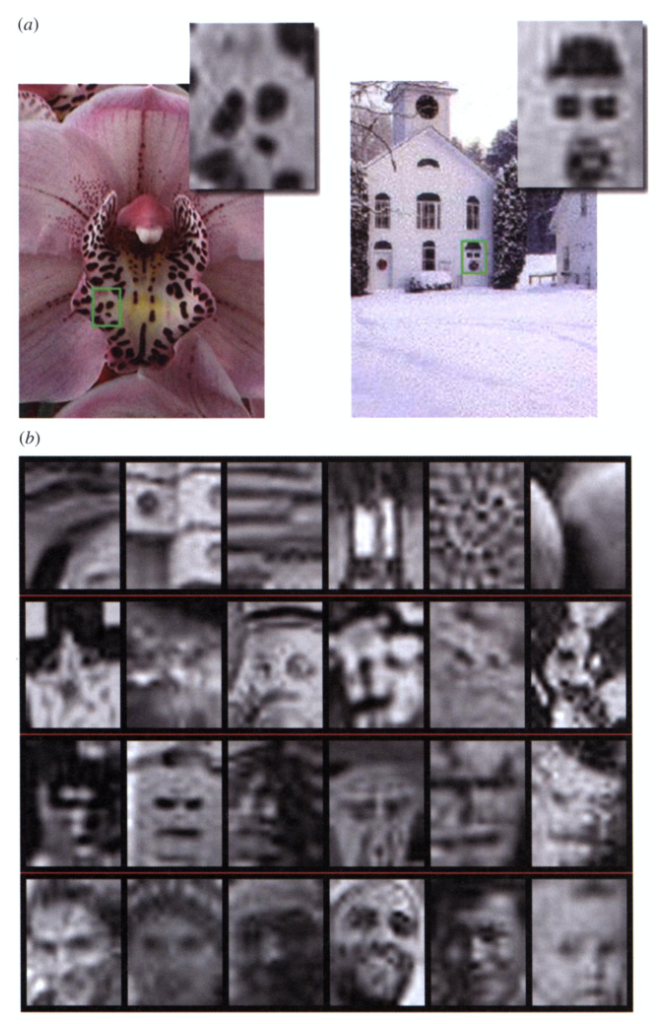
Figure 1. Examples of Stimuli with Varying Degrees of Face Resemblanc. Stimuli ranged from non-face images to genuine faces and were used to investigate left and right fusiform gyrus responses to facial similarity (Meng et al., 2012).

Further support comes from research examining the left and right fusiform gyri. The fusiform gyri are two brain structures located on the underside of the temporal lobes, one in each hemisphere.

Using images that ranged from non-face patterns to genuine faces (Figure 1), researchers found that the right fusiform gyrus categorized stimuli as faces or non-faces, whereas the left fusiform gyrus responded more gradually as facial resemblance increased. These findings suggest that the right hemisphere is specialized for face detection, while the left hemisphere is more sensitive to varying degrees of face-like features (Meng et al., 2012).

The fusiform face area serves as a key component of this network, allowing humans to rapidly detect and recognize faces. By studying how the FFA works, neuroscientists continue to uncover how the brain transforms simple visual input into one of our most socially important abilities: recognizing the people around us


References.

Kanwisher, Nancy, and Galit Yovel. “The Fusiform Face Area: A Cortical Region Specialized for the Perception of Faces.” Philosophical Transactions: Biological Sciences 361, no. 1476 (2006): 2109–28. http://www.jstor.org/stable/20209804.

Meng, Ming, Tharian Cherian, Gaurav Singal, and Pawan Sinha. “Lateralization of Face Processing in the Human Brain.” Proceedings: Biological Sciences 279, no. 1735 (2012): 2052–61. http://www.jstor.org/stable/41549504.

Murty, N. Apurva Ratan, Santani Teng, David Beeler, Anna Mynick, Aude Oliva, and Nancy Kanwisher. “Visual Experience Is Not Necessary for the Development of Face-Selectivity in the Lateral Fusiform Gyrus.” Proceedings of the National Academy of Sciences of the United States of America 117, no. 37 (2020): 23011–20. https://www.jstor.org/stable/26969232.

Ramon, Meike, Luca Vizioli, Joan Liu-Shuang, and Bruno Rossion. “Neural Microgenesis of Personally Familiar Face Recognition.” Proceedings of the National Academy of Sciences of the United States of America 112, no. 35 (2015): E4835–44. https://www.jstor.org/stable/26464134.

Comments

9 Responses to “What makes face… a face?”

  1. Onew Park Avatar
    Onew Park

    Hey iSci!

    This blog post was inspired by our discussions of brain organization and functional specialization in neuroscience. I was fascinated by the idea that something as simple as recognizing a face may depend on dedicated neural circuitry within the brain.

    There were lot’s of literature to dive into in regards to face recognition and this was a fun write up! I hope that this blog was able to reflect the interest I had for this topic.

    Happy Reading!

  2. Riyal Monga Avatar
    Riyal Monga

    Hi Onew!
    Really interesting post. The title hooked me right away, and Figure 1 made the left vs right fusiform gyrus findings easy to picture, since you can see the stimuli moving from non-faces to real faces. A few things that could help your blog:
    – Murty et al. (2020) and Ramon et al. (2015) are in your references but never come up in the post. You could add a short paragraph on them, like Murty’s finding that face-selectivity develops even without visual experience, or remove them from the list.
    – The face inversion effect is a great example, but it doesn’t have a citation and is only explained in one line. Adding a source and a sentence on why upside-down faces are harder for the FFA would back up your claim that it’s specialized.
    – Your ending talks about “this network,” but the post never really introduces a network beyond the FFA and fusiform gyri. Briefly saying how these regions work together earlier on would make the conclusion feel more connected.
    – Small fixes: “Resemblanc” in the figure caption should be “Resemblance,” a period is missing after (Kanwisher, 2006) and at the very end, and since the paper is by Kanwisher and Yovel, the in-text citation should be (Kanwisher and Yovel 2006).
    Happy editing!
    Riyal

  3. Michelle Zhang Avatar
    Michelle Zhang

    Hi Onew,

    Great post about a phenomenon I didn’t know much about before reading the post! It truly puts into perspective now many “normal” actions we do that are still a scientific mystery.
    Here’s some suggestions you consider while editing!
    – I would move the Figure to after you mention it in the text, it’s a bit confusing read first.
    – Is there a difference between the face-like images in part A vs part B of your figure? I would add this in the caption or get rid of the labels if not
    – See if you can clarify if the FFA and the left/right fusiform gyri are overlapping structures, or separate ones that both contribute to facial recognition.
    – I would combine paragraphs 4 and 5

    Happy editing! 😶‍🌫️
    Michelle

  4. Kai Fusch Avatar
    Kai Fusch

    Hi Onew!
    I found your concept super interesting and informative!

    I found a few major formatting issues that I want to make you aware of:
    1. Make sure to input the figure after you mentioned in text
    2. While the jstor links work, dois are preferred! You can look up the papers up on omni and take the doi’s from there
    3. I would add more depth to the figure caption since you only talk about the image b) and not A)

    Cant wait to read the final product!
    – Kai Fusch

  5. Leah Vadakken Avatar
    Leah Vadakken

    Hi Onew,

    This is such an interesting blog post! I have never quite thought much of this concept, or even realized how complex facial recognition actually is. It reminded me of this one study that showed that people tend to choose their car based on the face they see. Here is some feedback for you with some edits to make if you see fit:

    – I think it may help flow if you re-order this sentence (“…person’s identity, emotional state, approximate age…etc.) in the order of recognition. For instance, “we can determine sex, approximate age, identity, emotional state, and even where they are looking.” This is a very small change to just make the list more intuitive, but not a big deal!
    – Consider changing “face perception” to “facial perception” (if this is the more accurate terminology used in the literature).
    – Is the title supposed to be, “What makes a Face… a Face?” or “what makes Face… a Face?” If this is a type, consider changing it to the first option.

    Overall, this is such an interesting blog post, and I look forward to reading the final version!

    Happy editing!

    Leah

  6. Naya Brenya Avatar
    Naya Brenya

    Hi Onew,

    This was a very interesting blog post and I thoroughly enjoyed reading it! I have only a couple small things to mention:

    – I believe you forgot a period after the citation in paragraph 3.
    – I would suggest centering your figure and perhaps making the caption a little smaller.
    – Make sure to hyperlink your sources!

    Overall, great work. Happy editing!

    Naya

  7. Minglong Zhong Avatar
    Minglong Zhong

    Hey,

    A really fascinating topic! I just have a few minor suggestions to make it even better.

    P3S3: “Central to this system is the fusiform face area (FFA), a region of the temporal lobe that plays a crucial role in identifying and interpreting faces (Kanwisher, 2006)” You forgot a period here.

    P4S2 Within fractions of a second, we can determine a person’s identity, emotional state, approximate age, sex, and even where they are looking. The last part, “even where they are looking,” is a bit confusing and I think requires further clarification. Did you mean that we are able to recognize all this information when the person is looking at us, or did you mean the opposite, when the person is looking away?

    P9S2 “By studying how the FFA works, neuroscientists continue to uncover how the brain transforms simple visual input into one of our most socially important abilities: recognizing the people around us” You forgot a period here.

    Overall great blog and happy editing!

  8. Saniyah Farzeen Avatar
    Saniyah Farzeen

    Hi Onew!

    I really enjoyed reading this! Face recognition feels so automatic that I’ve honestly never thought much about how much processing has to happen in the brain for us to recognize someone, so I thought this was such an interesting topic 🙂

    I just had a few thoughts while I was reading:

    – When you mention that we can pick up someone’s identity, emotional state, age, sex, and where they are looking, I wonder if it would be worth clarifying that the FFA isn’t necessarily responsible for all of those things on its own. Since different aspects of a face are processed across a larger network of brain regions, I think distinguishing what the FFA is especially involved in from what the broader face-processing system does would make that section a little more precise.

    – In the paragraph about the Meng et al. study, you say that the right fusiform gyrus categorized stimuli as faces or non-faces, while the left responded more gradually as things became increasingly face-like. I thought this was one of the most interesting findings in the post, and I think one extra sentence explaining why that matters for the face-specificity debate would be really helpful. For example, what does that categorical response on the right tell us about whether faces are processed differently from other objects?

    – I would also be a little careful with going from the “right fusiform gyrus” in the study to saying that the entire “right hemisphere is specialized for face detection.” I think keeping that conclusion specific to the fusiform region you just discussed, unless the source supports a broader hemispheric difference, would make the wording more accurate.

    Overall though I thought this was really interesting, and I especially liked the left vs. right fusiform comparison because it showed that even within face processing, the two sides might be doing slightly different things!

    Happy editing!
    Saniyah

  9. Heidi Wang Avatar
    Heidi Wang

    Hi Onew
    This was a really interesting post! I have never heard of this phenomen before. I have a few minor suggestions for your consideration:

    1) I recommend merging a lot of your paragraphs. Currently, almost every paragraph consists of only one or two sentences, which makes the writing feel a little fragmented and interrupts the overall flow. For example, P1 and P2 could easily be combined into a single introductory paragraph, Similarly, P3, P4, and P5 could also be combined, as they all discuss the importance of facial recognition and the existence of specialized brain regions. I think organizing your article into fewer, more developed paragraphs would make it feel much more cohesive and improve the readability.

    2) P3 S1, you write, “Research suggests that face perception is not simply another form of object recognition. Instead, humans appear to possess specialized neural mechanisms dedicated to processing faces.” These two sentences are a bit redundant as they essentially communicate the same idea. I suggest combining them into something like: “Research suggests that face perception relies on specialised neural mechanisms distinct from those used for general object recognition.”

    3) In P5 S1, you state, “Because facial recognition is so important, neuroscientists have long debated whether the brain contains specialized “face-processing” regions or whether general visual mechanisms are sufficient.” which basically repeats the point you bring up in P3. I recommended either removing P3 or merging the two paragraphs into one down in P5, something like: “Neuroscientists have long debated whether face perception relies on specialized neural mechanisms or the same processes used for general object recognition, a debate known as the face-specificity hypothesis (Kanwisher, 2006). Research suggests that humans possess specialized neural circuitry for processing faces, particularly the fusiform face area (FFA), a region of the temporal lobe that plays a crucial role in face perception (Kanwisher, 2006).”

    Overall, this was a really fun post to read and I am really excited to read your final copy!

    Happy editing,
    Heidi 🫥

Leave a Reply