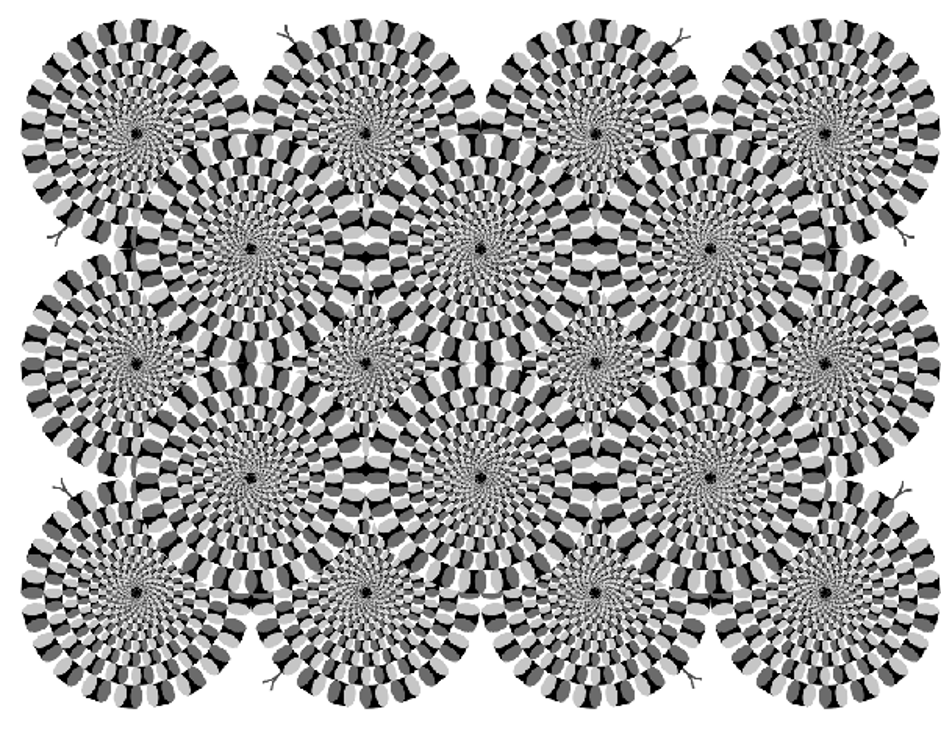
Figure 1. Kitoaoka’s Rotating Snakes Illusion
Is it moving?
It isn’t. This image is completely still. No animation. No movement. And absolutely nothing on the screen is changing. So why is it that you can see it moving? Why do we physically see things one way but mentally perceive them another? To understand why we see movement in a still image, we must begin by understanding what happens when we see something. The retina is where vision begins, a layer of neural tissue at the back of the eye containing photoreceptors that convert light into signals. Our peripheral vision is very sensitive to movement and changes in the visual field (Howard, 2026). When we stare at something completely still, our eyes are making tiny involuntary movements called microsaccades. As our eyes make these movements, the light and dark patterns shift across the retina, essentially creating signals that can be interpreted as motion. Microsaccades are associated with movement when we perceive the image as moving. This tiny movement is associated with moments where we perceive the photo as moving or “rotating” (Otero-Millan, Macknik, and Martinez– conde 2012). We know that the photo is not actually moving, so why is it that the light and color patterns make our visual system interpret it as movement? When does light become movement? The arrangement of light and dark regions in the Rotating snake photo is especially important to why we perceive it the way we do. The adjacent areas of the image differ in brightness and contain repeated asymmetric changes in luminance. Research shows that changing these luminance levels can affect the strength and direction of the motion people perceive (Atala- Gérard and Bach 2020). One of the many explanations is that changes in luminance and contrast produce differences in timings of neural responses. One explanation is that the neural responses create the motion signals our vision perceives as movement (Backus and Oruc 2005). When these visual signals interact with small eye movements, the contrast and pattern of the image can make it appear as if it’s moving (Otero-Millan, Macknik, and Martinez-Conde 2012). The rotating snake illusion is a perfect example of how vision is more than simply taking in what is physically in front of us. When light enters the eye, it is converted to neural signals, that get processed by the brain, and visual experience is created. The rotating snake photo is a combination of colors, contrast and small eye movement that causes a still image to be perceived as moving. The photo is not actually rotating, but because of the way our visual system processes things, it is constructed in a way so that we think it’s moving. Sometimes what we see is not exactly what is there.
Work Cited:
Bach, Michael, and Lea Atala-Gérard. 2020. “The Rotating Snakes Illusion Is a Straightforward Consequence of Nonlinearity in Arrays of Standard Motion Detectors.” I-Perception 11 (5). https://doi.org/10.1177/2041669520958025
Backus, Benjamin T., an,mid Ipek Oruç. 2005. “Illusory Motion from Change over Time in thee Response to Contrast and Luminance.” Journal of Vision 5 (11): 10. https://doi.org/10.1167/5.11.10.
Conway, B. R. 2005. “Neural Basis for a Powerful Static Motion Illusion.” Journal of Neuroscience 25 (23): 5651–56. https://doi.org/10.1523/jneurosci.1084-05.2005.
Otero-Millan, J., S. L. Macknik, and S. Martinez-Conde. 2012. “Microsaccades and Blinks Trigger Illusory Rotation in the ‘Rotating Snakes’ Illusion.” Journal of Neuroscience 32 (17): 6043–51. https://doi.org/10.1523/jneurosci.5823-11.2012.


Leave a Reply
You must be logged in to post a comment.