One of the most prolific predators on earth, the orca is both iconic and beloved. Since the 1960s, humans have become captivated by their strength, their intelligence, and most importantly, their seemingly docile demeanor towards humans. That’s not to say they aren’t incredibly prolific hunters, they absolutely are, but there have been zero confirmed deaths attributed to wild orcas (“All About KIller Whales – Diet & Eating Habits | United Parks & Resorts”, n.d.). There are countless videos online of people kayaking past curious orcas, or swimming next to entire pods of them all while leaving completely unscathed. But how is it that orcas, such a formidable predator, don’t take the opportunity to nab a human for lunch?
part of answer is the same reason you wouldn’t eat a squirrel. We have specific animals we consider food, and ones we don’t. Orcas are highly intelligent, so much so that they even have their own cultures and distinct vocalizations. Thus its widely accepted that like humans, some animals fall outside of their cultural hunting preferences. After all different orca populations hunt different prey, such as the resident orcas hunting almost exclusively Chinook salmost while transient orcas often focus on marine mammals.(Stiffler, n.d.). But I would like to explore another facet of this mystery. Namely, I want to know: are we calorically worth being called “prey”?
We don’t primarily live in the ocean, for one. but aside from the obvious, humans globally weigh an average of 136 pounds (Rettner 2013), and according to a study done by James Cole of the University of Brighton, humans contain a grand total of 118,440 calories in total excluding bone (“For cannibals, here’s the caloric content of humans—it’s just meh”, n.d.). The average Killer whale requires around 170,000 calories a day (Ball 2022). This would sound like a compelling case for human consumption, but we’re actually lagging behind a lot of other prey orcas consume. For example harp seal blubber contains around 4036 calories per lb (Worthy and Lavigne 1983), and a seals blubber makes up to half of its body weight. A harp seal may weigh up to 300 pounds, and if half that weight is blubber a single seal could provide up to 605400 calories from its blubber alone, far surpassing the 118,440 calories of edible matter in a human. This huge discrepancy in caloric value is because blubber is far fattier (thus more calorie dense) than the muscle tissue that makes up around 40% of your bodies compisition. This is, of course, one example of the countless animals orcas prey on of course, but when much of its prey is either covered in nutritious, calorie rich blubber, hang out in groups of hundreds, or encountered often enough to be more than a novelty, humans become much less appealing
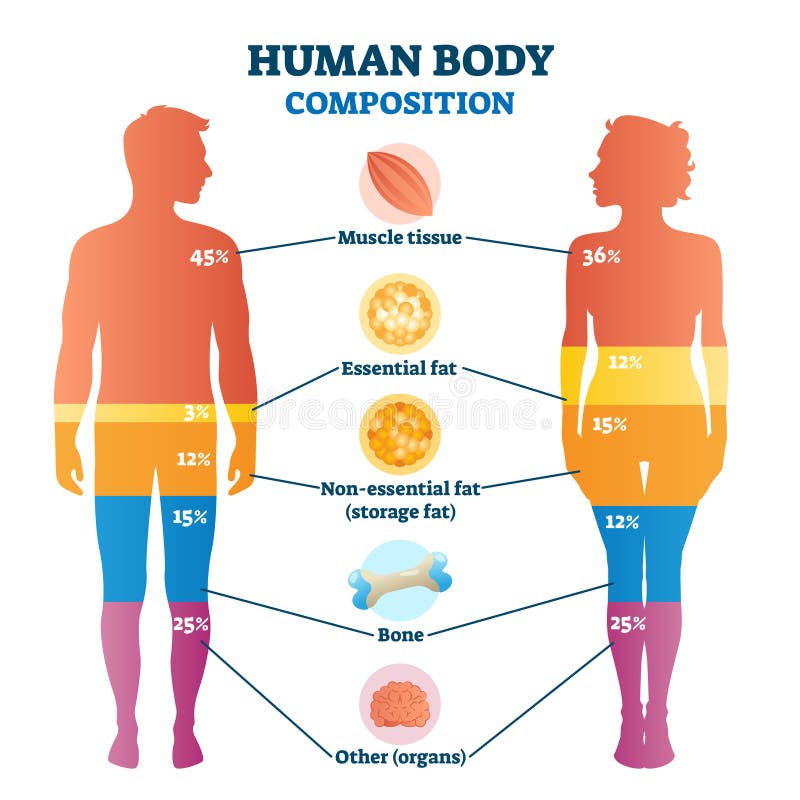
To put it simply, humans aren’t particularly energy-dense compared to an orcas prey. We aren’t very big, we don’t have many calories per pound of flesh, and there aren’t enough of us in the ocean where the opportunity to become part of their learned hunting behaviour could rise. One single human can’t even feed a whole orca, much less keep the whole pod full.
References
“All About a Great White Sharks Liver.” n.d. Ocean Safaris. Accessed September 20, 2026. https://oceansafaris.com/2024/01/23/all-about-a-great-white-sharks-liver/.
“All About KIller Whales – Diet & Eating Habits | United Parks & Resorts.” n.d. Seaworld.org. Accessed September 20, 2026. https://seaworld.org/animals/all-about/killer-whale/diet/.
Ball, David P. 2022. “B.C.’s endangered killer whales have been going hungry for years, study finds.” CBC. https://www.cbc.ca/news/canada/british-columbia/southern-resident-orcas-malnourished-ubc-study-1.6503594.
Boyer, David. n.d. “Blubber.” Education | National Geographic Society. Accessed September 19, 2026. https://education.nationalgeographic.org/resource/blubber.
“Carbohydrates, Proteins, and Fats – Nutrition – Merck Manual Consumer Version.” n.d. Merck Manuals. Accessed September 19, 2026. https://www.merckmanuals.com/home/disorders-of-nutrition/overview-of-nutrition/carbohydrates-proteins-and-fats.
“For cannibals, here’s the caloric content of humans—it’s just meh.” n.d. Ars Technica. Accessed September 19, 2026. https://arstechnica.com/science/2017/04/counting-calories-of-going-cannibal-on-a-paleo-diet-human-flesh-is-just-meh.
Rettner, Rachel. 2013. “The Weight of the World: Researchers Weigh Human Population.” LiveScience. https://www.livescience.com/36470-human-population-weight.html.
Rink, Sasha. n.d. “Orca (killer whale) facts.” World Animal Protection Canada. Accessed September 20, 2026. https://www.worldanimalprotection.ca/blogs/orca-killer-whale-facts/.
Rode, Karyn D., Charles T. Robbins, Craig A. Stricker, Brian D. Taras, and Troy N. Tollefson. 2021. “Energetic and health effects of protein overconsumption constrain dietary adaptation in an apex predator.” Sci Rep, (July).
Stiffler, Lisa. n.d. “Understanding Orca Culture.” Smithsonian Magazine. Accessed September 19, 2026. https://www.smithsonianmag.com/science-nature/understanding-orca-culture-12494696.
Vincent, Chloe. 2019. “Calendar Image: The Moose.” Nature Canada. https://naturecanada.ca/news/blog/calendar-image-the-moose/.
Webb, Kevin, and Erika Engelhaupt. n.d. “Cannibalism Study Finds People Are Not That Nutritious.” National Geographic. Accessed September 19, 2026. https://www.nationalgeographic.com/science/article/human-cannibalism-nutrition-archaeology-science.
Worthy, Graham A., and D. M. Lavigne. 1983. “Changes in Energy Stores during Postnatal Development of the Harp Seal, Phoca groenlandica.” Journal of Mammalogu 64, no. 1 (February): 89-96.
Comments
11 Responses to “Sorry, She’s Just Not That Into (eating) You: Why Don’t Orcas Hunt Humans?”
Hi Juliana,
Awesome post! I love how your writing went through multiple phases and clearly explained your reasoning. You transitioned really well, especially from the description of orca behaviour to the nutritional value of humans. I was most intrigued about what defines prey through caloric metrics.
As some advice:
Make sure to put in a comment for why this blog relates to iSci as well as why you chose it! Also, you can italicize your description for Figure 1.
Sincerely,
Berk
Hi Berk, Thank you so much for the feedback, ill be sure to fix the description and connect my post to isci!!
Thank you,
Juliana
Hey Juliana,
This was a great first post!! Your title rewards the writing and is quite captivating.
Some notes to include–make sure to edit and look over the text for minor flaws. It could be from pasting text into synopsis, or otherwise.
Capitalize “part” in the second paragraph, as well as the word “but” in the first line of the third paragraph,” for one. but”. Ideally, don’t start with “but”, just incorporate it concisely into the first sentence. Include commas in the following citations: “(Rettner 2013)”, “(Ball 2022)”, and “(Worthy and Lavigne 1983)”, considering they’re referenced in APA.
Embedded citations don’t traditionally include titles, only the name of the author and year. Just edit “(“All About KIller Whales – Diet & Eating Habits | United Parks & Resorts”, n.d.)” and “(“For cannibals, here’s the caloric content of humans—it’s just meh”, n.d.)” to the name of the author or publication. If neither are available, shorten the title (or just use the first few words) to include in your citation!
Just some minor editing issues! Great work.
Regards,
Gurleen
Ignore the comment on commas in citations–just realized you referenced in Chicago 18!
Hi Gurleen, thank you so much for the specific feedback! it can be easy to miss such details, ill certainly be sure to ifx my citations and fix the flow of the paragraphs.
Thank you,
Juliana
Hey Juliana,
This was such an engaging read! I love how the topic was specific and narrowed down enough so that it was clear what question you were answering. I definitely learned something new!
The only thing I’d recommend is splitting up some of your paragraphs so that the writing is easier to follow. Your third paragraph was very interesting as it had lots of statistics but I felt that it was hard to process all at once since there were no line breaks or places to reflect on what I had just read. I appreciated the infographic of Human Body Composition at the end because I could visualize what I’d learned about.
All in all, this was an awesome post and a super fun read!
Regards,
Mansi
Hi Mansi, You’re totally right about splitting the paragraph. Upon a second read, its certainly wordy. Ill definetly be sure to fix that.
Thank you,
Juliana
Hi Juliana!
Great work on your post, I really enjoyed the read.
I just have a few suggestions while you edit:
Don’t forget to add a comment explaining why you chose this topic, and the integration of different fields—maybe try to ad more of an integration aspect.
– P1, you use the word “prolific” in two sentences in a row, I would change one to another to decrease repetition.
– Your first citation should not have an “n.d” in it, and I’m more sure if that is the correct way to cite the source, I would double check that with the Chicago guide.
– P2, your first sentence needs a capital.
– P2 S3, add a comma after “thus”
– P2 S3, add an apostrophe in the “its” — “it’s”
– P2 S4, add a comma after “after all”
– Overall, some of your paragraphs have grammatical errors, I would just read through again, maybe out loud to catch them.
– Try and find sources that are peer reviewed and have a doi, they should almost always have a publication date.
– Some of the numbers are separated by a comma like “118,440” and others are not, like “605400”, be consistent with which format you choose!
– Add a comma after “(thus more calorie dense”
– Figure 1 need to be in the centred, and The figure caption need to have a capital and be longer.
Great work!
-Hava
Hi Hava,
Wow! I appreciate how thorough your suggestions are, I totally missed all of these grammar and citation issues! I’ll definetly be sure to implement your feedback! as for the iSci connection, while I did have an idea of how it integrates to different fields of science, ill be sure to try and communicate my ideas for clearly!
Thank you,
Juliana
Hi Juliana,
Great post! I really enjoyed how you tackled this question using concrete caloric metrics, comparing a human’s total ~118,440 calories to a harp seal’s massive 605,400 calories made your argument about energy density extremely clear and memorable. The title is super engaging, and including Figure 1 provides a great visual anchor for your discussion on body composition.
A few small suggestions for improvement:
– Consider explicitly referencing Figure 1 in the narrative text (e.g., “As shown in Figure 1…”) so the visual is directly linked to the surrounding paragraph.
– In the third paragraph, double-check the spelling of “compisition” (should be “composition”) and update “your bodies” to the possessive form (“your body’s composition”)
Overall, this was a super interesting and well researched read!
Sincerely,
Salma.
Hi Salma, thank you so much for the feedback! ill definetly be sure to fix the spelling and grammar, and ill totally be sure to reference figure 1in the text!
Thank you,
Juliana